

Most homeowners don’t realize that something as small as the water level in a toilet tank can waste hundreds of gallons of water every week. If the level is too high, water flows constantly into the overflow tube, silently running up your water bill. If it’s too low, your toilet won’t flush properly, leaving waste behind and creating frequent clogs.
The good news? Learning how to adjust water level in toilet tanks is simple, quick, and often a DIY job. With just a few minutes of attention, you can save money, prevent wasted water, and extend the life of your plumbing system.
Table of Contents
How to Know If Your Toilet Water Level Is Wrong
Signs the water level is too high:
Constant running sound after a flush.
Water spilling into the overflow tube.
Higher water bills with no obvious cause.
Signs the water level is too low:
Weak flush that doesn’t clear the bowl.
Toilet requires multiple flushes.
Frequent clogs or residue left behind.
Tip: The correct toilet water level is about 1 inch below the top of the overflow tube. Too high wastes water; too low weakens flush power.
Main Causes of Improper Toilet Water Levels
Several common issues can throw off the water level in your tank:
Misadjusted float
Whether you have a ball float or a float cup, an incorrect position will raise or lower the water line.
Faulty fill valve
If the fill valve doesn’t shut off properly, water keeps flowing.
Debris or wear inside the fill mechanism
Mineral deposits or worn parts prevent the valve from sealing.
Water pressure fluctuations
In areas with hard water or fluctuating pressure (like many Miami neighborhoods), valves wear faster.
Step-by-Step: How to Adjust Water Level in Toilet
Method 1: Adjusting a Float Cup Fill Valve
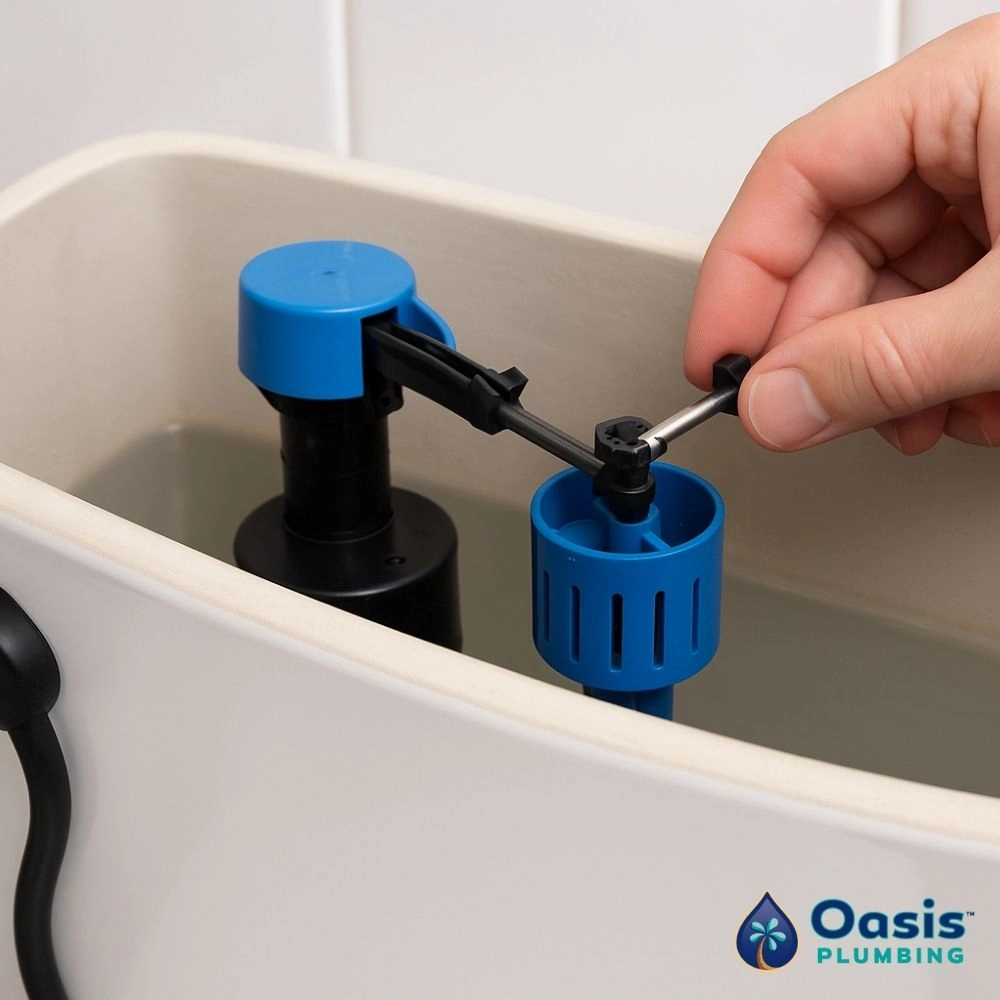
- Remove the tank lid and locate the vertical float cup.
- Find the adjustment screw on top of the fill valve.
- Turn clockwise to raise the water level, counterclockwise to lower it.
- Flush and watch the refill — stop adjusting when the water sits about 1 inch below the overflow tube.
Method 2: Adjusting a Ball Float
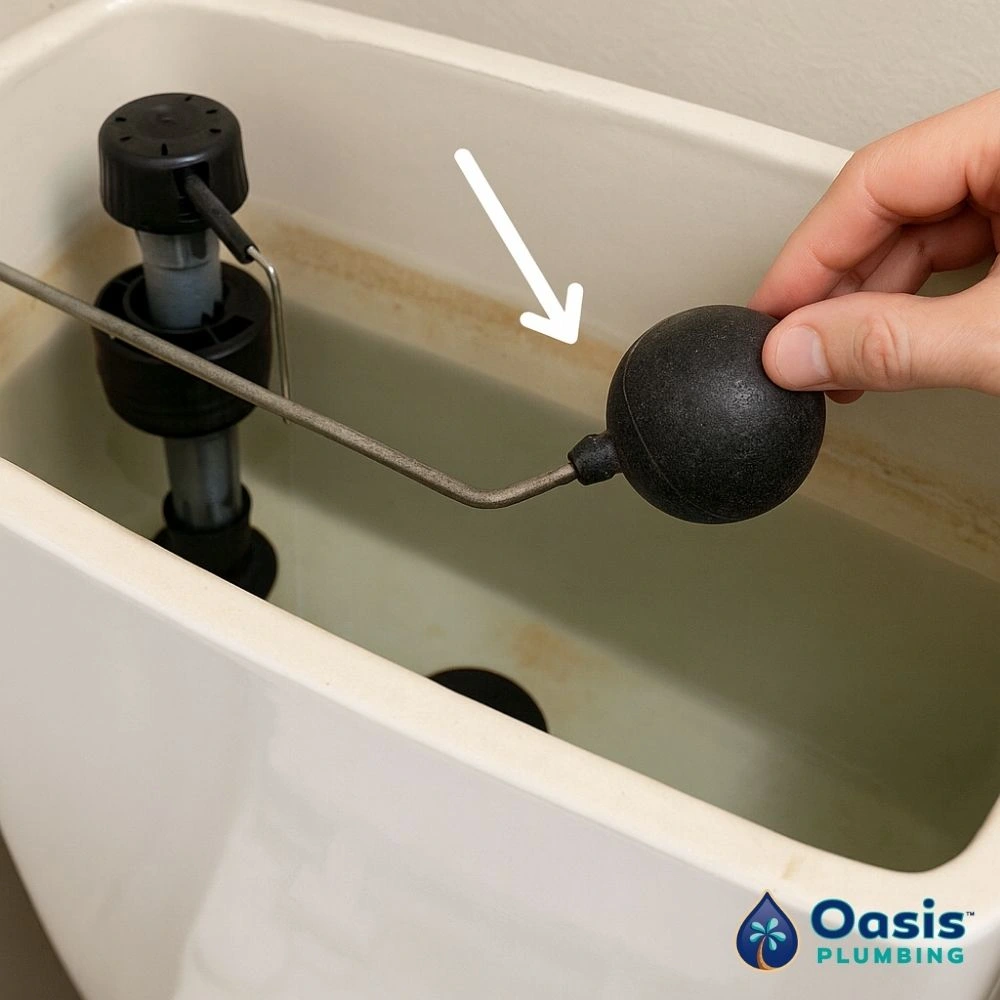
- Look for the long metal arm with a round plastic ball at the end.
- Gently bend the arm downward to lower water, or upward to raise it.
- Flush and check the new level, repeating as needed.
Method 3: Replace or Clean the Fill Valve
If adjustments don’t work:
Shut off the toilet’s water supply.
Remove the old fill valve and install a new one (typically $10–$20).
These are widely available at hardware stores and are DIY-friendly with basic instructions included.
Tip: Sometimes cleaning the valve is enough. Mineral buildup from hard water can prevent seals from working properly.
Why Fixing Toilet Water Levels Now Saves Money
A running toilet may seem minor, but it can waste more than 200 gallons of water every single day — that’s about 6,000 gallons per month.
Higher bills
Even a $20–$30 jump each month adds up quickly.
Hidden leaks
High levels may mask internal leaks that only get worse over time.
Plumbing stress:
Overflowing water adds wear on pipes, septic systems, and municipal sewer connections.
By acting now, you not only protect your wallet but also conserve a vital resource — water.
Expert Tips and Lesser-Known Fixes
Food coloring test
Add a few drops of food coloring into the tank. If color appears in the bowl within 15 minutes, you have a leak that needs fixing.
Always shut off water before repairs
Saves you from accidental floods while working inside the tank.
Local Miami Shores tip
Because South Florida has hard water with high mineral content, fill valves often wear out faster. Residents may need to replace parts more frequently than homeowners in areas with softer water.
Expert Tips and Lesser-Known Fixes
Correct level = efficient flush. The right water height ensures a single flush does the job.
Adjust the float first. Most problems are solved with a quick tweak of the float cup or ball.
Replace fill valve if needed. Cheap, fast, and often easier than constant adjustments.
Act early. Every day you delay could mean hundreds of gallons of wasted water and unnecessary costs.
Your toilet may not be the first thing you think about when it comes to water savings, but it’s one of the easiest places to stop waste. Don’t wait until your bill spikes or your toilet stops flushing properly — adjust water level in toilet tanks today and save both water and money.
If you’re in Miami Shores and your toilet still runs after adjustments, call Oasis Plumbing today for a professional water-saving inspection. We’ll make sure every fixture in your home is running efficiently. Not in Miami Shores? View our service areas to see if we serve your neighborhood.
Frequently Asked Questions
What should toilet water level be?
The water should sit about 1 inch below the overflow tube inside the tank.
Can I use duct tape or temporary fixes?
Not recommended — these don’t last. Adjust the float or replace the fill valve for a proper fix.
Will adjusting the water level stop my toilet from running?
In many cases, yes — especially if the float was incorrectly set. If the problem continues, the fill valve may need replacement.
