
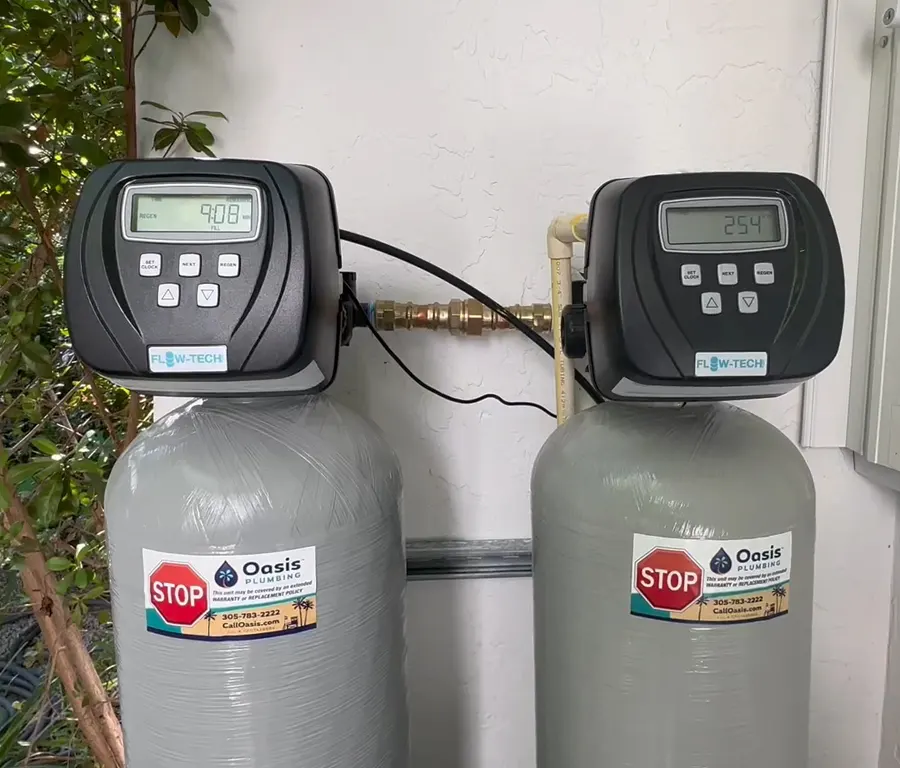
Hard water can affect more than just the quality of your water—it can leave mineral buildup on fixtures, reduce the efficiency of water-using appliances, and make it more difficult for soap and shampoo to lather effectively. If you’ve noticed stubborn white scale, spots on dishes, or dry skin after showering, hard water may be contributing to the problem.
A professionally installed water softener helps reduce the hardness minerals that cause these common household issues. By treating your home’s water before it flows through your plumbing system, a water softener can help improve everyday comfort while protecting your plumbing fixtures and appliances from scale buildup.
At Oasis Plumbing, we provide professional water softener installation services for homeowners in Miami, North Miami, and surrounding Miami-Dade communities. We evaluate your home’s water quality, explain your treatment options, and recommend the right solution based on your household’s specific hard water conditions.
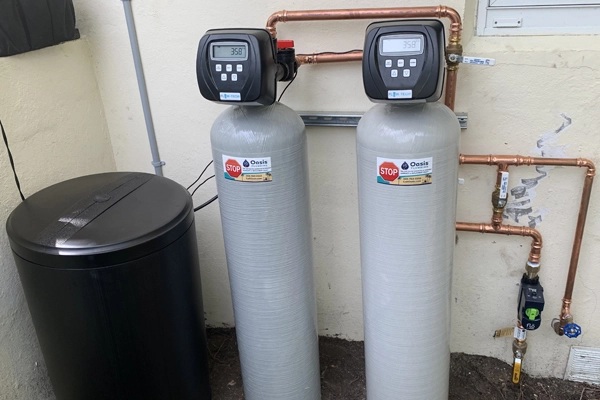
A water softener is a whole-home water treatment system designed to reduce the hardness minerals in your water, primarily calcium and magnesium. These naturally occurring minerals are responsible for hard water, which can lead to scale buildup on plumbing fixtures, reduced appliance efficiency, and other common household issues.
Most traditional water softeners use an ion exchange process to remove hardness minerals as water passes through the system. During this process, calcium and magnesium are exchanged for sodium or potassium ions, producing softened water that flows throughout your home’s plumbing system.
Unlike a water filter, which is designed to reduce contaminants or improve the taste and odor of your water, a water softener specifically addresses hard water. By reducing hardness minerals before the water reaches your faucets, showers, and appliances, a water softener helps improve water quality for everyday household use.

At Oasis Plumbing, we evaluate your home’s water quality before recommending a water softener. Understanding your water hardness is the first step in determining whether a water softener is the right solution for your home.
Seeing the water softening process makes it easier to understand how hardness minerals are reduced before water reaches your home’s plumbing system. This short video explains the basic ion exchange process and shows how a traditional water softener helps minimize hard water problems throughout the home.
Hard water is water that contains higher levels of naturally occurring minerals, primarily calcium and magnesium. As water moves through soil and rock, it dissolves these minerals before entering your home’s plumbing system. While hard water is common in many areas, the amount of mineral content can vary depending on the local water supply.
Hard water is not usually obvious when you turn on the faucet, but over time, the minerals it contains can leave noticeable signs throughout your home. You may see white scale on faucets, cloudy spots on glassware, mineral deposits around showerheads, or reduced soap lather during cleaning and bathing.
These hardness minerals can also build up inside plumbing pipes and water-using appliances over time. As mineral deposits accumulate, they may reduce efficiency and increase the need for maintenance.
The best way to determine whether your home has hard water is through professional water quality testing. By measuring your home’s water hardness, Oasis Plumbing can help you understand your water conditions and determine whether a water softener is the most appropriate solution.
Hard water problems often develop gradually, making them easy to overlook at first. Over time, however, the minerals in hard water can leave visible signs throughout your home and affect the performance of your plumbing fixtures, appliances, and everyday cleaning routine.
Some common signs that you may benefit from a water softener include:
White scale buildup on faucets and showerheads
Chalky white deposits are one of the most recognizable signs of hard water and are caused by calcium and magnesium minerals left behind as water evaporates.
Spots on dishes and glassware
Mineral residue can leave cloudy spots or streaks even after dishes have been washed.
Soap that doesn't lather well
Hard water reacts with soap, making it more difficult to produce a rich lather and often requiring more soap or detergent to achieve the same results.
Dry skin or dull hair after bathing
Many homeowners notice that hard water leaves their skin feeling dry or their hair feeling less manageable after showering.
Scale buildup around water-using appliances
Mineral deposits can accumulate in appliances such as water heaters, dishwashers, and washing machines over time.
Frequent cleaning of mineral deposits
If you're regularly removing white buildup from sinks, fixtures, or shower doors, hard water may be the underlying cause.
These signs don’t always confirm that hard water is present, but they are strong indicators that your home’s water should be evaluated. Professional water quality testing can measure your water hardness and determine whether a water softener is the right solution for your home.
Hard water doesn’t usually create immediate plumbing problems, but over time, the minerals it contains can affect your home’s plumbing system, water-using appliances, and everyday household tasks. Understanding these potential effects can help homeowners decide whether a water softener is the right long-term solution.
Some of the most common problems associated with hard water include:
Scale buildup inside plumbing systems
Calcium and magnesium can gradually accumulate inside pipes, valves, and plumbing fixtures, restricting water flow and increasing maintenance needs.
Reduced appliance efficiency
Mineral deposits can build up inside water heaters, dishwashers, washing machines, and other water-using appliances, making them work harder and potentially reducing their efficiency over time.
More frequent fixture cleaning
Hard water often leaves white mineral deposits on faucets, showerheads, sinks, shower doors, and other surfaces, requiring more frequent cleaning to maintain their appearance.
Increased soap and detergent use
Hard water reduces the effectiveness of soaps and detergents, meaning homeowners may need to use more products for bathing, laundry, and cleaning.
Dry skin and dull hair
Many homeowners find that hard water makes it more difficult to rinse away soap completely, which can contribute to dry skin and leave hair feeling less soft or manageable.
Addressing hard water early can help reduce these everyday frustrations and support the long-term performance of your plumbing system and household appliances. Professional water quality testing can determine the level of water hardness in your home and help identify the most appropriate treatment solution.
A water softener helps reduce the hardness minerals that contribute to scale buildup, allowing your home’s plumbing system and water-using appliances to operate with softened water. For many homeowners, this means fewer hard water problems, easier cleaning, and greater everyday comfort.
Some of the benefits of installing a water softener include:
Reduced scale buildup
Softened water helps minimize mineral deposits on faucets, showerheads, fixtures, and other plumbing surfaces, making them easier to keep clean.
Improved appliance performance
By reducing mineral buildup, a water softener can help support the efficient operation of water heaters, dishwashers, washing machines, and other water-using appliances.
Cleaner dishes and glassware
Softened water helps reduce the cloudy spots and mineral residue that hard water often leaves behind.
Better soap and detergent performance
Soap, shampoo, and laundry detergent generally lather and rinse more effectively with softened water, which may reduce the amount needed for everyday cleaning.
More comfortable bathing experience
Many homeowners notice that softened water leaves their skin feeling less dry and their hair feeling softer and easier to manage after showering.
Whole-home protection
Because a water softener treats the water entering your home, every faucet, shower, and water-using appliance benefits from reduced hardness minerals.
The right water softener depends on your home’s water hardness and household needs. At Oasis Plumbing, we recommend water softening solutions based on professional water quality testing so you receive a system that’s appropriate for your home’s specific water conditions.
Homeowners researching water softeners often come across both salt-based and salt-free systems. While both are designed to address hard water concerns, they work differently and are suited to different household needs.
| Salt-Based Water Softener | Salt-Free Water Conditioning System |
|---|---|
| Uses an ion exchange process to remove hardness minerals such as calcium and magnesium from the water. | Helps reduce the effects of scale buildup without removing hardness minerals from the water. |
| Requires periodic addition of salt or potassium for regeneration. | Does not require salt for normal operation. |
| Produces softened water throughout the home by reducing water hardness. | Conditions the water to help minimize scale formation while the minerals remain in the water. |
| Commonly recommended for homes with significant hard water. | May be appropriate for homeowners primarily concerned about scale buildup with minimal maintenance requirements. |
The best choice depends on your home’s water hardness, plumbing system, maintenance preferences, and long-term water treatment goals. A home with high hardness levels may benefit from a traditional salt-based water softener, while other homes may be well suited to a salt-free conditioning or anti-scale system.
At Oasis Plumbing, we don’t recommend one solution for every home. We begin with professional water quality testing to understand your water conditions, then explain the advantages and considerations of each option so you can choose the solution that’s most appropriate for your household.
A water softener and a whole house water filtration system are both installed on your home’s main water line, but they serve different purposes. A water softener is designed to reduce hardness minerals that cause scale buildup, while a whole house water filtration system is designed to improve overall water quality by reducing chlorine, sediment, and other common contaminants.
| Water Softener | Whole House Water Filtration System |
|---|---|
| Reduces hardness minerals such as calcium and magnesium. | Helps reduce chlorine, sediment, and other common contaminants, depending on the filtration system. |
| Primarily addresses hard water problems and scale buildup. | Primarily improves the quality of the water used throughout the home. |
| Helps protect plumbing fixtures and water-using appliances from mineral deposits. | Helps improve the taste, odor, and overall quality of water at every faucet. |
| Uses a water softening process, typically ion exchange, to reduce water hardness. | Uses filtration media to improve water quality as water enters the home. |
These systems are not interchangeable because they solve different water quality concerns. In many homes, they can also complement each other. For example, a whole house water filtration system may improve overall water quality, while a water softener helps reduce hard water and the mineral buildup it can cause.
At Oasis Plumbing, we begin with professional water quality testing to understand your home’s water before recommending a water softener, a whole house water filtration system, or a combination of both.
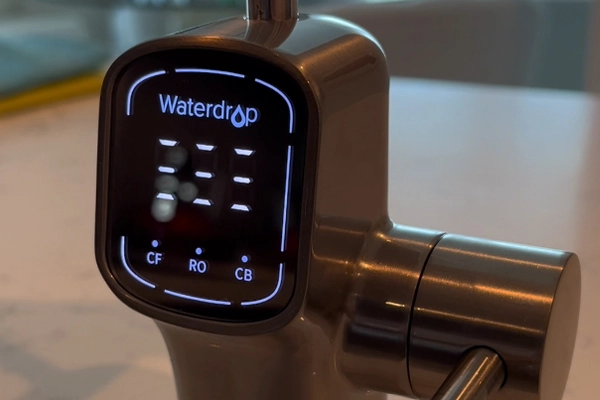
A water softener and a drinking water filter are designed to improve your home’s water in different ways. A water softener reduces the hardness minerals that affect your plumbing system and everyday household water, while a drinking water filter improves the quality of the water you use for drinking, cooking, and preparing beverages.
| Water Softener | Drinking Water Filter |
|---|---|
| Reduces hardness minerals such as calcium and magnesium throughout the home. | Improves drinking water quality at a specific location, such as an under-sink system or dedicated drinking water faucet. |
| Helps reduce scale buildup on plumbing fixtures and water-using appliances. | Helps reduce chlorine, improve taste and odor, and address other common drinking water concerns, depending on the filtration system. |
| Treats all the water entering the home's plumbing system. | Treats water only where it's installed. |
| Designed to address hard water problems. | Designed to improve the quality of water used for drinking and cooking. |
Because they solve different problems, these systems are not substitutes for one another. Some homeowners choose a water softener to reduce hard water throughout the home and also install a drinking water filter to improve the quality of the water they consume every day.
Professional water quality testing helps determine whether your home would benefit from a water softener, a drinking water filter, or a combination of both based on your home’s specific water conditions and household needs.
Choosing the right water softener starts with understanding your home’s water hardness and your household’s daily water usage. While many water softeners perform the same basic function, the best system depends on factors such as water hardness, household size, plumbing configuration, maintenance preferences, and your long-term water treatment goals.
When selecting a water softener, consider the following:
Your home's water hardness
Professional water quality testing measures the level of hardness minerals in your water and helps determine whether a water softener is the appropriate solution.
Household water usage
Larger households or homes with higher water demand may require a system with greater softening capacity to provide consistent performance.
Type of water softening system
Traditional salt-based water softeners and salt-free conditioning systems work differently. Understanding the advantages of each can help you choose the solution that best fits your home's needs.
Maintenance preferences
Some systems require periodic salt replenishment or routine maintenance, while others are designed for homeowners seeking lower-maintenance operation.
Future water treatment needs
Depending on your water quality, your home may benefit from a water softener alone or from combining it with a whole house water filtration system or a drinking water filter for more comprehensive water treatment.
At Oasis Plumbing, we don’t recommend water softeners based on assumptions. our plumbers in Miami begin with professional water quality testing, evaluate your household’s needs, and recommend a water treatment solution that’s designed to provide reliable performance, long-term value, and improved water quality throughout your home.
A water softener is most effective when it’s properly sized for your home’s water hardness and professionally installed. Correct installation helps ensure reliable water flow, efficient operation, and long-term performance while allowing the system to treat your home’s water as intended.
Our water softener installation process typically includes:
Water quality evaluation
We review your water quality test results and measure your home's water hardness to determine whether a water softener is the right solution.
System selection
Based on your household size, water usage, plumbing configuration, and water hardness, we recommend a water softening system that's appropriate for your home's needs.
Installation planning
We identify the best installation location, verify plumbing connections, and evaluate drain, bypass, and water supply requirements before installation begins.
Professional installation
Our plumbers in Miami install your water softener according to manufacturer specifications and professional plumbing practices to help ensure dependable operation and long-term reliability.
System testing and homeowner walkthrough
After water softener installation, we test the system, verify proper operation, inspect for leaks, and explain how your water softener works, including any routine maintenance requirements.
At Oasis Plumbing, our plumbers in Miami believe a successful installation starts with understanding your home’s water. That’s why every water softener recommendation is guided by professional water quality testing and tailored to your household’s specific needs rather than a one-size-fits-all approach.
Choosing a water softener isn’t just about installing equipment—it’s about selecting a solution that’s appropriate for your home’s water hardness, plumbing system, and household needs. At Oasis Plumbing, we take a consultative approach, helping homeowners understand their water before recommending a water softening solution designed for reliable, long-term performance.
When you choose Oasis Plumbing, you can expect:
Water quality testing before recommendations
We evaluate your home's water hardness and overall water quality to determine whether a water softener is the right solution.
Personalized system recommendations
Every home is different. We recommend water softening systems based on your household's water usage, plumbing configuration, maintenance preferences, and treatment goals.
Professional installation
Our experienced plumbers in Miami install water softening systems according to manufacturer specifications and professional plumbing practices to help ensure dependable operation and long-term reliability.
Honest guidance and clear explanations
We explain your options, answer your questions, and help you understand the differences between available water treatment solutions so you can make an informed decision.
Long-term support
At Oasis Plumbing, our plumbers in Miami believe every water softener recommendation should be based on your home's actual water conditions—not assumptions. By combining professional water quality testing with expert installation, we help homeowners choose solutions that deliver lasting performance and confidence in their home's water.
At Oasis Plumbing, our plumbers in Miami believe a successful installation starts with understanding your home’s water. That’s why every water softener recommendation is guided by professional water quality testing and tailored to your household’s specific needs rather than a one-size-fits-all approach.
Still have questions? Call our plumbers in Miami at Oasis Plumbing today. We’ll answer your questions, explain how water softeners work, and help you decide if a water softener is the right solution for your home’s water supply.
Hard water doesn’t have to become part of your daily routine. If you’re dealing with scale buildup, spots on dishes, dry skin, or other signs of hard water, Oasis Plumbing can help you determine whether a water softener is the right solution for your home.
Schedule your water softener installation consultation today and let our experienced plumbers in Miami evaluate your water quality, recommend the most appropriate water softening system, and professionally install a solution that delivers reliable, long-term performance throughout your home.



THANK YOU!
Your inquiry has been received!
We will be in touch and contact you soon!