

Ever turned on your faucet expecting a soothing stream of clear, warm water—only to be greeted by tiny black specks floating around like pepper flakes? Yeah, that’s not the kind of “spa experience” anyone wants.
If you’re seeing black specks in your hot water, don’t panic—your plumbing system is probably trying to tell you something.
Let’s break down what those little black dots are, why they’re showing up, and what you can do to fix (and prevent) them—Miami-style.
Table of Contents
Why You’re Seeing Black Specks in Hot Water
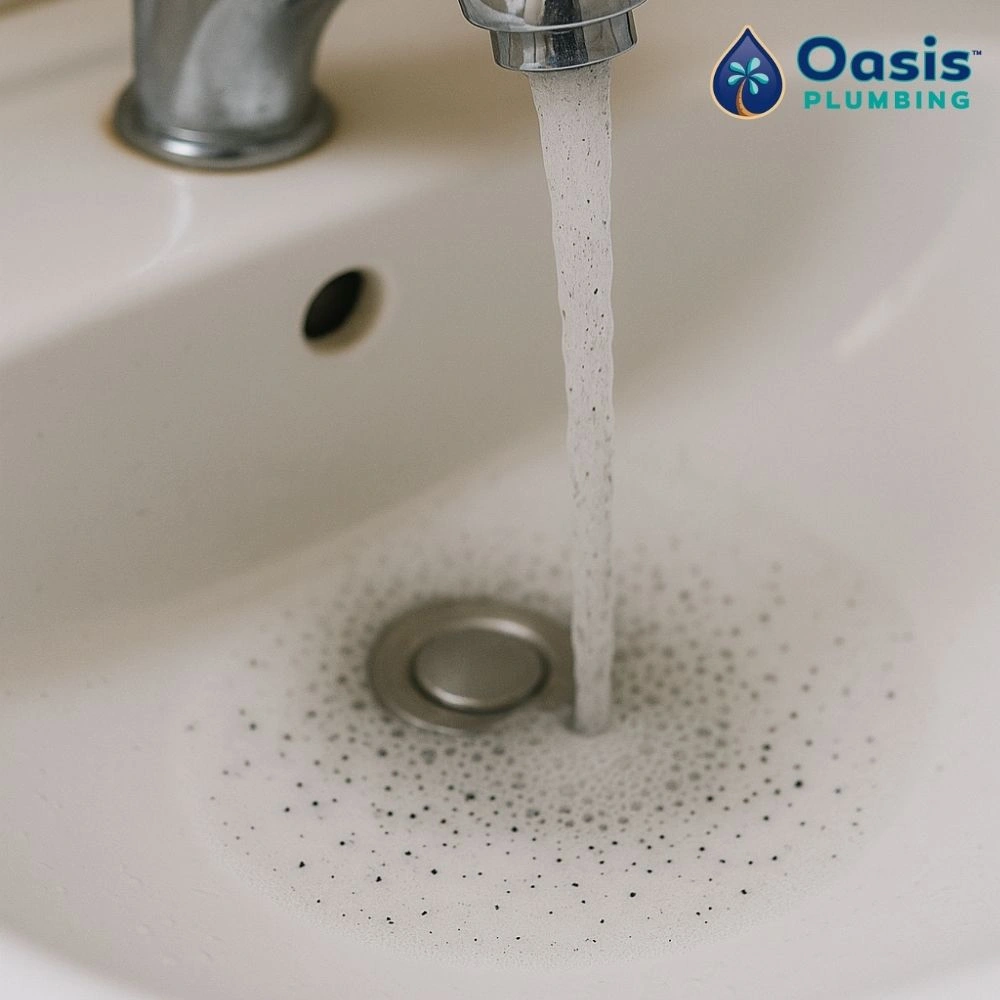
In most homes, black specks in hot water are caused by one of these:
Sediment from a deteriorating water heater tank or anode rod
Rubber or plastic pieces breaking down inside flexible hoses or washers
Mineral or pipe corrosion (especially in old galvanized lines)
Granular carbon from water filters leaking into the hot water supply
Each of these tells a slightly different story about what’s happening inside your plumbing system. Let’s go deeper.
1. The Water Heater Might Be the Culprit
Over time, the inside of your water heater tank can corrode or collect sediment, especially if it’s an older model or hasn’t been flushed in a while. When you turn on the hot water, those bits of rust or minerals can loosen and flow right into your tap—appearing as small black specks in your hot water.
If you’re seeing them only in hot water (not cold), the heater is almost always the suspect.
How to fix it:
Flush your water heater annually to remove sediment and extend its lifespan.
Replace the anode rod if it’s corroded—this sacrificial part protects your tank but eventually wears out.
If the tank is old or leaking, it might be time for a new, efficient water heater installation.
Not sure if it’s time for a replacement? Call Oasis Plumbing—we’ll check your water heater and make sure it’s not secretly making “black pepper tea”.
2. Rubber Hose Breakdown: The Silent Speck Source
Those flexible rubber or braided hoses under your sinks, behind your washing machine, or connecting to your water heater don’t last forever. Over time, they can degrade and shed tiny black rubber particles that end up in your hot water lines.
Signs this is your issue:
The specks feel soft and squishy rather than gritty or metallic.
You notice them in both hot and cold water (depending on which hoses are affected).
Replace any rubber or plastic supply hoses with stainless steel braided ones.
Inspect your water heater connectors—rubber washers can break down from heat exposure.
3. Deteriorating Pipes: The Vintage Problem
If your home still has galvanized steel pipes, they’re basically ticking corrosion time bombs. As the inside of the pipe deteriorates, flakes of black or brown iron oxide can mix into your water—especially noticeable when you run hot water, which accelerates corrosion.
How to fix it:
Replace old galvanized or corroded sections with Type L copper or PEX piping.
Schedule a whole-home plumbing inspection to identify problem areas before leaks or bursts happen.
At Oasis Plumbing, we make pipe replacement painless—no drama, no mess, just better water flow.
4. Carbon Filter Granules Sneaking into Your Hot Water
If you have a whole house water filter or under-sink carbon filter, those black particles could actually be activated carbon granules.
Normally, they’re safely contained inside the filter—but if the cartridge cracks or is past its prime, the carbon can escape and travel through your plumbing lines.
Fix it:
Replace old or overused filter cartridges.
Avoid running hot water through carbon filters, since they’re not designed for heat.
Consider upgrading to a higher-capacity filtration system with sediment pre-filters.
We install professional-grade filters that don’t flake out on you—literally.
5. When the Specks Are Slimy or Greasy
If your black specks feel oily or sticky, you might be dealing with mold or bacterial growth inside your water heater or pipes. That can happen when the water heater is set too low (below 120°F), allowing microorganisms to thrive.
Fix it:
Sanitize your water heater by raising the temperature to 140°F temporarily.
Have a plumber flush and disinfect your hot water system.
Always keep your water heater set at least to 120°F for safety and hygiene.
How to Tell Where the Black Specks Are Coming From
Here’s a quick DIY detective method:
| Where You See the Specks | Likely Cause |
|---|---|
| Only in hot water | Water heater sediment or corrosion |
| In both hot & cold water | Rubber hose or pipe deterioration |
| Only in one faucet | Local supply hose or aerator issue |
| In filtered water | Carbon filter leakage |
| Specks feel slimy | Bacterial growth |
If you’re still unsure, fill a clear glass with water from different taps, let it sit, and observe. Do the specks float, sink, or dissolve? That small clue can help your plumber identify the issue in minutes.
Professional Solutions from Oasis Plumbing
When your water looks like it needs a strainer, it’s time to call in the experts. Here’s how we can help:
Water Heater Inspection & Flushing – We’ll remove sediment and replace worn parts.
Pipe Material Upgrades – Swap out old galvanized pipes for copper or PEX.
Water Filtration Installation – Get clean, speck-free water straight from the tap.
Whole Home Plumbing Inspection – Spot corrosion, leaks, and pressure issues early.
Black specks belong in your coffee, not your bathtub. Book your inspection today with Oasis Plumbing—Miami’s clean water heroes!
Key Takeaways
Black specks in hot water usually mean sediment, corrosion, or hose deterioration.
Most problems start in the water heater or supply hoses—simple fixes when caught early.
Flushing, replacing filters, and upgrading old pipes keeps your water clean and clear.
Annual plumbing maintenance saves you from costly damage and “what’s-that-in-my-water” moments.
Seeing black specks in your hot water isn’t just gross—it’s your plumbing system waving a red (or black) flag. Whether it’s your water heater rusting from the inside, your hoses breaking down, or a filter leaking carbon granules, these issues only get worse over time.
At Oasis Plumbing, we help Miami homeowners get back to crystal-clear water—fast. Our licensed plumbers inspect, clean, and repair your system with precision, so you can enjoy safe, spotless hot water again.
Stop wondering what’s floating in your water—let’s get to the bottom of it. Call (305) 506-1062 — because when your water’s spotless, so is your peace of mind.
Frequently Asked Questions
Are black specks in hot water harmful?
Usually, they’re not dangerous—but they can indicate corrosion, bacteria, or filter failure. It’s best to have a plumber inspect your system to ensure it’s safe to drink and bathe in.
Why do I only see black specks in my bathroom sink or shower?
That often points to a local fixture issue—like a worn-out washer, deteriorated hose, or faucet aerator collecting debris. Try cleaning or replacing those parts first.
Can a water heater cause black particles?
Yes! Old or unflushed water heaters can release rust flakes, sediment, or bits of the anode rod into your hot water.
Will a new water filter solve the problem?
It depends. If the filter itself is leaking carbon granules, replacing it will help. But if the issue is corrosion or sediment, you’ll need a plumber to address the root cause.
How can I prevent black specks in the future?
Flush your water heater once a year, replace rubber hoses every few years, and change filters on schedule. Proactive maintenance is the key to clean, clear water.
