

If you’re seeing a higher water bill than usual, hearing random water sounds, or noticing damp spots you can’t explain, your home might be leaking somewhere — even if nothing is visibly dripping.
One of the fastest, most accurate ways to check for home leaks is already sitting on your property: your water meter.
And the good news? You can run the test yourself in under 5 minutes.
This guide walks you step-by-step through how the test works, what the results mean, and when it’s time to call in a plumber.
Simple. Straightforward. No complicated tools.
Table of Contents
How Water Meters Help You Check for Home Leaks
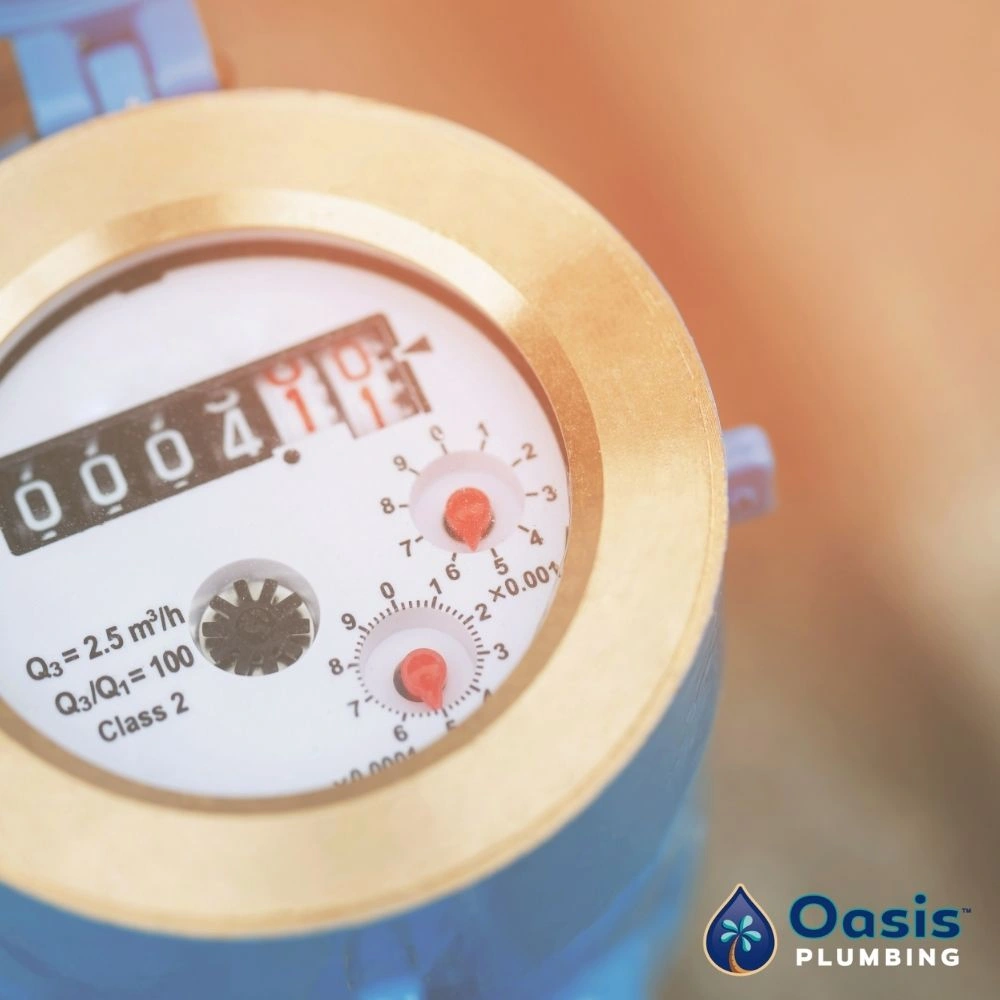
Your water meter tracks every drop entering your home. If the meter is moving when no water is being used, it’s because water is escaping somewhere.
Why the meter test works
Leaks create a continuous demand on your water supply. The meter will always record that movement — even tiny drips.
Hidden leaks the meter can detect
Running toilets
Underground/slab leaks
Buried irrigation line leaks
Pin-hole pipe leaks
Dripping hose bibs
Water softener regeneration issues
Stuck refrigerator or ice-maker lines
Shower valve bypass leaks
Want confirmation of your leak?
Too many signs and not sure which appliance is causing it? Call (305) 703-8220 — we’ll pinpoint the source and prevent serious damage.
Step-by-Step — How to Check for Home Leaks Using Your Water Meter
Follow these steps exactly, and you’ll know if your home has a leak in less than five minutes.
Step 1: Turn Off All Water in the Home
Your thermostat may be set too low.
Faucets
Showers
Washing machine
Dishwasher
Sprinklers
Ice maker
Water softener regeneration
Toilets (don’t flush during testing)
You need the entire house completely still.
Step 2: Locate Your Water Meter
Most homes have the meter:
Inside a plastic or metal ground box near the street
Near the sidewalk
Sometimes on the side of the house (rare in South Florida)
Lift the lid carefully
Step 3: Identify the Leak Indicator
Most meters have a small rotating feature:
A tiny red triangle
A small black or red dial
A digital flow rate indicator
This is your leak detector.
If it moves — even slightly — you have a leak.
Step 4: Watch the Leak Indicator for 1–2 Minutes
Stand still and observe:
No movement?
Great — no leaks detected.
Slow, subtle movement?
Likely a small continuous leak.
Most common: running toilet.
Fast spinning?
This is a major leak — often underground.
Step 5: Record Meter Numbers (Optional)
If the meter doesn’t have a visible leak indicator, record the reading:
Take one photo
Wait 10 minutes
Take another photo
If the numbers changed, you have a leak.
Step 6: Recheck After Running Water
Turn one faucet on for 10 seconds and off again.
The indicator should:
Spin when on
Completely stop when off
If it slows down but never fully stops, that means water is still leaving the system somewhere.
Leak test confirmed a leak? Now what?
We can walk you through your next step on the phone. Call (305) 703-8220 — fast, simple diagnostics.
What Your Meter Results Really Mean
Not all meter movement indicates the same type of leak. Here’s how to interpret the results like a pro.
Scenario A: The Leak Indicator Spins Fast
This usually means a significant leak, such as:
Underground/slab leak
Broken irrigation pipe
Buried main line leak
Water softener stuck in bypass mode
Toilet fill valves stuck open
Fast spinning = large flow rate = urgent.
Scenario B: The Indicator Moves Slowly
This means a small but steady leak, like:
Toilet flapper leaking
Drip inside a wall
Refrigerator line seep
Shower valve bypass (very common)
Small copper pinhole leak
Even tiny leaks add up:
1 drip/second = 3,000+ gallons/month
Scenario C: Digital Meter Shows Flow When Off
Digital meters often show:
Flow rate (GPM or L/min)
Flow arrow icon
If the flow arrow is present while all fixtures are off → confirmed leak.
Not sure if it’s a slab leak?
Slab leaks are tricky — but we diagnose them without tearing open your floors. Call (305) 703-8220 for a pressure test.
How to Pinpoint the Leak After You Confirm It
Once you confirm a leak, here are the most common next steps.
1. Test Toilets First (Most Common Leak)
Toilets cause 80% of hidden leaks.
Test each toilet:
Remove tank lid
Listen for hissing
Drop food coloring in tank
Wait 10 minutes
If color enters the bowl → toilet leak.
2. Shut Off Toilets One at a Time
Turn the valve under each toilet clockwise.
Check the meter again.
If the meter stops → that toilet is your leak source.
3. Isolate the Irrigation System
Turn off the irrigation shutoff valve (usually outside near the backflow).
Check the meter:
If it stops → irrigation leak
If it continues → plumbing leak indoors or under slab
4. Check for Water Softener Issues
Softener stuck in regeneration/bypass mode = constant water flow.
Turn the bypass valve ON (bypass) and recheck meter.
5. Check Hose Bibs
A slow outdoor drip may not be obvious but will show on the meter.
6. Check Shower Valves (Very Common in Miami)
A worn cartridge or valve body can allow water to bypass internally even when the shower is off.
Meter will show slow continuous flow.
If the meter keeps moving and you can’t find the source
Book a leak detection visit. We use pressure testing and thermal tools to locate the exact spot. Call (305) 703-8220.
When to Call a Plumber (Your Personal Line Between DIY & Danger)
The water-meter test is simple — but interpreting the results and finding the actual leak can get tricky.
Call a plumber when
The indicator spins fast
You suspect a slab/underground leak
You can’t isolate the leak
Irrigation is leaking below ground
Toilets are not the issue
You hear water in the walls
Water shows under flooring
Your bill suddenly doubled
You have low water pressure and a moving meter (sign of a main line leak)
Professional leak detection tools
Pressure test gauges
Thermal imaging
Ultrasonic listening devices
Moisture sensors
Pipe tracing equipment
A plumber can confirm the leak and give you options before damage spreads.
How Often Should You Check for Home Leaks?
To avoid surprises, here’s a simple rule of thumb:
Every 3 months for normal homeowners
Every month if you have old pipes or high water bills
Before and after vacations
After plumbing repairs
If you hear running water but can’t find it
5 minutes of prevention = hundreds in savings.
Key Takeaways
Your water meter is the #1 tool for spotting hidden leaks fast.
A moving leak indicator (even when all water is off) = confirmed leak.
Most meters can test leaks in under 5 minutes.
If the numbers move slowly, you may have a small but constant leak (toilet, slab, irrigation, etc.).
If the indicator spins rapidly, you likely have a major leak that needs professional attention.
Early detection saves hundreds or thousands on repairs — and prevents water damage.
Checking for home leaks with your water meter is one of the simplest, most powerful plumbing tests any homeowner can do. In just a few minutes, you can confirm whether your home is wasting water, losing pressure, or developing a serious hidden leak.
Early detection protects your floors, prevents mold, reduces your water bill, and keeps your plumbing system healthy.
If your meter shows movement — even slow movement — don’t ignore it. Small leaks become big leaks.
If your water meter test shows any sign of a leak — slow or fast — let Oasis Plumbing help you figure out the next step.
Call Oasis Plumbing at (305) 703-8220. We’ll run a full leak diagnosis, explain what’s happening, and give you clear repair options so you can protect your home and budget.
Frequently Asked Questions
Does a moving leak indicator always mean I have a leak?
Yes — if all water is off and it’s still moving, your home is losing water somewhere.
Can a toilet really waste hundreds of gallons?
Absolutely. A flapper leak can waste 3,000–6,000 gallons per month.
What if the meter is moving only at night?
Your irrigation system or water softener may be the cause. We can help isolate it.
Can the water meter be wrong?
Rarely. Meters are usually the most accurate part of your water system.
Should I shut off the whole house if I have a major leak?
Yes. Turn off the main water shutoff valve immediately and call a plumber.
