
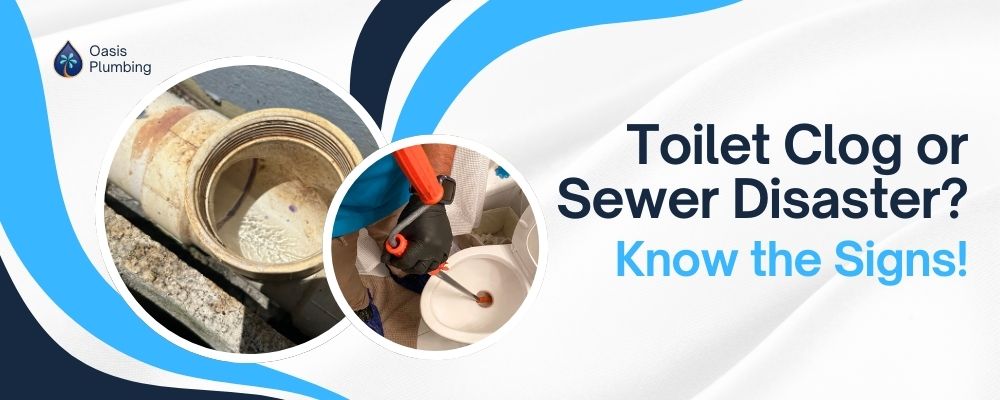
Dealing with a clogged toilet is never fun—but how do you know if it’s just a simple blockage or a bigger issue like a sewer line clog? These problems can look the same on the surface: water rising in the bowl, slow drains, strange noises. But the solutions are very different. A toilet clog is often an easy fix. A sewer line issue? That can affect your whole home and lead to costly repairs if ignored.
This guide is for homeowners who are noticing repeated toilet clogs, slow drains, bubbling noises, or water backing up in strange places. Knowing how to tell the difference between a clogged toilet and a sewer line clog can save you time, stress, and a lot of money.
Table of Contents
Quick Answer: What’s the Difference?
Here’s a fast way to spot what you’re dealing with.
Clogged Toilet
Only affects one toilet.
Water may rise or drain slowly.
Other fixtures like sinks or tubs work fine.
Often caused by something stuck close to the bowl or trap.
Sewer Line Clog
Affects multiple drains across your home.
You may hear gurgling sounds in other fixtures.
Water might back up in one area when you use another (like the shower backing up when you flush).
Usually a sign of a deeper issue in your main sewer line.
Signs of a Clogged Toilet
When it’s just the toilet causing problems, you’ll likely notice a few classic signs:
Gurgling noises after flushing.
No problems with nearby sinks, tubs, or other toilets.
Sometimes, flushing doesn’t work at all—and the water level stays high or overflows.
Most toilet clogs are caused by:
Too much toilet paper.
Flushing things you shouldn't (like wipes, paper towels, or sanitary products).
Small objects (looking at you, kids’ toys) dropped into the bowl.
Older or low-flow toilets that don’t push waste through effectively.
Signs of a Sewer Line Clog
A sewer line clog is a whole different animal. This isn’t about one bathroom—this affects your entire home’s plumbing.
Watch for these warning signs:
Multiple fixtures are clogged at once (toilets, sinks, tubs).
You flush the toilet, and water backs up in your tub or shower.
Using water upstairs causes problems downstairs.
Drains bubble or make weird gurgling sounds.
Bad smells around drains or outside near your yard or sewer cleanout.
The lawn feels unusually soggy or has sewage smells.
These symptoms mean the blockage is deep in the main sewer line. That’s not something you can fix with a plunger.
Common Causes of Clogs
What Causes a Clogged Toilet?
Flushing non-flushables
Wipes, diapers, paper towels, and feminine products don’t break down like toilet paper.
Too much toilet paper
Especially in one go. If you want to avoid clogs altogether, check out our guide on “Top Tips for Preventing Toilet Clogs: Optimizing Your Toilet Flushing Routine” for expert advice on flushing smarter.
Foreign objects
Toys, toothbrushes, and other surprises can block the trap.
Low-flow toilet problems
Some older low-flows don’t have enough force to move waste effectively.
What Causes a Sewer Line Clog?
Tree roots
Roots from nearby trees can grow into your pipes and block the line.
Grease buildup
Grease poured down kitchen sinks can harden and cause blockages.
Pipe collapse
Old, damaged, or poorly installed pipes can break or collapse.
Flushed debris
Items flushed over time can travel deep enough to cause a sewer backup.
Old plumbing systems
If your home is older, your pipes may just be wearing out.
DIY vs. Professional Help
When You Can DIY a Toilet Clog
If it’s just your toilet and no other drains are affected, you may be able to fix it yourself.
Try:
Plunging
A good plunger with a tight seal can often clear basic clogs. However, if you don't have one or need an alternative, check out our related blog "Stop Using a Plunger! Here’s How to Unclog a Toilet Fast" for quick DIY fixes.
Toilet auger
Also called a manual snake, it can reach and remove objects a plunger can’t.
Avoid chemical drain cleaners
Chemical drain cleaners can damage pipes and don’t always work on solid clogs.
When to Call a Pro for a Sewer Line Clog
If you’re seeing issues in multiple fixtures or signs of a deep blockage, it’s time to call in the experts.
Call a plumber when:
You have repeated clogs, even after plunging.
Multiple drains are backing up or slow.
You suspect a sewer line clog due to smells or bubbling.
You need tools like hydro-jetting or camera inspections to find the cause.
Professional help can prevent a minor issue from turning into a full-blown sewage backup. Learn why delaying drain cleaning could lead to costly repairs in our blog: “Clogged Drain? Why Waiting Could Cost You More in Miami“.
How a Plumber Diagnoses the Problem
So what happens when the plumber shows up?
Sewer camera inspection
This is the go-to method. A waterproof camera is fed into your pipes to see exactly where and what the clog is.
Hydro-jetting
If it’s a sewer line clog, a high-pressure water jet can break up roots, grease, and buildup.
Cleanout access
Your plumber will look for the main sewer cleanout (a capped pipe, often in your yard or basement) to get to the blockage easily.
Early action matters
The sooner the issue is found, the less risk of damage to your home—and the lower the cost.
Costs and Consequences of a Clog
Here’s the part no one loves: the price tag.
Toilet Clog Repair Costs
DIY: Free (if you have a plunger or auger).
Plumber visit: $100–$250 for a standard toilet clog.
Sewer Line Clog Repair Costs
Camera inspection: $200–$500
Hydro-jetting: $300–$800
Major repair or replacement: $3,000 to $10,000+ (especially if digging is required)
Ignoring a sewer line clog can lead to:
Sewage backups inside your home.
Water damage to floors, walls, and foundations.
Health risks from bacteria and mold exposure.
It’s better to act early than to wait for the smell to tell you it’s time.
Preventative Tips for Homeowners
Nobody wants to deal with a clogged toilet or a surprise sewer line clog. A little prevention can go a long way.
Here’s what you can do:
Flush only toilet paper and human waste. No wipes, even the “flushable” kind.
Use drain-safe enzymatic cleaners monthly to keep buildup down.
Don’t pour grease down the sink. Wipe pans with a paper towel and toss it in the trash.
Avoid planting trees near sewer lines—roots will find their way in.
Schedule inspections if your home is over 30 years old. Older pipes are more prone to failure.
Knowing the difference between a clogged toilet and a sewer line clog can save you serious time, money, and headaches. If it’s just one toilet acting up, grab a plunger. But if multiple drains are backing up, water’s bubbling, or things smell off—it’s likely a bigger issue.
Don’t wait for a small problem to turn into a disaster.
Not sure if it’s your toilet or your main sewer line? Call Oasis Plumbing Miami today for a professional diagnosis and fast, clean solutions you can count on.
