

If you live in Miami Shores Village, you may have wondered whether installing a reverse osmosis system in your home is actually necessary. Perhaps you’ve noticed that the tap water tastes slightly chlorinated, or maybe you see residue on glasses after they dry. In some homes, the water smells faintly chemical, while in others the taste simply isn’t as clean as homeowners would like. These small experiences often lead people to start asking questions about filtration and whether upgrading their drinking water system would make a meaningful difference.
Municipal water in Miami-Dade County is treated and considered safe according to regulatory standards. However, many homeowners are learning that “safe” does not always mean ideal when it comes to everyday drinking water. The treatment process ensures safety, but it can still leave behind minerals, chlorine, and trace contaminants that affect taste and quality. Because of this, a growing number of homeowners in Miami Shores Village are installing drinking water filtration systems to gain more control over what comes out of their tap.
Reverse osmosis is one of the most thorough residential filtration methods available. It is designed to remove extremely small contaminants that standard filters cannot capture, producing water that is noticeably cleaner in taste and composition. Still, that does not automatically mean every home needs it. The real question homeowners should ask is whether the benefits of reverse osmosis match their expectations for water quality, convenience, and long-term value.
In this guide, we’ll walk through how reverse osmosis works, what’s actually in South Florida tap water, and when installing this type of system makes sense for homeowners in Miami Shores Village. By the end, you’ll have a much clearer idea of whether reverse osmosis is simply an upgrade—or something that could significantly improve the water in your home.
Table of Contents
Understanding Miami Shores Village Tap Water
Homes in Miami Shores Village receive water from the Biscayne Aquifer, a large underground freshwater source that supplies much of South Florida. Before the water reaches homes, it is treated by Miami-Dade County’s water treatment facilities to meet federal and state drinking water standards.
Although the water is treated, it still carries certain characteristics that homeowners often notice. Because groundwater moves through limestone, it naturally contains dissolved minerals such as calcium and magnesium. These minerals can affect taste and leave spots on glassware or fixtures.
The treatment process also uses chlorine or chloramine to disinfect the water supply. This step is necessary for public safety, but it can create a noticeable flavor or odor that some homeowners find unpleasant.
In addition to these factors, trace amounts of substances can still remain in treated water. These may include compounds such as fluoride, nitrates, and very small quantities of metals or disinfection byproducts. The levels are typically within regulatory limits, but many homeowners prefer additional filtration to reduce them further.
These characteristics are the reason many people begin asking whether Miami Shores Village homes need reverse osmosis systems to improve the quality of their drinking water.
Cleaner Drinking Water Today
Install a reverse osmosis system with Oasis Plumbing—call (305) 703-8220.
What Reverse Osmosis Actually Does
Reverse osmosis is a filtration process designed to remove extremely small contaminants from drinking water. Unlike standard filters that mainly improve taste, reverse osmosis works at a molecular level to separate purified water from dissolved substances.
The system typically starts with a sediment filter that removes larger particles such as rust, sand, or debris that may travel through plumbing lines. After that, water passes through carbon filters that remove chlorine and many organic compounds responsible for unpleasant taste or odor.
The most important stage of the system is the reverse osmosis membrane. This semi-permeable membrane allows water molecules to pass through while blocking a wide range of dissolved contaminants. During this process, substances such as heavy metals, nitrates, fluoride, and many other impurities are separated from the drinking water.
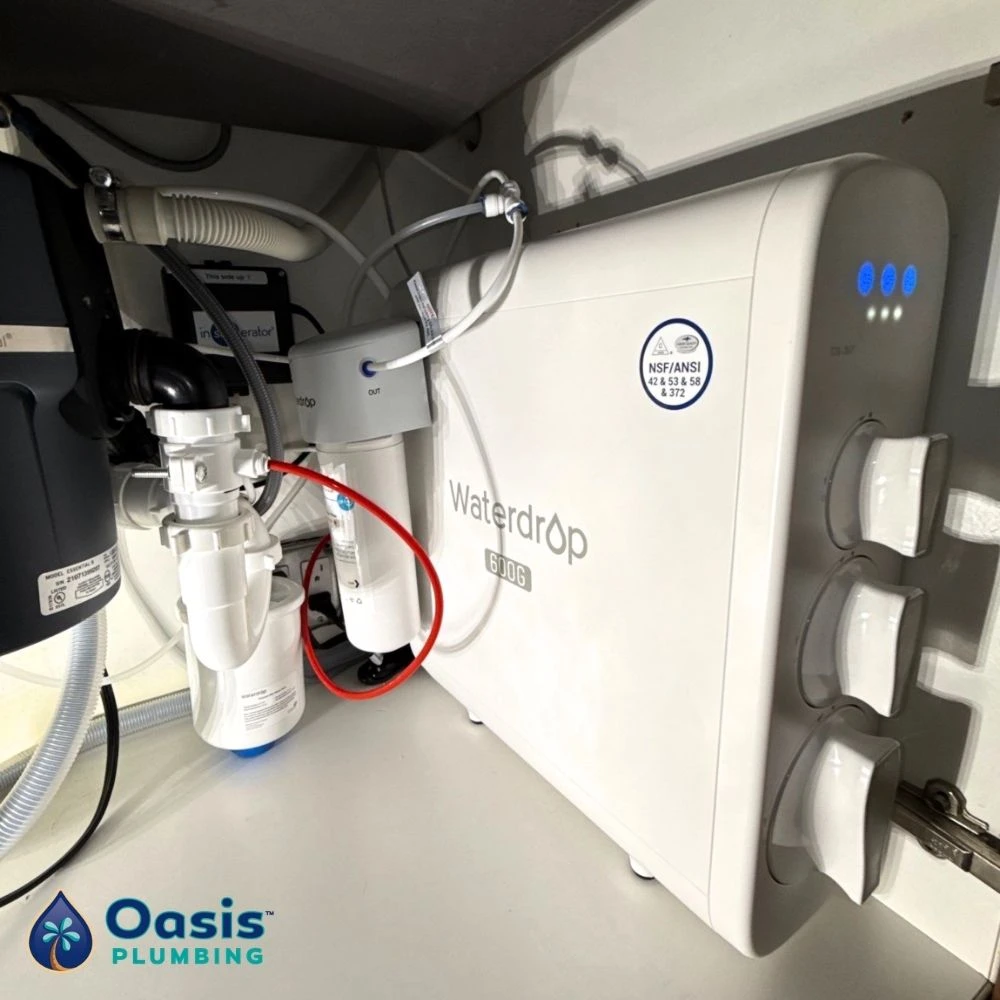
Once the water passes through the membrane, it usually enters a small storage tank beneath the sink. When the faucet is opened, the water flows through a final polishing filter that improves flavor before reaching the glass.
The result is drinking water that is significantly cleaner in taste and composition than untreated tap water.
Signs Your Miami Shores Village Home May Benefit from Reverse Osmosis
While not every home requires reverse osmosis, certain conditions make it a particularly valuable upgrade. Most common reasons homeowners install reverse osmosis systems are:
Taste
If tap water has a noticeable chlorine flavor or metallic aftertaste, reverse osmosis filtration can dramatically improve the drinking experience.
Families rely heavily on bottled water
In many homes, purchasing bottled water becomes a routine habit because residents simply do not enjoy the taste of their tap water. Installing a reverse osmosis system often eliminates that need by providing purified water directly from the kitchen sink.
Older plumbing systems
Homes built decades ago may have piping materials that contribute trace metals to drinking water. Reverse osmosis provides an extra layer of filtration at the point of use, helping remove those substances before the water is consumed.
For homeowners who prioritize the highest level of filtration available for residential drinking water, reverse osmosis is frequently the preferred solution.
Stop Buying Bottled Water
Install reverse osmosis in your kitchen—call Oasis Plumbing at (305) 703-8220.
Situations Where Reverse Osmosis Might Not Be Necessary
Despite its effectiveness, reverse osmosis is not always required for every home.
In some cases, homeowners are primarily concerned with chlorine taste or odor in their tap water. When this is the only issue, a carbon drinking water filter can often solve the problem without the additional complexity of an RO system.
Homes with newer plumbing and relatively good water taste may also find that basic filtration provides satisfactory results. While reverse osmosis will still remove more contaminants, the noticeable difference in taste may be smaller.
Space considerations can also influence the decision. Reverse osmosis systems typically include multiple filters and a storage tank that must fit beneath the sink. In compact cabinetry, installation may require careful planning to ensure everything fits properly.
Because of these factors, the best solution often depends on the individual home and the homeowner’s expectations for drinking water quality.
Reverse Osmosis vs Standard Drinking Water Filters
Many homeowners exploring filtration systems eventually compare reverse osmosis with standard drinking water filters.
A typical under-sink drinking water filter uses carbon filtration to remove chlorine, odors, and certain chemicals that affect taste. These systems are effective at improving flavor and are often easier to install.
Reverse osmosis systems, however, provide a deeper level of purification. The membrane filtration process removes a much broader range of dissolved contaminants that carbon filters cannot capture. This includes substances such as nitrates, fluoride, heavy metals, and various dissolved minerals.
Because of this difference, reverse osmosis is widely considered one of the most comprehensive residential water purification methods available.
For homeowners asking whether Miami Shores Village homes need reverse osmosis, the answer often comes down to whether they want basic taste improvement or the highest level of drinking water purification possible.
Upgrade Your Kitchen Water
Professional reverse osmosis installation—call (305) 703-8220.
Why Reverse Osmosis Is Popular in Miami Shores Village
Over the past several years, more homeowners in Miami Shores Village have started upgrading their homes with drinking water filtration systems. Reasons for this trend are:
Increased awareness of water quality
Many homeowners today are more informed about substances such as PFAS, microplastics, and disinfection byproducts. Even when water meets regulatory standards, people often prefer additional filtration for peace of mind.
Convenience
Reverse osmosis systems provide clean drinking water instantly from a dedicated faucet, eliminating the need for pitchers or bottled water stored in the refrigerator.
Taste
Many homeowners notice that coffee, tea, and even ice taste noticeably better when made with reverse osmosis water. Cooking with purified water can also improve the flavor of certain foods.
For these reasons, reverse osmosis systems have become a common upgrade in kitchens throughout Miami Shores Village.
Professional Reverse Osmosis Installation Matters
Installing a reverse osmosis system involves several plumbing connections that must be done correctly to ensure the system operates properly.
The water supply line must be connected safely, the drainage line must be installed correctly to carry away the filtered waste water, and the faucet must be mounted securely at the sink. In addition, the system should be tested to confirm that it operates efficiently without leaks.
Professional reverse osmosis installation ensures that the filtration system performs as intended and integrates properly with the home’s plumbing. A plumber in Miami Shores can also help determine the best location for the system and recommend the most suitable filtration equipment for the household.
Professional Installation You Can Trust
Reverse osmosis systems installed by Oasis Plumbing—call (305) 703-8220.
Key Takeaways
Miami Shores Village tap water comes from the Biscayne Aquifer and is treated by Miami-Dade County.
Municipal water is considered safe but can contain chlorine, minerals, and trace contaminants.
Reverse osmosis systems remove a wide range of dissolved substances including heavy metals and nitrates.
Many homeowners install reverse osmosis systems to improve taste and reduce reliance on bottled water.
Standard carbon filters improve flavor but typically remove fewer contaminants than reverse osmosis systems.
Professional reverse osmosis installation helps ensure the system operates safely and efficiently.
For many homeowners, the question of whether Miami Shores Village homes need reverse osmosis comes down to expectations. The municipal water supply is treated and safe, but it still contains minerals, disinfectants, and trace contaminants that can affect taste and overall water quality. Reverse osmosis systems offer an additional level of purification that removes many of these substances and produces noticeably cleaner drinking water.
Some households may find that a basic drinking water filter solves their concerns about taste. Others prefer the higher level of filtration that reverse osmosis provides, especially if they want to eliminate bottled water or maximize water purity for cooking and beverages. Ultimately, the decision depends on how important water quality is to the homeowner and how much improvement they want from their filtration system.
If you’re considering installing a reverse osmosis system in your kitchen, it helps to start with a professional evaluation of your home’s water and plumbing setup. The team at Oasis Plumbing in Miami Shores installs drinking water filtration systems for homeowners throughout Miami Shores Village and can help determine whether reverse osmosis is the right solution for your household. A properly installed system can provide clean, great-tasting drinking water directly from your sink every day, eliminating the need for bottled water and giving you greater confidence in the water your family drinks. To learn more about reverse osmosis installation or to schedule a consultation, call Oasis Plumbing at (305) 703-8220 and we’ll help you find the best filtration solution for your home.
Frequently Asked Questions
Do Miami Shores Village homes need reverse osmosis?
Not necessarily. The municipal water supply is safe to drink, but many homeowners install reverse osmosis systems to improve taste and reduce additional contaminants.
What contaminants does reverse osmosis remove?
Reverse osmosis systems can remove substances such as lead, nitrates, fluoride, PFAS, dissolved minerals, and many other contaminants depending on the system.
Is reverse osmosis better than a drinking water filter?
Reverse osmosis generally removes more contaminants than standard carbon drinking water filters, although both systems improve taste and water quality.
How long do reverse osmosis filters last?
Most filters require replacement every 6 to 12 months, while the RO membrane typically lasts between two and three years depending on usage.
Does reverse osmosis waste water?
Reverse osmosis systems do produce wastewater during filtration, but modern systems are designed to be much more efficient than older models.
