
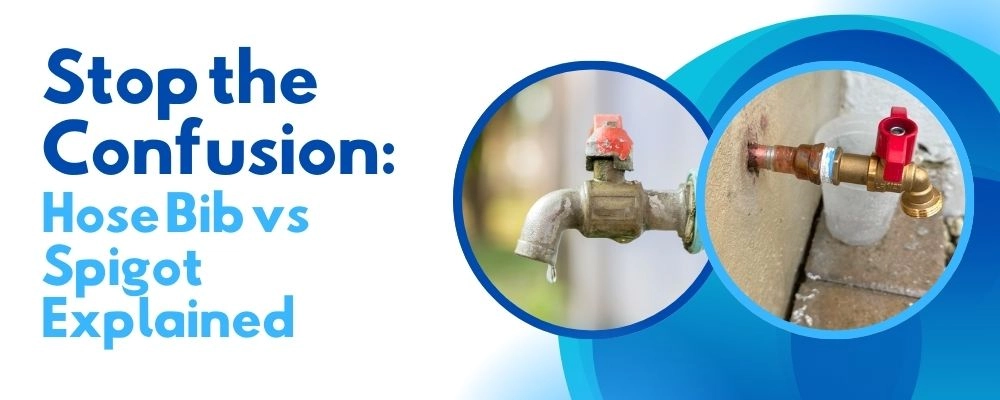
You’ve probably watered your lawn, washed your car, or hooked up a garden hose — but was it connected to a hose bib or a spigot? Most homeowners use these terms interchangeably, but when you’re standing in the hardware aisle or talking to a plumber, the difference suddenly matters.
In this guide, we’ll clear up the confusion once and for all. We’ll break down the real meaning of “hose bib vs spigot”, show you where each term applies, and explain why knowing the distinction can save you time, money, and even prevent plumbing headaches.
Table of Contents
Hose Bib vs Spigot – Quick Answer
Here’s the straight-to-the-point definition:
Hose bib
A specific outdoor faucet designed for attaching a garden hose. It’s usually threaded and mounted outside a house.
Spigot
A more general word for any faucet, tap, or valve that controls the release of water.
Bottom line: Every hose bib is a spigot, but not every spigot is a hose bib.
Breaking Down the Terms Between Hose Bib vs Spigot
What Is a Hose Bib?
A hose bib is the standard outdoor faucet you’ll find on most residential homes. Key features include:
Threaded outlet to connect directly to garden hoses.
Cold water supply designed primarily for outdoor use.
Durable construction—often brass or stainless steel for outdoor conditions.
Common names: sillcock, garden tap, outdoor faucet.
When your garden hose is hooked up outside, chances are it’s screwed onto a hose bib.
What Is a Spigot?
A spigot is a broader word. It can mean:
An outdoor faucet (including a hose bib).
A tap on a rain barrel, water keg, or cistern.
Even indoor valves in some regions.
Think of “spigot” as a catch-all term for a water outlet. A hose bib fits under the spigot category, but not all spigots are hose bibs.
Key Differences Between a Hose Bib and a Spigot
At first glance, they may look the same. But here’s where they differ:
Terminology
Hose bib = specific. Spigot = general.
Usage
Hose bib = garden hoses and outdoor chores. Spigot = can mean hose bib, keg tap, or any valve.
Design
Hose bibs almost always have hose threads. A spigot may or may not.
Regional Language
In some U.S. regions people say “spigot,” in others “hose bib.” For example, in the Northeast, “spigot” is more common; in the South, “hose bib” is the go-to term.
Why the Difference Between Hose Bib vs Spigot Matters for Homeowners
It might seem like just a word choice, but here’s why hose bib vs spigot matters:
Repairs and replacements
If you walk into a hardware store and ask for a “spigot,” you might get blank stares or be handed the wrong part. Saying “hose bib” ensures you get the right fixture.
Frost-proof options
In cold climates, only hose bibs are designed with frost-free technology to prevent frozen pipes. A generic “spigot” may not.
Plumbing codes
Inspectors and plumbers use the term “hose bib” when listing fixtures for compliance. Using the right term avoids confusion in paperwork.
DIY projects
When building or upgrading, knowing the difference makes sure you buy the fittings and connections that actually work.
Common Problems and Fixes with Hose Bibs vs Spigots
No matter what you call them, these fixtures deal with a lot of wear and tear. Here are the most common issues and how to handle them:
Leak at the handle or stem
Usually the packing nut is loose. Try tightening it; if that fails, replace the washer.
Dripping after shut-off
The seat washer may be worn. Replacing it typically solves the issue.
Cracks in the body
Common if water froze inside. The only fix is replacing the whole hose bib.
Low water pressure
Could be debris in the supply line or blockage at the valve. Cleaning or replacing solves it.
Frozen in winter
Prevent with insulation or by upgrading to a frost-free hose bib.
Expert Tips for Choosing and Maintaining Outdoor Faucets
Want your hose bib or spigot to last longer? Here are some pro tips:
Choose brass, not plastic
Brass hose bibs handle heat, UV, and pressure better.
Install a vacuum breaker
Prevents dirty water from siphoning back into your home’s clean water supply.
Go frost-proof if you live in colder regions
These are designed to stop water from freezing in the line.
Shut off and drain before winter
In freezing climates, this is the cheapest insurance against burst pipes.
Use plumber’s tape
Wrap threads with Teflon tape during installation to prevent leaks.
For more insights on safeguarding your outdoor faucets, don’t miss our related guide: “Outdoor Plumbing Essentials: Protect Faucets and Hose Bibs“.
Local Note – Hose Bibs and Spigots in Miami Shores
In Miami Shores, outdoor faucets face unique challenges. High humidity, salty air from the coast, and year-round warm weather accelerate corrosion. Homeowners here often:
Upgrade to solid brass hose bibs to avoid leaks.
Use frost-free models even in a warm climate, since they also resist corrosion.
Follow local plumbing codes, which require vacuum breakers (backflow preventers) on hose bibs. Inspectors in Miami Shores check this detail closely.
Not from Miami Shores? Check out our service areas to see if we serve your neighborhood.
Key Takeaways
Here’s the short version of hose bib vs spigot:
Hose bib = a specific outdoor faucet made for hoses.
Spigot = general term for faucets and taps.
For repairs, replacements, or code language → use “hose bib.”
Regular maintenance prevents leaks, water waste, and freeze damage.
Not from Miami Shores? Check out our service areas to see if we serve your neighborhood.
While the terms get mixed up in everyday conversation, knowing the difference between a hose bib vs spigot can save you from buying the wrong part, failing an inspection, or dealing with water damage.
If your hose bib or spigot is leaking, outdated, or giving you trouble, don’t wait until it costs you more in wasted water or repairs. Call Oasis Plumbing Miami today — we’ll repair or replace it before it becomes a bigger problem.
Frequently Asked Questions
Are hose bibs and spigots the same thing?
Not exactly. A hose bib is a type of spigot, but “spigot” can mean other water outlets too.
What’s the proper name to use at the hardware store?
Say “hose bib” if you need a replacement faucet for your outdoor hose.
Do all hose bibs need backflow preventers?
In most areas, yes. Plumbing codes often require a vacuum breaker for safety.
Can you install a hose bib yourself?
Yes, with basic plumbing tools. But check local codes, since some areas require licensed installation.
What does “sillcock” mean?
It’s just another name for a hose bib, often used in the trades.
