

A water softener is one of those systems you forget about… until it stops working. Suddenly your dishes look cloudy, your shower doors get filmy again, your skin feels dry, and your soap doesn’t lather like it used to.
If you’re asking “Is my water softener working?”, this guide will walk you through simple home tests, what the results mean, and when it’s time to call a professional.
This is written for Miami homeowners — where hard water minerals (calcium and magnesium) cause constant buildup, clogged fixtures, and even early appliance failure. A working softener is not optional here.
Table of Contents
Quick Answer: How Do You Know if a Water Softener Is Working?
Your water softener is likely not working if you notice:
Soap doesn’t lather easily
Water spots return
Skin feels dry or irritated
Laundry looks dull or stiff
Scale buildup reappears on faucets
Water feels “heavy” instead of silky
To confirm, you can run a few easy at-home tests (explained below).
What a Water Softener Should Be Doing
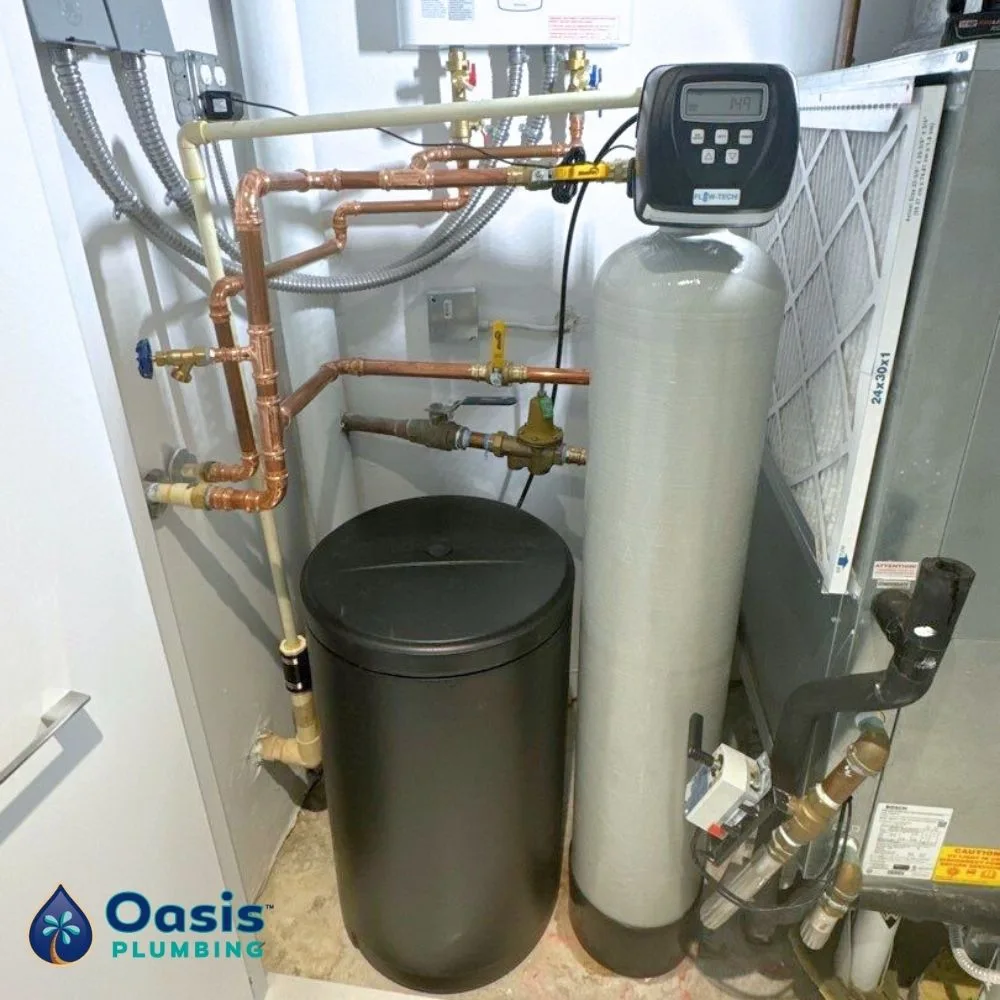
A properly working water softener:
Removes hardness minerals
Prevents scale buildup
Makes water feel smoother
Protects your plumbing and appliances
Keeps dishes cleaner
Improves soap performance
If these benefits disappear, the system might be failing.
Simple Home Tests to Check if Your Water Softener Is Working
Below are the easiest ways to confirm if the system is still softening water.
1. The Soap Lather Test (Fastest Home Test)
This test takes 30 seconds:
- Grab a clean water bottle.
- Fill it halfway with tap water.
- Add a few drops of dish soap.
- Shake hard.
Results:
Lots of foam + clear water = working water softener.
Little foam + cloudy water = hard water = softener may not be working.
Need Professional Water Hardness Testing?
Oasis Plumbing offers water quality testing. If your softener isn’t working, we can pinpoint exactly why. Call (305) 703-8220.
2. Use Hardness Test Strips
You can buy simple strips at Home Depot, Amazon, or Walmart.
Instructions:
Run cold tap water into a cup.
Dip the strip for 1–2 seconds.
Compare the color to the chart.
Results:
0–3 grains per gallon (gpg) = properly softened
4–7 gpg = partially soft
7+ gpg = hard water → softener may be failing
Miami typically has 10–14 gpg, so softened water should test near 0–3.
3. Check the Salt Level in the Brine Tank
Low salt = zero softening.
Look for:
Salt below half full
Salt bridging (a hard crust forming)
Mushy salt mush at the bottom
Fix:
Break up bridging
Add new salt
Clean out the mush
Not Sure What You’re Seeing in the Brine Tank?
Salt bridges and mush are extremely common in Miami humidity. Call Oasis Plumbing at (305) 703-8220 and we’ll tell you exactly what’s wrong.
4. Run Your System Through a Manual Regeneration
Most water softeners have a “Regenerate” or “Recharge” button.
After a regen cycle:
Water should feel softer
Soap should lather better
Test strips should show lower hardness
If nothing changes → the softener is not functioning.
5. Check for Scale Buildup in Your Home
Look at:
Faucets
Showerheads
Glass shower doors
Kettles or coffee makers
Toilet bowls
White crust = hard water returning.
If you see scale within days or weeks, the softener is not softening properly.
6. Taste & Feel Test
Soft water has a very noticeable feel:
Slick, smooth, silky
Soap rinses slower
Water feels “lighter”
Hard water feels:
Chalky
Harsh
Drying
Heavy
This is not scientific, but most Miami homeowners can tell instantly.
7. Check Your Softener Settings
Your softener needs to be programmed based on:
Hardness level
Household size
Water usage
If hardness in your city increased or your household grew, the system may be regenerating too infrequently — causing hard water to slip through.
Confused by the Settings?
Most homeowners have no idea how to set hardness levels or regeneration cycles — and that’s normal. We can calibrate your softener for maximum efficiency. Book an inspection: (305) 703-8220.
Why Water Softeners Stop Working (Common Miami Issues)
Low Salt or Salt Bridges
Miami humidity causes salt to cake and stop dissolving → regeneration fails.
Resin Bed Is Exhausted
Hardness minerals overwhelm the resin, especially in older systems.
Clogged Injector or Valves
Mineral sludge reduces suction and salt delivery.
Broken Control Valve
If the valve can’t cycle through regen stages, the water stays hard.
Incorrect Hardness Settings
If Miami’s water hardness increases (it often fluctuates), your softener needs adjustments.
Brine Line Air Leaks
Air in the line stops the brine draw.
Do You Need to Replace, Repair, or Just Reset the Softener?
Here’s a quick guide:
Just Reset or Clean
Salt bridging
Mush buildup
Incorrect settings
Repair
Brine line clog
Injector clog
Control valve malfunction
Replace
System is 10–15+ years old
Resin is permanently fouled
Repairs exceed value of new softener
Miami’s mineral levels are harsh — many systems fail earlier than in other cities.
What Oasis Plumbing Checks During a Softener Inspection
A technician will:
Measure actual water hardness at multiple taps
Test before-and-after softener readings
Open the brine tank
Check for bridging or salt mush
Inspect valves, injectors, brine lines
Verify regeneration frequency
Calibrate hardness settings
Inspect resin condition
Confirm proper water flow through the system
You’ll get a clear explanation and next-step options — no pressure.
Want a Full System Health Check?
Most softener failures are preventable with annual maintenance. We offer inspection, cleaning, resin evaluation, and settings calibration. Call Oasis Plumbing: (305) 703-8220.
How Long Should a Water Softener Last?
Standard resin systems: 10–15 years
High-end systems: 15–20 years
Electronic control heads: 8–12 years
If you inherited a system from a previous homeowner, it may be near its lifespan.
When You Should Call a Plumber Immediately
Call for service if:
Water hardness stays high after regeneration
Salt levels drop but no softening occurs
Brine tank floods
You hear loud clicking from the control head
Water pressure suddenly drops
You see yellow or brown resin beads in faucets
These are signs of mechanical failure or resin damage.
Key Takeaways
Hard water symptoms returning = the softener might not be regenerating properly.
You can test for soft water with soap tests, hardness test strips, and salt level checks.
Most issues come from low salt, a clogged brine tank, or incorrect settings.
If water hardness in Miami spikes, your softener may need resin cleaning or service.
Oasis Plumbing can inspect, test, and restore your water softener professionally.
Knowing whether your water softener is working doesn’t have to be complicated. With simple tests — lather checks, hardness strips, salt inspection, and a quick regen cycle — you can confirm whether the system is actually doing its job.
If your softener is struggling, giving hard water again, or showing signs of failure, Oasis Plumbing is here to help. In Miami, where mineral-heavy water is part of daily life, having a properly functioning softener protects your plumbing, appliances, skin, and home.
A quick inspection today can prevent expensive problems tomorrow.
If your water softener isn’t working or your water is starting to feel hard again, let’s get it fixed before scale and buildup damage your home.
Call Oasis Plumbing at (305) 703-8220. Expert testing, settings calibration, resin inspection, and full softener repair. Fast, local Miami service you can trust
Soft water = smoother showers, cleaner dishes, and longer-lasting plumbing.
Frequently Asked Questions
How often should my water softener regenerate?
Most Miami homes should regenerate every 2–3 days, depending on water usage and hardness.
How can I tell if the resin is worn out?
If hardness stays high even after regeneration, the resin may be exhausted or fouled.
Why does my softener use so much salt?
Incorrect hardness settings or excessive regeneration cycles can cause high salt usage.
Do I need a plumber to clean the brine tank?
You can clean it yourself, but a plumber can check the injectors, valves, resin, and flow rates at the same time.
Can a softener make my water taste salty?
No — softeners do not add salt to your drinking water. If your water tastes salty, there’s another issue.
