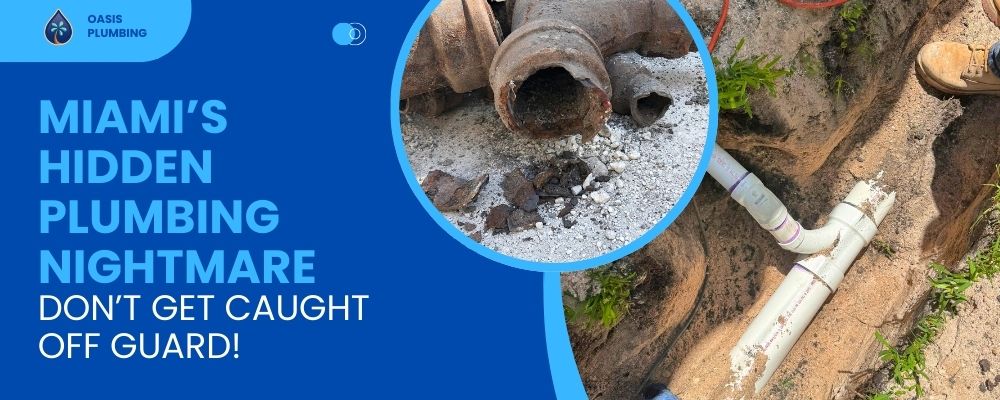
What if your yard is hiding a costly plumbing disaster?
For many Miami homeowners, sewer line damage isn’t something you think about until the toilets back up or there’s a foul smell creeping in from the lawn. But by then, the problem might already be serious—and expensive.
Sewer line damage can stay hidden for years, quietly undermining your property’s plumbing system and even its foundation. A simple plumbing inspection or sewer inspection could catch it early, but most people don’t act until it’s too late.
This guide is for Miami homeowners who want to stay ahead of sewer line repair costs, protect their property value, and avoid nasty surprises.
Table of Contents
Why Miami Homes Are at Higher Risk
Living in Miami comes with its perks—sunshine, beaches, and lush tropical yards. But it also comes with some plumbing headaches.
Aging Infrastructure
Living in Miami comes with its perks—sunshine, beaches, and lush tropical yards. But it also comes with some plumbing headaches. To learn more about what might be happening beneath older properties, check out our blog, “Aging Sewer Lines: Hidden Dangers Lurking Under Older Homes“.

High Groundwater and Shifting Soil
Miami’s high water table and soft, sandy soil can cause sewer pipes to shift or sink, especially after heavy rains. That shifting can crack pipes or misalign connections, leading to leaks and backups.
Tree Root Intrusion
Tropical landscaping is beautiful but dangerous for sewer lines. Palm trees, ficus, and other large plants send out strong roots that can break into sewer pipes in search of moisture, causing major blockages and damage.
Climate Hazards
From hurricanes to seasonal flooding, Miami’s extreme weather can wreak havoc on underground plumbing systems. Excess water puts pressure on pipes and can lead to sewage backups, especially if your system already has weak spots.
Silent Signs of Sewer Line Trouble
Sewer line damage often starts quietly. But your home will give you clues if you know what to look for.
Slow Drains and Frequent Backups
If you’re always plunging toilets or standing in water while you shower, it could be more than a clogged pipe—it could be a damaged sewer line.
Foul Odors
Smell sewage in the yard or near your home’s foundation? That’s a big red flag.
Green Patches in the Yard
A single area of super-lush grass can mean a leak in the sewer line is fertilizing that spot.
Mold or Mildew Growth
A cracked pipe leaking behind walls or under floors can create constant moisture—perfect for mold.
Gurgling Sounds
Drains that bubble or toilets that gurgle when you flush might signal trapped air from a broken sewer line.
Pests
Rats, cockroaches, and flies love broken sewer lines. If you’re seeing more pests, your plumbing system may be compromised.
Hidden Dangers of Ignoring Sewer Line Damage
Putting off a plumbing inspection can cost you more than just peace of mind.
Health Hazards
Raw sewage carries harmful bacteria, viruses, and parasites. A cracked sewer line can expose you and your family to dangerous pathogens through leaks or backups.
Structural Damage
Leaks under your foundation can erode soil and shift your home’s slab, leading to cracked walls, uneven floors, or worse.
Escalating Repair Costs
What starts as a minor crack can quickly spread, turning a small fix into a full sewer line replacement. The longer you wait, the more expensive it gets.
Plumbing System Failure
One failure can bring down your entire plumbing system, leaving your home without working toilets or drains—potentially for days.
Property Value Impact
Unresolved sewer problems can scare off potential buyers and significantly reduce your home’s value. It can also delay sales or complicate closings.
Common Causes of Sewer Line Damage in Miami
Understanding what causes damage can help you prevent it.
Tree Roots
One of the most common issues. Roots squeeze into small cracks, eventually busting pipes wide open.
Old Cast Iron Pipes
Old cast iron pipes corrode from the inside out. If your home was built before the 1980s, it’s time for a sewer inspection.
Pipe Shifting
Shifting soil or nearby construction can stress or dislocate pipes.
Grease and Debris
Pouring grease down the drain or flushing wipes can clog your line over time.
Stormwater Infiltration
During Miami’s rainy season, overloaded systems can cause backflow and increase wear on your sewer pipes.
How to Spot Issues Early
Early detection is key to avoiding major sewer line repair costs.
Get Regular Sewer Inspections
A sewer camera inspection lets professionals see exactly what’s happening inside your pipes. It’s quick, non-invasive, and can catch damage early.
Schedule Routine Plumbing Maintenance
Have a licensed plumber inspect your system annually or bi-annually. Even basic plumbing inspections can uncover issues before they get worse.
Pay Attention to Minor Issues
Don’t ignore small plumbing annoyances. That slow-draining sink or occasional gurgle could be the start of a bigger problem.
Talk to Your Neighbors
If neighbors are having sewer line repair work done, it might be a neighborhood-wide issue. Sewer problems often affect multiple homes in the same area.
Prevention Tips and What You Can Do
Here’s how you can take control before things go downhill.
Be Smart About Landscaping
Plant large trees and shrubs away from sewer lines. Use root barriers if needed.
Install a Backwater Valve
This can prevent sewage from flowing back into your home during heavy rains.
Use Professional Drain Cleaning
Skip the chemical drain cleaners—they can damage pipes. Schedule regular cleanings instead.
Explore Trenchless Repair
If repairs are needed, trenchless sewer line repair options are less invasive and can be more cost-effective.
What to Do If You Suspect Damage
Think you might have sewer line damage? Don’t wait.
Call a Licensed Plumber
Get a professional on site fast. A licensed plumber can perform a sewer inspection using a camera and confirm the issue.
Get Multiple Estimates
Compare quotes and ask about all your repair options, including trenchless sewer repair. The right method depends on your property and budget.
Ask About Financing or Local Programs
Miami has home improvement assistance programs that may help cover the cost of plumbing work. Some companies also offer financing options.
Sewer Line Repair in Miami: What to Expect
Let’s talk dollars, methods, and timelines.
Inspection and Repair Costs
Sewer Camera Inspection
$250–$500
Minor Repairs
$1,000–$3,000
Full Replacement
$5,000–$20,000+
Trenchless repairs often cost less than traditional excavation methods, especially when factoring in landscaping restoration.
Trenchless vs. Traditional Repairs
Trenchless
No digging up the yard, faster, and often cheaper long-term.
Traditional
Necessary for severe damage or collapsed lines, but more disruptive.
How Long It Takes
Minor repairs can be done in a day. Full replacements may take several days, especially if permits or inspections are needed.
Insurance Considerations
Most home insurance doesn’t cover sewer line damage unless you’ve added specific coverage. Check your policy and consider adding a sewer line rider.
Sewer line damage in Miami is more common—and more dangerous—than many homeowners realize. The signs can be subtle, but the consequences are big: health risks, structural damage, and sky-high repair bills.
By staying on top of plumbing inspections and acting quickly when something feels off, you can avoid the worst-case scenarios.
Don’t ignore the warning signs. Your home, your health, and your wallet are worth protecting.
Think you might have sewer line damage? Contact Oasis Plumbing Miami today for a fast, non-invasive sewer inspection.