

A new year is usually about fresh starts—new routines, new goals, and fewer surprises. But in Miami, one thing never takes a break: your plumbing system.
Between heat, humidity, aging pipes, mineral-heavy water, and seasonal travel, Miami homes experience plumbing stress differently than most of the country. That’s why Miami home maintenance tips aren’t just “nice to know”—they’re essential if you want to avoid leaks, backups, water damage, and unexpected repair bills.
This guide walks you through real, practical plumbing maintenance steps Miami homeowners should focus on at the start of the year. No fluff. No generic advice. Just proven, local insight from plumbers in Miami who see these problems every single day.
Table of Contents
Why Plumbing Maintenance Matters More in Miami
Miami plumbing systems don’t fail randomly. They fail because of predictable local conditions:
Hard and mineral-rich water causes scale buildup in pipes, fixtures, and water heaters
High humidity accelerates corrosion and mold growth
Older housing stock means aging cast iron, galvanized, and copper systems
Seasonal occupancy leads to dried traps, unnoticed leaks, and pressure issues
Heavy rain and flooding strain sewer lines and underground connections
Skipping maintenance doesn’t save money—it just delays the bill.
When homeowners ask us, “Why did this suddenly happen?” the honest answer is usually: It didn’t. It built up quietly over time.
Miami Home Maintenance Tips for Plumbing Systems in 2026
1. Inspect for Small Leaks Before They Become Big Repairs
Leaks rarely start with visible water damage. Most begin behind walls, under cabinets, or at aging fittings where moisture slowly escapes.
What Miami homeowners should check quarterly:
Under sinks (especially kitchen cabinets with particle board)
Around water heaters and drain pans
Toilet supply lines and shutoff valves
Hose bibs and outdoor irrigation connections
If you notice warped wood, musty smells, or unexplained moisture, don’t wait. Miami’s humidity turns small leaks into mold problems fast.
Hidden Leaks Cost More the Longer You Wait
Small leaks inside walls and cabinets quietly cause mold, rot, and water damage long before you ever see a drip—schedule a professional leak inspection with Oasis Plumbing at (305) 703-8220 before it turns into a major repair.
2. Flush and Maintain Your Water Heater Annually
Sediment buildup is one of the most common—and ignored—plumbing problems in Miami homes.
Minerals settle at the bottom of the tank, reducing efficiency, shortening lifespan, and causing:
Lukewarm water
Popping or rumbling noises
Premature tank failure
Higher electric bills
Miami home maintenance tip:
Flush tank water heaters once per year, even if they “seem fine”.
For tankless systems, descaling is just as critical—especially with Miami’s mineral content.
3. Test Water Pressure to Protect Pipes and Fixtures
High water pressure feels great in the shower—but it’s brutal on plumbing systems.
Excess pressure:
Stresses pipe joints
Causes pinhole leaks
Shortens appliance life
Leads to sudden failures with no warning
Ideal residential water pressure: 50–70 PSI
Many Miami homes run well above that.
If your pressure is high, a pressure-reducing valve (PRV) isn’t optional—it’s protection.
High Water Pressure Is a Silent Pipe Killer
Excess water pressure slowly weakens pipes, valves, and appliances until they fail without warning—have Oasis Plumbing test and protect your system today at (305) 703-8220.
4. Clear and Maintain Drain Lines Proactively
Most drain backups don’t happen overnight. They build slowly from:
Grease and food waste in kitchens
Hair and soap residue in bathrooms
Scale buildup inside older pipes
Root intrusion in sewer lines
Miami home maintenance tip:
If your drains are slow—even slightly—that’s your early warning.
Waiting until water backs up often means:
Emergency service
Higher costs
Property damage
Professional drain cleaning restores flow before failure, not after.
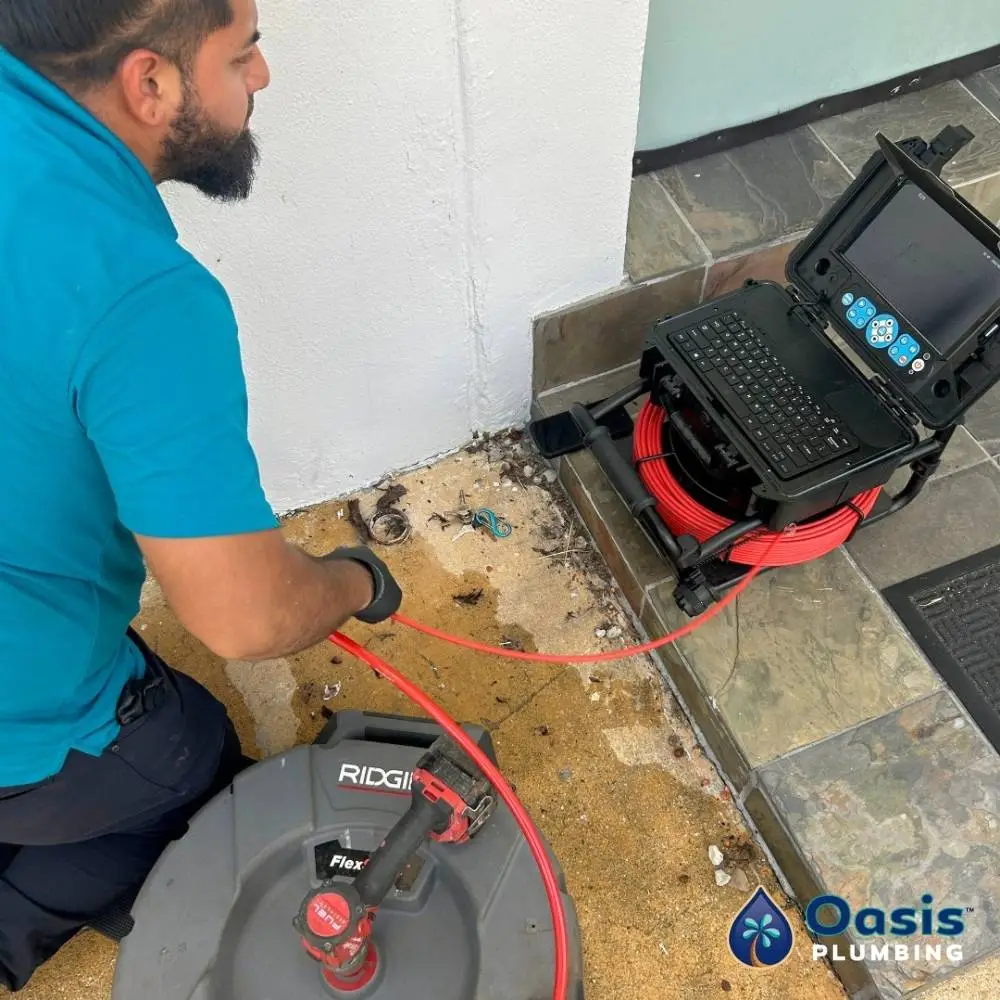
5. Pay Attention to Sewer Line Warning Signs
Sewer problems are some of the most expensive plumbing repairs in Miami—and also some of the most preventable.
Watch for:
Multiple drains backing up at once
Gurgling toilets or sinks
Sewer odors inside or outside the home
Repeated clogs despite cleaning
Older Miami homes with cast iron sewer lines are especially vulnerable to corrosion and collapse.
Sewer Problems Always Get Worse, Never Better
Gurgling drains and recurring clogs usually mean a failing sewer line, and waiting almost always leads to backups and property damage—call Oasis Plumbing at (305) 703-8220 to inspect it before it reaches that point.
6. Inspect Shutoff Valves and Emergency Controls
In an emergency, seconds matter. But many homeowners don’t know:
Where their main water shutoff is
Whether the valve even works
How to isolate fixtures or appliances
Miami home maintenance tip:
Test every shutoff valve once a year. If it doesn’t turn—or leaks when moved—it needs replacement.
A working shutoff can be the difference between:
Minor cleanup
Or tens of thousands in water damage
7. Prepare for Seasonal Travel and Vacancy
Miami has a unique challenge: homes that sit unused for months.
When plumbing isn’t used:
Traps dry out, letting sewer gas in
Minor leaks go unnoticed
Pressure issues worsen
Mold grows quietly
Before leaving for extended periods:
Shut off the main water supply
Drain exposed lines if possible
Consider leak detection systems with automatic shutoff
Vacant Homes Are Prime Targets for Water Damage
When a home sits unused, small leaks can run for weeks and cause massive damage, which is why Oasis Plumbing recommends protection before you leave—call (305) 703-8220 to secure your plumbing system.
8. Don’t Ignore Fixture Wear and Performance Changes
Dripping faucets, weak flushes, and inconsistent temperature aren’t just annoyances—they’re warning signs.
Common Miami fixture issues:
Corrosion from humidity
Mineral buildup clogging aerators
Worn internal seals
Aging shutoff valves
Fixing small fixture issues early prevents:
Wasted water
Hidden leaks
Costly valve or pipe failures later
9. Schedule a Whole-Home Plumbing Inspection
The most effective Miami home maintenance tip?
Have a professional inspect the system as a whole—not just one problem at a time.
A proper inspection checks:
Water pressure
Visible piping
Drain performance
Water heater condition
Shutoff accessibility
Signs of corrosion or leaks
This turns plumbing from a reactive expense into a planned, predictable system.
Preventive Inspections Save Thousands Long-Term
A full plumbing inspection finds pressure issues, leaks, and failing components early—saving you from emergency calls and surprise repairs—schedule yours with Oasis Plumbing at (305) 703-8220.
Key Takeaways
Miami’s climate and water conditions accelerate plumbing wear
Preventative maintenance costs far less than emergency repairs
Small leaks, pressure issues, and slow drains are early warning signs
Annual inspections catch problems before they become expensive
A proactive approach leads to fewer surprises and lower long-term costs
Plumbing problems don’t announce themselves—they accumulate quietly.
Starting the year with smart Miami home maintenance tips gives you control:
Control over costs
Control over timing
Control over your home’s safety
Instead of reacting to leaks, backups, and water damage, you’re preventing them.
That’s what worry-free plumbing really looks like.
When water doesn’t move, neither does your day—so if you want a worry-free year with fewer plumbing surprises, call Oasis Plumbing at (305) 703-8220 and get your home inspected the right way.
Frequently Asked Questions
How often should Miami homeowners schedule plumbing maintenance?
At least once per year, with additional checks for older homes or seasonal properties.
Is plumbing maintenance really necessary if nothing seems wrong?
Yes. Most major plumbing failures show warning signs long before damage becomes visible.
Does Miami’s water cause plumbing problems?
Yes. Mineral-heavy water contributes to scale buildup, reduced efficiency, and shorter appliance lifespan.
What’s the most common plumbing issue you see in Miami homes?
Hidden leaks, failing sewer lines, high water pressure, and neglected water heaters.
Can preventative maintenance really save money?
Absolutely. Preventative service typically costs a fraction of emergency repairs and water damage restoration.
