
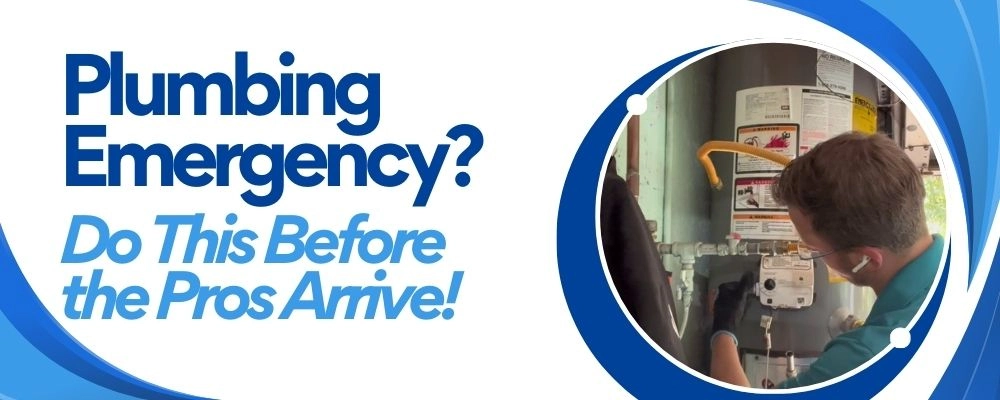
Water pouring across the floor? Don’t panic. Here’s what to do in a plumbing emergency, before the plumber even gets there.
When you’re in the middle of a plumbing emergency, every second counts. A burst pipe or backed-up sewer can cause thousands of dollars in damage within minutes. The faster you act, the more you can minimize the mess, save your belongings, and protect your home.
This guide walks you through exactly what to do when a plumbing disaster strikes. Whether it’s flooding, a broken water heater, or a mystery leak, you’ll know how to stay safe and limit the damage before professional help arrives.
Table of Contents
Why Every Minute Counts in a Plumbing Emergency
In a plumbing emergency, immediate action isn’t optional, it’s essential.
Here’s why time matters:
Property damage
Water can soak walls, flooring, and furniture in seconds.
Safety hazards
Leaks near electricity, gas lines, or sewage backups can pose serious risks.
Water waste
A broken pipe can release hundreds of gallons in minutes.
Knowing what to do in those critical early moments can save you money, stress, and long-term problems like mold.
Recognizing a Plumbing Emergency
What counts as a plumbing emergency? Not every drip is an emergency, but some issues demand immediate attention.
Common plumbing emergencies include
Burst pipes (especially in cold weather)
Sewage backups
Flooding from broken fixtures or water lines
Water heater leaks
No water pressure throughout the home
Overflowing toilets or sinks
Quick Checklist: Is It an Emergency?
Water is actively leaking or flooding.
There’s a strong sewage or gas odor.
Water flow has stopped entirely.
Water is backing up into sinks or tubs.
There’s water near electrical wiring or appliances.
If you answered “yes” to any of these, it’s a plumbing emergency. Act now.
Immediate Actions to Take Before Help Arrives
Here’s exactly what to do as soon as you realize there’s a plumbing emergency:
Shut Off the Water Supply
Stopping the flow of water is priority #1.
Main shutoff valve
Typically found near the water meter, basement, crawlspace, or garage. Turn it clockwise to close.
Fixture shutoffs
Toilets, sinks, and washing machines usually have local valves underneath or behind them.
Pro Tip
Label your valves before an emergency strikes so you’re not scrambling to find them under pressure.
Turn Off the Water Heater
This prevents pressure buildup and limits damage, especially if the tank is leaking.
Electric water heaters
Switch off the breaker.
Gas water heaters
Turn the gas valve to the “off” position.
Never attempt repairs on a leaking water heater. Just power it down and wait for the plumber.
Contain the Leak
Use what you have on hand: buckets, towels, duct tape, even plastic containers.
For minor leaks: Wrap the pipe in a towel or use pipe repair tape or epoxy putty.
For major leaks: Position buckets or trash bins under the source and mop regularly.
Protect Belongings and Flooring
Move items away from the water source fast:
Elevate furniture using aluminum foil or wooden blocks.
Unplug electronics.
Store valuables in dry areas.
This small step can prevent thousands in damage.
Ventilate the Area and Prevent Mold
Get airflow moving:
Open windows.
Set up fans or a dehumidifier.
Blot standing water as quickly as possible.
Drying out even part of the space can stop mold growth before it starts.
Avoid DIY Fixes That Might Make It Worse
Tempting as it is to “just fix it”, some emergency actions can backfire:
Avoid chemical drain cleaners (especially in standing water).
Don’t over-tighten fittings or use the wrong tools.
Never open sealed plumbing components or disassemble major systems.
When in doubt, contain the issue and wait for the pro.
When to Call 911 or Leave the Home
Not all plumbing emergencies are DIY-safe. Some situations require emergency services:
Smell gas? Leave immediately and call 911 or your gas company.
Electrical hazard? Water near wires or breaker panels can spark fires.
Raw sewage backup? The risk of illness and contamination is serious. Evacuate and let professionals handle cleanup.
When safety is in doubt, err on the side of caution.
Prepare for the Plumber’s Arrival
Make things easier — and faster, for your plumber with a few simple steps:
Write down what happened: When did the leak start? What did you notice first?
Mention any previous plumbing work in that area (repairs, DIY fixes, etc.).
Clear the work area as much as possible.
Show them the shutoff valve and water heater so they can get right to work.
This helps the plumber diagnose and solve the issue faster, saving you time and money.
Key Takeaways: Your Emergency Plumbing Response Checklist
Here’s a quick-hit checklist to keep on hand during a plumbing emergency:
Shut off the water (main or fixture-specific)
Cut power if water is near electronics
Contain leaks with buckets, towels, or temporary patches
Protect valuables and flooring
Stay safe. Don’t use risky DIY solutions
Call a licensed plumber and provide clear details
A plumbing emergency can feel overwhelming—but with the right steps, you can take control before the damage spreads. Knowing how to shut off your water, contain leaks, and protect your space gives you a major advantage when every minute counts.
The key is preparation. Label your shutoff valves, keep this checklist handy, and don’t hesitate to call a professional when things go wrong. Your quick action can make the difference between a minor cleanup and a major repair.
Facing a plumbing emergency? Don’t wait — call Oasis Plumbing Miami now.
