
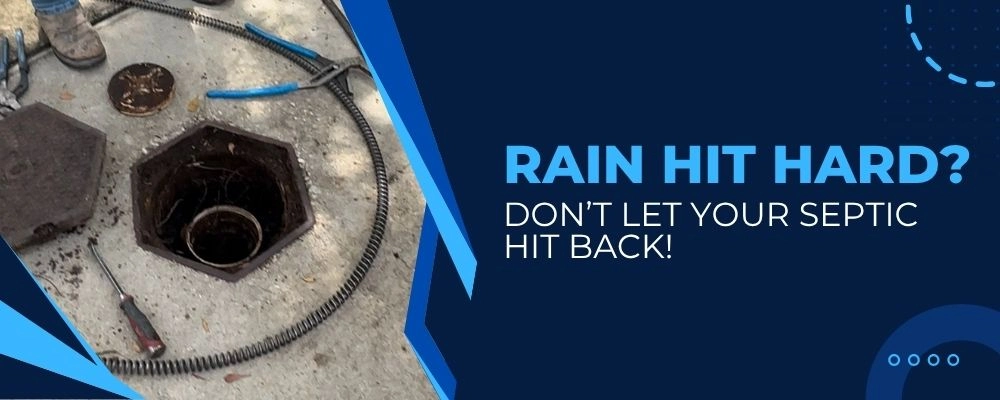
Picture this: A sudden downpour, and next thing you know, your toilets are gurgling and your drains are backing up. Sound familiar? Septic backup after heavy rain is a common yet stressful problem for homeowners with septic systems. This guide explains why it happens, how to spot the early red flags, what to do immediately, and how to prevent it from happening again.
Table of Contents
Why Septic Systems Backup After Heavy Rain
Heavy rainfall can oversaturate the soil, preventing your drain field from absorbing wastewater. This causes the septic system to back up, sometimes into your home.
Here’s how it works:
Waterlogged soil
Your drain field relies on dry soil to absorb and filter wastewater. Heavy rain floods the soil, leaving nowhere for that water to go.
Surface runoff
Rainwater may leak into your septic tank if the lid is cracked or poorly sealed, overwhelming the system.
Rising groundwater
When the water table rises, hydraulic pressure can force wastewater to back up through your pipes.
Warning Signs Your Septic System Is Struggling
Gurgling toilets or drains
This noise can mean air is trapped in the plumbing, often a sign of backup or slow drainage.
Sewage odors inside or outside the house
Unpleasant smells point to leaking gases or surface sewage, both red flags.
Slow-draining sinks and tubs
Water taking too long to drain suggests your septic system isn’t handling wastewater efficiently.
Wet, mushy ground above your drain field
This indicates wastewater is surfacing instead of filtering through the soil.
Sewage backing up into your home
The most serious sign: your system is overloaded and pushing waste backward.
Pro Tip: These signs often start small. Don’t ignore them. After a big rain, even a minor symptom can mean your septic system is on the verge of failure.
What to Do Immediately If You Have a Septic Backup
Here’s your step-by-step emergency plan:
- Stop all water use inside the home: no flushing toilets, no showers, no laundry.
- Avoid chemical drain cleaners. They won’t help and could harm your system or delay repairs.
- Inspect the drain field. Look for standing water, mushy patches, or foul smells in the yard.
- Call a licensed septic technician or emergency plumber. You may need an emergency pump-out or inspection.
Safety Reminder: Exposure to raw sewage can cause serious illness. Use gloves and protective gear, and keep pets and kids away from affected areas.
Long-Term Solutions and Preventive Measures
After the mess is cleaned up, it’s time to prevent the next one.
Fix the root causes:
Seal septic tank lids and risers to keep rainwater out.
Improve grading around your drain field so runoff flows away from it.
Install a sump pump or French drain if your property has poor drainage.
Get your system inspected regularly (every 1–3 years) to catch problems early.
Optional upgrades for high-risk areas:
Backwater valve
Prevents reverse flow during floods.
Mounded drain fields
Raised systems improve drainage in flood-prone zones.
When to Call a Pro (And What They’ll Do)
A septic specialist will inspect:
The tank's liquid level and scum/sludge depth
Inlet and outlet pipes for clogs
The saturation level of your drain field
When DIY isn’t enough:
You have sewage backing up into your home
Standing sewage is visible in the yard
Odors persist even after you clean up
Pro Tip: Go local. Septic issues are often tied to soil type and local water tables. A local expert understands your area’s challenges better than anyone.
Key Takeaways: Don’t Let the Next Storm Catch You Off Guard
Here’s your game plan:
Know the warning signs
Act fast if something seems off.
Respond quickly
Stopping water use and calling a pro can prevent thousands in damage.
Prevent future backups
Seal your system, improve drainage, and schedule routine inspections.
Bonus Tip: Save a wet-weather septic emergency plan to your phone or fridge. Include your plumber’s contact info and key shut-off steps.
With heavy rains becoming more frequent, understanding and preparing for septic backup after heavy rain is critical. Whether you’re dealing with a crisis now or just want peace of mind, proactive care goes a long way. Stay dry, stay safe, and don’t let your plumbing turn into a storm of its own.
For more ways to protect your home’s plumbing during severe weather, check out our blog: “Storm Plumbing Tips: How to Prep Before the Next Big Storm“ — it’s packed with practical advice to help you stay ahead of the next downpour.
Have your septic system inspected before the next rainy season hits. It’s way cheaper than replacing floors or cleaning up sewage. Call Oasis Plumbing Miami today for an inspection or emergency response.
Frequently Asked Questions
How long after rain does a septic system recover?
Recovery time depends on how saturated the soil is. In most cases, it takes several days to a week.
Is septic backup covered by homeowners insurance?
Usually not, unless you have a special rider or endorsement for sewer/septic backup. Check your policy.
Can rainwater get into my septic tank?
Yes. Rainwater can enter through cracked lids, damaged vent pipes, or improperly sealed covers.
Should I pump the tank after every storm?
No. Only pump the tank if it’s full or backing up. Over-pumping can disturb natural bacteria and cause other issues.
