

If your tap water tastes off, smells strange, or leaves white mineral spots on everything, you’re not imagining it — Miami’s water is known for hardness, minerals, and occasional chlorine-heavy days. That’s exactly why more homeowners are turning to under sink water filter installations as a simple, powerful upgrade for cleaner, better-tasting water right at the kitchen faucet.
This guide breaks it all down in plain English — how these filters work, which type is right for your home, what installation involves, and when it’s smart to bring in a licensed plumber.
Let’s get into it.
Table of Contents
What Is an Under Sink Water Filter and Why Do Miami Homes Need It?
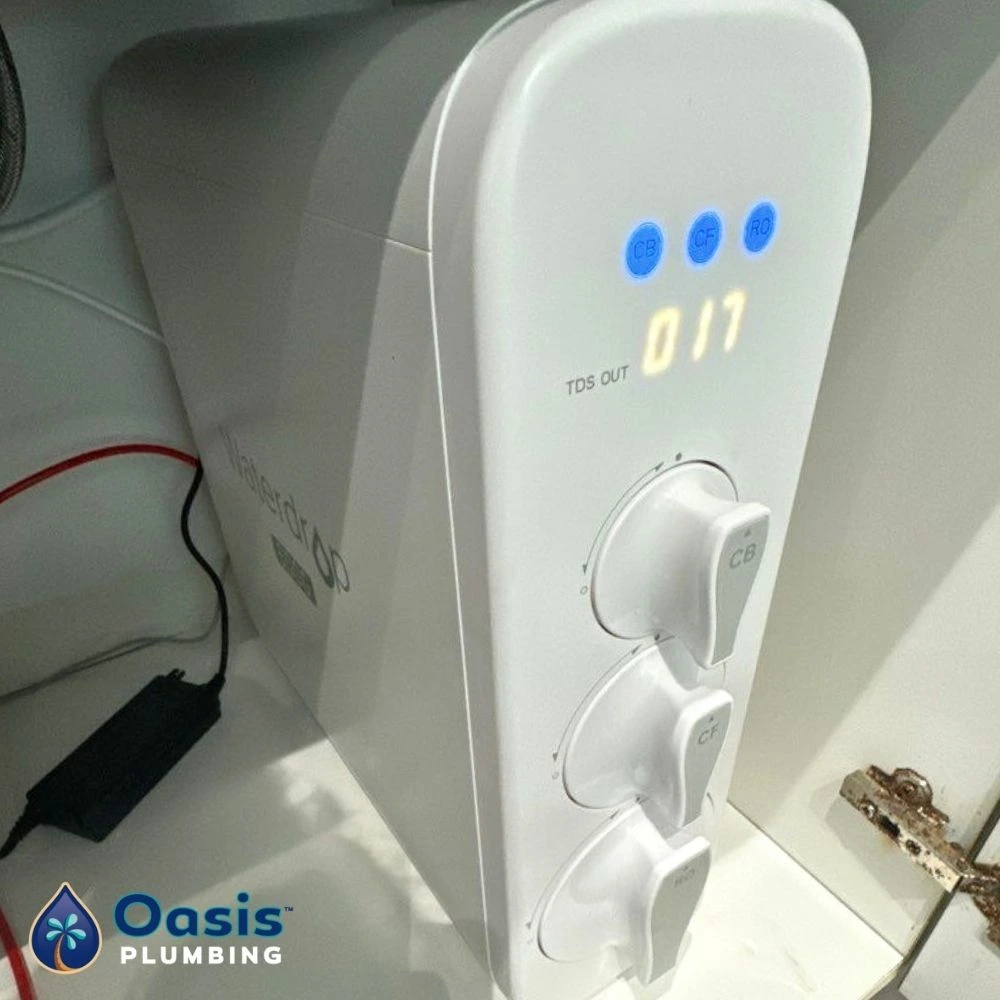
An under sink water filter is a small filtration system installed under your kitchen sink that removes unwanted contaminants from your drinking and cooking water. It connects directly to your cold-water line and delivers clean water through either a dedicated filtered-water faucet or your existing faucet (depending on the model).
Miami homeowners choose under sink filters because they:
Improve taste and smell
Reduce chlorine
Remove sediment and rust
Reduce contaminants like VOCs, pesticides, microplastics
Provide cleaner water for drinking, cooking, washing fruits, coffee/tea, baby bottles, etc.
And unlike whole-house systems, they’re affordable and focused specifically on the water you actually consume.
Need help choosing the right filter?
Overwhelmed by cartridges, micron ratings, or RO vs. carbon? Call Oasis Plumbing at (305) 703-8220 and we’ll match you with the perfect system for your home.
Types of Under Sink Water Filters (And Which One You Actually Need)
Not all filters work the same. Choosing the right one depends on what problem you’re trying to solve.
Below are the three most common types.
1. Carbon Block Filters (Most popular for Miami homes)
These remove:
Chlorine
Bad taste and odors
Sediment
Volatile organic compounds
Some chemicals
Best for:
Homes with decent water quality that mainly need taste improvement and chlorine reduction.
Pros:
Affordable, simple installation, fast flow.
Cons:
Does not remove dissolved solids (TDS).
Not sure if carbon is enough?
Want to know exactly what’s in your water? Ask us about a quick in-home water test before choosing a filter.
2. Multi-Stage Under Sink Systems
These use a combination of:
Sediment filters
Carbon blocks
Specialty cartridges (lead, arsenic, cysts, etc.)
Best for:
Homes with older plumbing, tougher contaminants, or specific water-quality concerns.
Pros:
Cleaner, more complete filtration.
Cons:
Bigger footprint under the sink; slightly more maintenance.
3. RO (Reverse Osmosis) Systems
Reverse osmosis systems remove:
Dissolved solids
Heavy metals
PFAS (in many cases)
Nitrates
Lead
Fluoride
Contaminants carbon filters can’t touch
They include:
Multiple filters
A membrane
A pressurized storage tank
Optional UV sterilization
Best for:
Families who want the purest drinking water possible, especially for infants or health-conscious households.
Cons:
Slower flow, requires a drain line, tank takes space, more complex installation.
Thinking about Reverse Osmosis?
Reverse osmosis systems sound complicated, but they don’t have to be. Call our plumbers in Miami at (305) 703-8220 and we’ll break down exactly what fits under your sink — no pressure, no jargon.
How Under Sink Water Filter Installation Works (Step-by-Step)
Here’s what actually happens during a professional installation.
(No fluff — just clear steps.)
Step 1: Evaluate Your Sink, Piping, and Space
A licensed plumber checks:
• Cabinet space
• Water supply line
• Shutoff valves
• Drain line (for RO systems)
• Faucet mounting hole
If a dedicated filtered faucet is needed, we determine whether your sink has an extra hole or if a new one needs to be drilled.
Step 2: Mount the Filter System
The unit is mounted securely to the cabinet wall so the filters hang vertically and remain easy to access for future replacement.
Step 3: Connect to the Cold Water Line
A T-adapter or angle stop valve is added to split the water line. This allows the filtration system to feed clean water to the faucet.
Step 4: Install the Filtered Water Faucet (if your model requires one)
For systems needing a dedicated faucet, we:
• Use an existing hole, or
• Drill a clean, professional hole into stainless steel, granite, or quartz
Step 5: Connect the Filter Tubing
Color-coded polyethylene tubing is connected to:
• Incoming cold water
• Filter cartridges
• Dedicated faucet
• (For RO) storage tank and drain saddle
All fittings are leak-tested and secured.
Step 6: Flush and Test the System
We flush the filters to remove any carbon fines, check pressure, inspect for leaks, and confirm flow rate.
You’re left with fresh, clean drinking water — immediately.
Want fast scheduling without the back-and-forth?
Need this installed soon? Call (305) 703-8220 and we’ll reserve the next available slot on our schedule.
DIY vs Professional Under Sink Water Filter Installation — What’s Better?
Let’s be honest:
Some homeowners CAN install these systems themselves. But that doesn’t always mean they should.
Here’s the real breakdown:
DIY Installation Works If You:
Are comfortable with plumbing tools
Know how to avoid over-tightening fittings
Don’t mind drilling a faucet hole
Are okay troubleshooting leaks
Average time for DIY: 1–3 hours
(And usually two trips to Home Depot.)
Professional Under Sink Water Filter Installation Makes Sense If You:
Don’t want leaks under the sink
Have older plumbing
Need an RO system
Need a new faucet hole drilled
Want a clean, fast installation
Prefer a warranty
Not sure which route to take?
Thinking DIY? Call us first at (305) 703-8220 — we’ll tell you honestly if your setup is simple enough to handle on your own.
Maintenance: How Often Do Under Sink Water Filters Need to Be Replaced?
| Filter Type | Replacement Frequency |
|---|---|
| Sediment | Every 6 months |
| Carbon block | Every 6–12 months |
| RO pre-filters | Every 6–12 months |
| RO membrane | Every 2–3 years |
| UV bulbs | Every 12 months |
Many homeowners schedule a yearly checkup so filters get replaced on schedule and flow rate stays strong.
Signs Your Under Sink Water Filter Needs Attention
Generally, no, but it should not be ignored because it can point to:
Water flow slows down
Taste changes
Strange odor returns
Filter canister feels unusually heavy
System makes hissing or gurgling noises (Reverse Osmosis)
If you notice any of these, it’s time to service or replace your filters.
When to Call a Plumber Immediately
You should NOT wait if you notice:
Water dripping under the sink
Puddles forming in cabinet corners
Constant cycling of RO tank
Filter housing that won’t tighten
Fittings that look cracked
A newly installed system with dropping pressure
A small leak can quickly turn into cabinet and flooring damage in Miami humidity.
Key Takeaways
Under sink water filters are one of the easiest ways to improve drinking and cooking water in your home.
Miami’s chlorine levels and mineral content make under-sink filtration a smart upgrade.
Choose between carbon, multi-stage, or RO depending on your water-quality goals.
Professional installation avoids leaks, drilling mistakes, and frustration.
Filters need routine replacement to stay effective.
Clean, great-tasting water shouldn’t be a luxury — and with the right under sink water filter, it doesn’t have to be. Whether you want to remove chlorine taste, protect your family from contaminants, or simply make better coffee every morning, installing a dedicated filter under your kitchen sink is one of the most straightforward upgrades you can make.
Oasis Plumbing installs every major brand and filter type, from basic carbon units to premium reverse osmosis systems with UV sterilizers. If you’re ready for cleaner, fresher water, we’re here to help.
Ready for cleaner, better-tasting water every day? Give us a call at (305) 703-8220 and we’ll get you on the schedule for the next available opening. We’ll handle the installation, the setup, and make sure everything flows the way it should.
Frequently Asked Questions
How long does under sink water filter installation take?
Most installations take 45–75 minutes, depending on your sink, piping, and filter type.
Can I use my existing faucet for filtered water?
Some systems allow it, but many require a dedicated filtered-water faucet for best performance.
Do under sink filters remove chlorine?
Yes — carbon block filters and multi-stage systems remove chlorine and improve taste immediately.
Is reverse osmosis really necessary?
Not always. Reverse osmosis is best for removing dissolved solids, heavy metals, and contaminants that carbon filters miss. We can help you decide.
Will an under sink filter reduce water pressure?
A small drop is normal, but if pressure becomes very low, it usually means the filter needs replacing.
