

If you’ve ever wondered why some people call their home’s heating system a boiler while others talk about a water heater, you’re not alone. The two systems sound similar — and in some homes, they even look almost identical. But while both heat water, a water heater vs boiler comparison reveals that they serve two completely different purposes.
So today, let’s break it down once and for all — what makes a boiler different from a water heater, how each one works, and how to tell which system you have at home.
Table of Contents
Understanding the Basics Between Water Heater vs Boiler
Before we dive into the differences between water heater vs boiler, here’s the simplest way to remember it:
A water heater provides hot water for your faucets, showers, dishwashers, and washing machines.
A boiler provides hot water (or steam) for heating your home through radiators, baseboards, or radiant floor systems.
Both heat water, but for completely different end uses.
How a Water Heater Works

A water heater is designed for domestic hot water — that’s the water you use every day for bathing, cooking, and cleaning.
Here’s how it works:
- Cold water enters the tank or unit from your home’s supply line.
- The water passes over a heat source — either a gas burner, electric element, or high-efficiency heat exchanger (in tankless systems).
- The unit heats the water to your desired temperature, usually between 120°F and 140°F.
- The hot water flows out to your fixtures whenever you open a tap.
Types of Water Heaters
Tank (storage) water heaters keep a reservoir of hot water ready to go.
Tankless water heaters heat water on demand — saving energy and space.
Hybrid or heat pump water heaters pull warmth from the air to heat water more efficiently.
No matter the type, the goal is the same: consistent hot water for your household needs.
How a Boiler Works
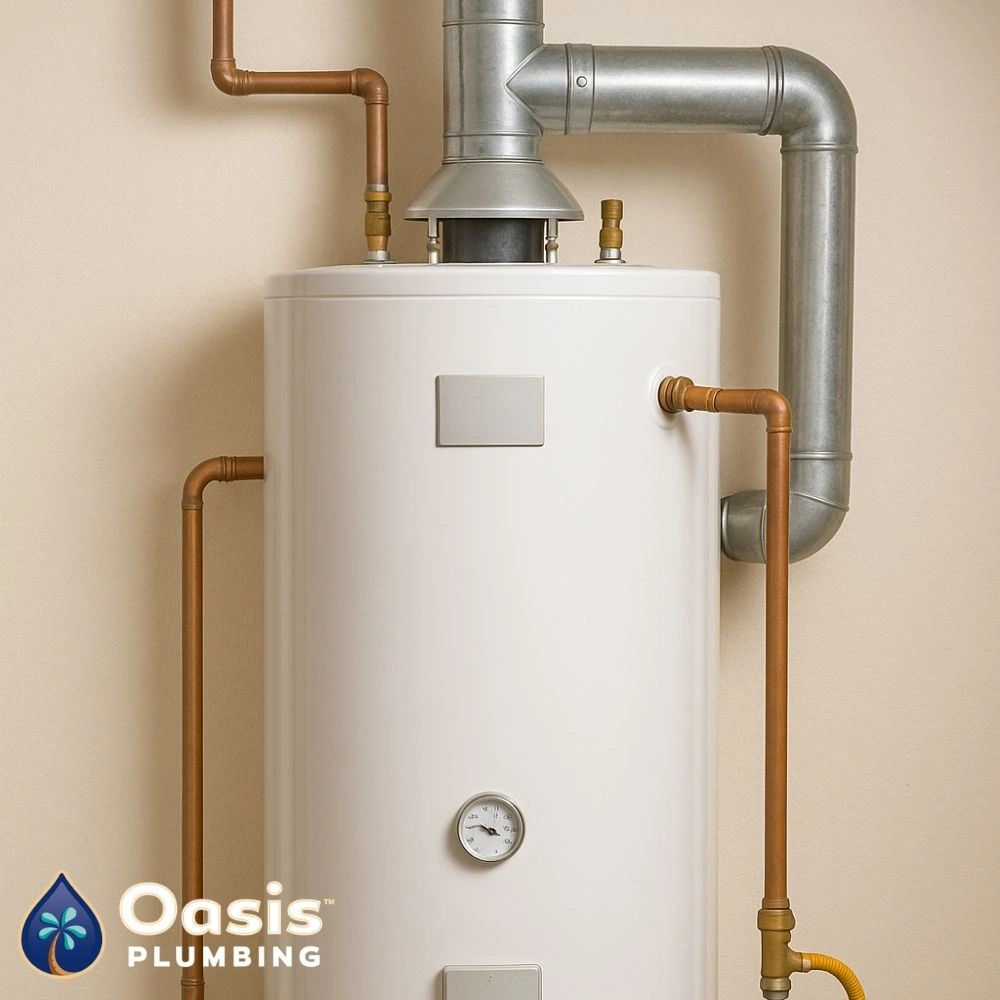
A boiler, on the other hand, is a heating system that heats water for space heating — not for drinking, cooking, or showering.
Here’s the typical process:
- The boiler heats water (or creates steam) inside a closed loop.
- That hot water or steam travels through pipes to radiators, baseboards, or in-floor tubing throughout your home.
- The heat radiates into your rooms, warming the air.
- The cooled water then returns to the boiler to be reheated — and the cycle repeats.
In short, a boiler heats your home, not your shower.
Types of Boilers
Hot water boilers (hydronic systems) circulate hot water for heat.
Steam boilers heat water until it becomes steam, which rises through pipes to radiators.
Combination (combi) boilers do both — providing space heating and domestic hot water in one unit.
Combi boilers are one reason why the line between “boiler” and “water heater” can get blurry.
Why People Get Confused Between Water Heater vs Boiler
It’s easy to see how water heater vs boiler get mixed up — after all, they both heat water and both have pipes, valves, and sometimes even similar tanks. But there are a few other reasons the confusion persists:
1. Regional Terminology
In colder climates like the Northeast U.S., “boiler repair” is a common household term. Many homes there use boilers for both heating and hot water, so homeowners grow up calling any hot-water appliance a boiler.
Here in Miami and South Florida, though, that’s rarely the case. Homes rely on dedicated water heaters, since space heating isn’t a big concern.
2. Similar Appearance
A gas boiler and a gas water heater can look nearly identical: metal tanks, burners, exhaust vents, pressure valves. Without looking at the piping or purpose, most homeowners wouldn’t know which is which.
3. Combination Systems
Modern combi boilers can provide both home heating and domestic hot water from a single unit. In these cases, both terms are technically correct — it’s a boiler that also functions as a tankless water heater.
4. Older Homes and Terminology Drift
In older northern homes, it was common for the boiler to heat domestic water indirectly through a built-in coil. This design worked similarly to a tankless water heater, further blending the line between the two systems.
The Key Difference Between Boiler and Water Heater
At the end of the day, it all comes down to what the heated water is used for.
| Feature | Water Heater | Boiler |
|---|---|---|
| Purpose | Provides hot water for faucets, showers, appliances | Provides heat for your home |
| Type of Water | Potable (safe to drink/use) | Closed-loop (non-potable) |
| Distribution | Through plumbing pipes | Through heating pipes/radiators |
| Energy Source | Gas, electric, solar, or hybrid | Gas, oil, or electric |
| Tank or Tankless? | Both available | Typically tankless (closed system) |
So if your system connects to radiators or baseboards, it’s a boiler.
If it connects to sinks and showers, it’s a water heater.
Can a Boiler Heat My Shower Water?
In some setups — yes.
Certain boiler systems are designed to handle both domestic hot water and home heating. These are known as combination (combi) boilers.
When you turn on a hot water tap, the system automatically diverts heat from the boiler to warm the water for your shower or kitchen sink. Once you’re done, it switches back to heating your home.
However, in Miami and most of South Florida, combi systems are rare because we don’t need whole-home heating for cold weather. Here, a dedicated water heater is simpler, cheaper, and more energy-efficient for our climate.
Is There Such a Thing as a Boiler That Only Heats Water?
Technically, no — not in a residential setting.
If a system’s sole purpose is to make hot water for your faucets and appliances, it’s not a boiler at all. It’s just a water heater (tank-style, tankless, or hybrid).
Industrial facilities sometimes use “boilers” just for producing hot water for cleaning or process use, but that’s different from home applications.
So if your Miami home has an appliance that only supplies hot water and no radiators or heating zones, you have a water heater, even if someone calls it a boiler.
Which System Is Right for Your Home?
For homeowners in South Florida, the answer is almost always a water heater.
We rarely need the kind of radiant or baseboard heat boilers are built for. Instead, we focus on energy-efficient water heating for daily comfort and lower utility bills.
Here’s a quick guide:
Choose a Water Heater if:
You just need hot water for showers, faucets, and appliances.
You live in a warm climate (like Miami).
You want simple, low-maintenance operation.
Choose a Boiler or Combi System if:
You live in a cold climate and need hydronic heating.
You prefer radiant floor heating or radiators.
You want one unit to handle both heating and domestic water (common in northern states).
Water Heater vs Boiler: How to Tell What You Have at Home
If you’re still unsure whether you have a boiler or water heater, here’s a simple way to tell:
-
Look at the pipes coming out of it.
- Pipes going to radiators or floor heating = boiler.
- Pipes leading to faucets and shower lines = water heater.
-
Check the controls.
- Thermostat controls for room heat = boiler.
- Dial or digital setting for water temperature = water heater.
-
Listen and feel.
- If you hear water circulating or feel warm radiators, you have a boiler.
- If you only get hot water at taps and not radiators, it’s a water heater.
Maintenance Tips for Both Water Heater and Boiler
Even though they serve different functions, boilers and water heaters share one important rule: both need regular maintenance to stay safe and efficient.
For Water Heaters:
Flush the tank once a year to remove sediment.
Check the anode rod every 2–3 years.
Inspect for leaks or rust near fittings.
For Boilers:
Schedule annual service before heating season.
Bleed radiators to remove trapped air.
Check for pressure drops or unusual noises.
Routine service extends the life of your system, prevents breakdowns, and keeps your energy costs under control.
Water Heater vs Boiler:The Bottom Line
Both boilers and water heaters heat water — but for completely different purposes.
Water heaters give you hot water for your daily needs.
Boilers heat your home through a closed water or steam system.
In Miami, most homes use water heaters, not boilers. But understanding the difference helps you communicate clearly with your plumber, recognize when something’s wrong, and make smarter upgrade decisions.
Understanding the water heater vs boiler difference can save you time, money, and confusion when repairs or replacements are needed. While boilers are common in northern states, Miami homeowners rely almost entirely on water heaters to keep daily life running smoothly.
At Oasis Plumbing Miami, we specialize in tank and tankless water heater installation, repair, and replacement across Miami-Dade and nearby areas. Our plumbers in Miami help homeowners choose the best systems for their lifestyle — whether you want endless hot water, lower energy bills, or modern smart-home integration.
Our licensed team performs thorough inspections, safety checks, and performance tests to keep your system running at its best.
Call (305) 703-8220 or book online to talk with our team about the best water heater solution for your home.
Because when water doesn’t move, neither does your day — and we’re here to keep it flowing.
Frequently Asked Questions
Can a boiler replace a water heater?
Only if it’s a combi boiler that handles both heating and domestic water. Regular boilers can’t deliver potable water.
Which uses more energy — a water heater or a boiler?
A boiler typically uses more energy because it heats large volumes of water for the whole home.
Do Florida homes have boilers?
Almost never. Our warm climate makes water heaters the standard for Miami homes.
How long does each system last?
Water heaters: 8–15 years.
Boilers: 15–25 years with consistent maintenance.
Which is safer between water heater vs boiler?
Both are safe when maintained properly. Annual inspections prevent pressure problems and carbon monoxide risks.
