

Your reverse osmosis system has filters that need to be replaced periodically. Does that mean the system itself only lasts as long as those filters?
No.
If you’re wondering how long do reverse osmosis systems last, it’s important to separate the lifespan of the complete system from the lifespan of the components inside it. A reverse osmosis system can remain in service for many years while filters, membranes, valves, pumps, tanks, or other components are replaced along the way.
EPA notes that a well-maintained point-of-use reverse osmosis system can last around 15 years, but that isn’t a guaranteed replacement date. Actual useful life depends on the equipment, household use, incoming water conditions, installation quality, care, and how individual components age.
For homeowners in Miami Shores Village, Shorecrest, and Belle Meade, the more useful question isn’t simply, “How old is my reverse osmosis system?” It’s whether the system as a whole is still performing reliably enough to justify continued servicing—or whether age and recurring component problems are making replacement the more practical path.
Table of Contents
System Lifespan and Filter Lifespan Are Two Different Things
The most important distinction is simple:
Replacing a filter does not mean you are replacing the reverse osmosis system.
Filters and membranes are consumable treatment components. They are designed to wear through use and be replaced according to the requirements of the particular system.
The complete reverse osmosis setup includes much more than those consumables. Depending on its design, it may also include:
filter housings or integrated cartridges;
tubing and fittings;
valves;
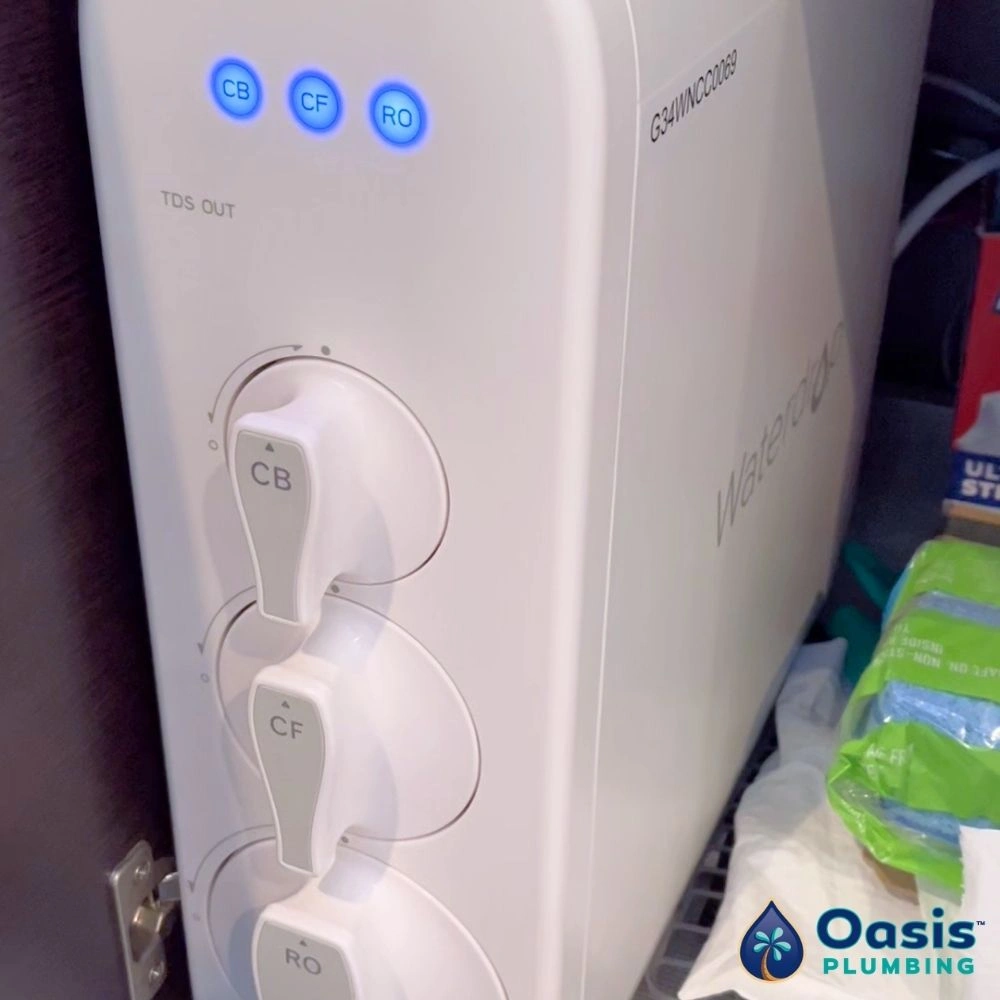
a manifold;
a dedicated faucet;
a storage tank;
a booster pump;
electronic controls;
sensors;
and other system-specific components.
Some of those parts can remain functional through multiple filter or membrane replacement cycles.
Think of it less like replacing an entire appliance every time one service component wears out and more like maintaining a system whose individual parts have different useful lives.
That distinction matters because a homeowner may hear that a membrane needs replacement after a certain period and mistakenly assume the whole reverse osmosis system has reached the end of its life.
It usually hasn’t.
Don't Replace the Whole System Based on One Component
Have Oasis Plumbing evaluate whether an aging reverse osmosis system needs service, component replacement, or a newer setup. Call (305) 703-8220.
How Long Do Reverse Osmosis Systems Last Overall?
A well-maintained point-of-use reverse osmosis system can potentially remain in service for around 15 years, but actual useful life varies considerably from one system and household to another.
That number should be treated as context rather than an expiration date.
A system doesn’t automatically become unusable on its fifteenth birthday. Likewise, a poorly performing system shouldn’t be kept indefinitely merely because it hasn’t reached a certain age.
Several things determine whether the complete system still has useful life left:
Equipment quality
Components, fittings, housings, pumps, electronics, and other parts are not identical across all systems.
Household use
A system serving frequent drinking, cooking, bottle filling, and beverage preparation may operate differently from one used occasionally.
Incoming water conditions
Conditions entering the system can influence how hard treatment components have to work.
Installation quality
Correct configuration and installation help the system operate as its manufacturer intended.
Component replacement
Consumable or worn parts need to be addressed before deteriorating performance creates broader problems.
Age-related wear
Valves, seals, tanks, pumps, tubing, fittings, and electronic components can eventually wear or fail even when routine filters have been changed appropriately.
The useful-life question is therefore less about reaching one universal number and more about the condition of the complete system as it ages.
Why Filters May Be Replaced Many Times During the Life of One System
Filters are expected to have much shorter replacement cycles than the overall reverse osmosis equipment.
That isn’t evidence that the system is wearing out unusually fast.
Those components are doing their job.
Pre-filters, for example, help protect downstream parts of the system. The reverse osmosis membrane itself is also a replaceable treatment component rather than something expected to remain unchanged for the entire life of the equipment.
The exact replacement timing depends on the system and manufacturer instructions, so this article isn’t going to turn into a filter-change schedule.
The important concept is:
A ten-year-old reverse osmosis system may have had several sets of filters and more than one membrane while still using much of its original system hardware.
For a Miami Shores Village homeowner trying to determine the age of a system, knowing that filters were recently changed tells you very little about when the overall equipment was originally installed.
Those are separate timelines.
What Can Shorten the Useful Life of a Reverse Osmosis System?
A reverse osmosis system doesn’t age based on the calendar alone.
Conditions that increase wear, create restrictions, stress components, or allow problems to go unresolved can reduce how long the complete setup remains practical to operate.
1. Water Conditions That Put More Stress on the System
The incoming water determines what the reverse osmosis equipment has to process.
Conditions vary from property to property, so homeowners shouldn’t assume that every system in the same neighborhood experiences identical water conditions.
What matters is whether the conditions reaching the equipment fall within the system’s operating requirements and how those conditions affect its components over time.
Material can accumulate on treatment components. Scale or fouling can affect membrane performance depending on the water and equipment. Those conditions are among the reasons manufacturer replacement instructions and system-specific evaluation matter.
This doesn’t necessarily mean the whole system needs replacement.
It means water conditions can influence how quickly individual components wear and how reliably the complete setup performs over many years.
2. Heavy Household Use
A reverse osmosis system used throughout the day experiences a different workload from one serving occasional glasses of drinking water.
A busy household may use filtered water for:
drinking;
multiple reusable bottles;
coffee and tea;
cooking;
ice;
and other kitchen tasks.
That doesn’t mean heavy use is bad for the equipment.
It means system capacity and design should be appropriate for the demand placed on it.
If a system was originally selected for lighter use and household habits change significantly, its performance may feel increasingly inadequate even if the equipment technically still operates.
The separate guide on how to size reverse osmosis around household demand explains why use patterns and delivery expectations matter when selecting equipment.
For lifespan, the key point is that a system’s workload is part of its long-term operating environment.
Installation Quality Can Affect Long-Term Reliability
Reverse osmosis systems have operating requirements that need to be matched to the installation.
A system that is installed correctly has the opportunity to perform as its design intends. Poor installation or an unsuitable configuration can create problems that may affect performance, components, or reliability.
Depending on the equipment, proper installation may involve considering:
incoming water pressure;
drainage;
tubing and fittings;
storage configuration;
electrical supply for powered systems;
cabinet space;
system orientation;
and manufacturer-specified installation requirements.
This doesn’t mean every aging reverse osmosis problem can be blamed on the original installation.
But installation quality is part of the long-term picture.
A Belle Meade homeowner dealing with recurring issues on an older system may benefit from having the complete setup evaluated rather than continually assuming each new symptom is an isolated component problem.
Professional reverse osmosis installation in Belle Meade can also help when an older setup is no longer practical to service and the next step is choosing replacement equipment appropriate for the kitchen and household demand.
Aging System or Installation Problem?
Oasis Plumbing can evaluate how the equipment is configured before you keep replacing parts on a poorly performing system. Call (305) 703-8220.
Wear Doesn't Happen to Every Component at the Same Time
One reason how long do reverse osmosis systems last is difficult to answer with one number is that the system isn’t one indivisible object.
Its parts age differently.
Consider a storage-based system.
The membrane may eventually require replacement while the storage tank remains functional. Later, a valve or fitting may develop a problem while the newer membrane continues performing normally.
A powered tankless system introduces another set of components that can age independently, such as a pump or electronic controls.
This creates an important homeowner distinction:
Consumable Wear
Filters and membranes are expected to require replacement as part of owning the equipment.
Repairable Component Wear
A fitting, valve, tank, pump, or another serviceable part may eventually need attention without automatically making the complete system obsolete.
System-Level Aging
Eventually, enough of the equipment may be worn, outdated, unreliable, difficult to service, or poorly matched to current household needs that continuing to replace individual components makes less sense. The difficult part is determining when the system has moved from the second category into the third. That's where age alone is not enough.
A Decline in Performance Can Tell You More Than the Calendar
Suppose a Shorecrest homeowner has had the same reverse osmosis system for several years.
The age itself may not be particularly concerning.
But perhaps something else has changed:
the drinking-water faucet is noticeably slower;
the system doesn't seem to recover as it once did;
a pump sounds different;
water production has declined;
the system requires increasingly frequent attention;
or multiple components have begun failing within a relatively short period.
If your system displays TDS, a noticeable change from its usual reading can provide another clue that the system may need attention. However, it helps to understand what TDS in reverse osmosis water actually tells you before assuming a changing number means the system is failing.
Those changes provide more useful information than simply saying, “The system is old”.
For example, disappointing faucet performance may involve pressure, storage behavior, restrictions, or system design. The article on reverse osmosis water pressure and slow faucet flow explains that symptom in more detail.
The lifespan question is slightly different.
If performance issues are recurring because several parts of an aging system are deteriorating, continued component replacement may eventually stop being the most practical approach.
Care Matters—But This Isn't a Maintenance Checklist
One reason how long do reverse osmosis systems last is difficult to answer with one number is that the system isn’t one indivisible object.
Appropriate care can help preserve performance and useful system life, but that doesn’t mean homeowners need another lengthy checklist here.
For the lifespan question, three principles matter most:
Follow the equipment requirements
Replacement and care recommendations should come from the manufacturer for the specific system rather than from a universal internet schedule.
Address meaningful performance changes
A system that begins behaving differently deserves attention rather than assuming the change is simply normal aging.
Don't ignore consumable components
Filters and membranes protect or perform important treatment functions. Treating them as permanent components can affect how the system performs.
EPA specifically notes that proper use and maintenance are important to effective reverse osmosis function and long-term system life.
The takeaway isn’t “change every component constantly”.
It’s that a system has a better chance of serving the household for many years when expected wear is addressed rather than ignored.
Does an Older Reverse Osmosis System Automatically Need Replacement?
No. Age alone does not mean a reverse osmosis system needs to be replaced.
An older system that continues to perform reliably, has serviceable components available, and still meets the household’s practical needs may remain worth servicing.
On the other hand, a much newer system can still be a poor candidate for continued use if it has serious recurring problems or was never well matched to the home.
Instead of asking only:
How old is it?
Consider:
| Question | Why It Matters |
|---|---|
| Is performance still satisfactory? | Reliable output suggests the complete system may still have useful life |
| Are problems isolated or recurring? | One worn component is different from repeated failures |
| Are replacement parts available? | Serviceability matters as equipment ages |
| Does the system still fit household demand? | Needs may have changed since installation |
| Is the current configuration still practical? | Older equipment may not match present space or performance expectations |
| Has servicing restored normal performance? | Successful component repair can support continued use |
This creates a much better basis for deciding whether to repair or replace than system age alone.
For a Miami Shores Village homeowner trying to determine the age of a system, knowing that filters were recently changed tells you very little about when the overall equipment was originally installed.
Those are separate timelines.
When Does Component Replacement Still Make Sense?
Replacing a component can make sense when the problem is reasonably isolated and the rest of the system remains in good condition.
Imagine an older reverse osmosis system that has otherwise performed reliably. A serviceable component wears out, but replacement parts remain readily available and the system still meets household expectations.
In that situation, replacing the entire setup solely because of age may be unnecessary.
Similarly, expected membrane or filter replacement is not usually evidence that the entire system has failed.
Those are consumable parts.
The stronger replacement question begins when system-level concerns accumulate.
When Might a Newer Reverse Osmosis System Make More Sense?
There is no universal age when replacement becomes mandatory.
Instead, several factors together may make a newer system worth considering.
Problems Are Becoming Repetitive
One service issue is different from a pattern of multiple components requiring attention.
If an aging system repeatedly develops new problems, the homeowner may need to consider whether continued repairs are still providing a dependable solution.
Performance No Longer Matches Household Needs
Maybe the equipment still technically works, but the household now uses far more filtered water than it did when the system was installed.
Perhaps more people live in the home, filtered water is now used for cooking, or several bottles need to be filled within the same part of the day.
In that case, the problem may not simply be age. The original equipment may no longer be a good fit.
The Existing Configuration Is No Longer Practical
The market includes both storage-tank and tankless configurations, and homeowners may have different space or delivery expectations than when their existing system was installed.
If an aging setup is being reconsidered, understanding tank vs tankless reverse osmosis can help homeowners evaluate whether the replacement should use the same general configuration or a different one.
That is a replacement-design question rather than a reason to discard an otherwise functional system prematurely.
Parts or Support Become Difficult to Obtain
Serviceability is part of useful system life.
A system may physically continue operating while becoming increasingly difficult to repair because compatible parts, cartridges, or manufacturer support are no longer practical to obtain.
At that point, continued operation and practical useful life are not necessarily the same thing.
Repair the Problem—or Replace the Aging Setup?
Have Oasis Plumbing evaluate the condition of the complete system before committing to another repair or a full replacement. Call (305) 703-8220.
System Design Can Change What Eventually Wears Out
Not every reverse osmosis system contains the same components.
A traditional storage-tank system and a powered tankless system can therefore develop different age-related issues.
A tank-based configuration includes a storage component that plays an important role in delivering treated water. A tankless configuration may rely more heavily on powered equipment and electronic controls.
That doesn’t mean one design automatically lasts longer.
It means different system designs have different components that may eventually require service.
This is one reason lifespan claims should be treated cautiously. Saying every reverse osmosis system lasts exactly the same number of years ignores differences in equipment design, manufacturer specifications, household conditions, and how the system is used.
An Aging System Can Still Be Useful Even If It Isn't “Like New”
A reverse osmosis system doesn’t need to perform as if it were installed yesterday simply to remain useful.
Normal component replacement over many years is part of keeping equipment in service.
The more relevant questions are whether:
the system still performs reliably;
the components remain serviceable;
normal servicing restores expected performance;
recurring failures are absent;
and the equipment still meets household needs.
A homeowner can therefore have an older system that remains a reasonable candidate for continued service.
Conversely, a younger system with repeated problems may justify a closer look.
Useful life is about condition and suitability, not age alone.
How Can You Tell Whether Your System Is Nearing the End of Its Useful Life?
There usually isn’t one symptom that proves the complete system has reached the end.
Instead, look for a pattern.
A professional evaluation becomes more useful when you notice combinations such as:
declining performance that returns after previous servicing;
multiple aging components needing attention;
recurring leaks or mechanical problems;
difficulty obtaining compatible replacement parts;
a system that no longer supports household demand;
repeated issues with pumps, tanks, valves, or controls where applicable;
or an older configuration that no longer makes practical sense for the kitchen.
These observations don’t automatically mean replacement is required.
They mean the decision has become broader than simply changing another consumable filter.
At that point, the homeowner needs to know whether the complete equipment still represents a sound platform to keep servicing.
What Should You Know About an Older System Before Having It Evaluated?
You don’t need to diagnose the reverse osmosis equipment yourself.
A few pieces of information can make the evaluation more useful:
Approximate system age
Even a rough installation year provides context.
Manufacturer and model
This helps identify equipment specifications and replacement-component availability.
Recent service history
Note what components have already been replaced.
Performance changes
Explain whether flow, production, sounds, or other behavior has changed.
Frequency of problems
A first repair is different from several recurring issues.
Household-use changes
Mention if more people now use the system or filtered water is being used for more kitchen tasks.
Original versus current expectations
Explain whether the system ever performed the way you expected.
That information helps separate an individual repair from a broader system-life decision.
Servicing vs Replacing: The Better Question for an Aging System
Instead of asking only how long do reverse osmosis systems last, homeowners with older equipment may eventually need to ask:
Is this particular system still worth keeping in service?
That decision is based on a combination of age, condition, reliability, performance, component availability, and household needs.
There are generally three possibilities.
Continue Servicing the Existing System
This may make sense when the equipment remains fundamentally sound and expected component replacement restores proper operation.
Replace a Specific Worn Component
A tank, valve, pump, fitting, membrane, or other part may be the actual problem while the rest of the system remains usable.
Replace the Complete Reverse Osmosis System
This may become more reasonable when age-related problems are accumulating, performance no longer meets household expectations, replacement parts are difficult to obtain, or the existing design no longer makes sense.
Professional evaluation helps determine which of those situations you’re actually dealing with.
That is more useful than deciding from age alone.
Key Takeaways
The reverse osmosis system and its filters do not have the same lifespan: Consumable components are expected to be replaced multiple times during the life of the complete equipment.
A well-maintained reverse osmosis system can potentially serve a home for many years: EPA notes that a properly maintained point-of-use system can last around 15 years, although actual useful life varies.
There is no universal expiration date: Water conditions, household demand, system design, installation quality, care, and component wear all influence useful life.
Changing a membrane or filter does not mean the system has failed: Those are replaceable treatment components.
Age alone is not enough to justify replacement: Performance, reliability, repair history, parts availability, and household needs matter more.
Repeated problems deserve a broader evaluation: Multiple component failures on an aging system may indicate that continued servicing is becoming less practical.
Household needs can outgrow a working system: Equipment may still operate but no longer provide the production or delivery the household expects.
Professional evaluation can separate repairable wear from system-level aging: The goal is to determine whether servicing, component replacement, or newer equipment makes the most sense.
So, how long do reverse osmosis systems last?
A well-maintained system can potentially remain useful for many years, but there isn’t one replacement age that applies to every home.
The most important distinction is between the complete system and the components designed to be replaced along the way.
Filters wear out. Membranes wear out. Valves, tanks, pumps, fittings, and other parts may eventually require attention. None of those events automatically means the entire reverse osmosis system has reached the end of its life.
What matters is the bigger pattern.
Is the equipment still reliable? Does servicing restore proper performance? Are parts still available? Does the system still meet the household’s drinking and cooking demand? Or are recurring age-related issues beginning to make continued repair less practical?
For homeowners in Miami Shores Village, Shorecrest, and Belle Meade, those questions provide a far better basis for deciding what to do with an aging reverse osmosis system than simply counting the years since installation.
If your reverse osmosis system is getting older, developing recurring problems, or no longer performing the way it once did, Oasis Plumbing can evaluate whether the better path is servicing the existing equipment, replacing a worn component, or installing a newer system.
Call Oasis Plumbing today at (305) 703-8220 to get the complete system evaluated before assuming either that an older reverse osmosis system must be replaced or that another component repair will solve a growing system-level problem.
