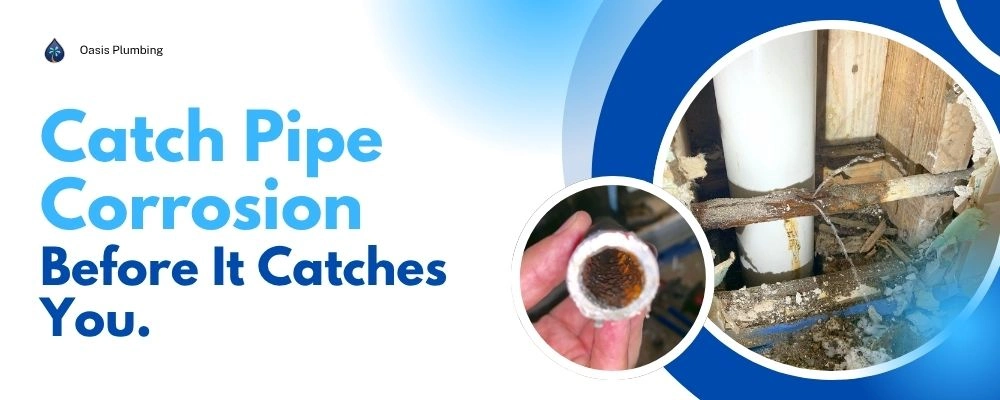
Let’s be honest—most homeowners never think about what’s happening inside their pipes until water starts dripping from the ceiling or a sudden burst floods the kitchen. But by the time corrosion shows itself, it’s usually too late.
If you’ve ever wondered why your plumbing system keeps springing leaks or why your water pressure slowly drops for no clear reason, you’re not alone. These are some of the early signs of pipe corrosion, and catching them early can mean the difference between a small repair and a $10,000 water damage nightmare.
In this post, we’ll walk through exactly how to identify early corrosion on pipe surfaces, what causes it, and what you can do to stop it before it turns into a burst or a major repipe. Whether your home is old or relatively new, this guide will help you understand what’s happening inside those walls—and how to prevent disaster before it strikes.
Table of Contents
What Are the Signs of Pipe Corrosion?

Short answer: Corrosion happens when metal pipes react with water, oxygen, and minerals, slowly eating away the material.
Over time, these reactions create weak spots, thinning the pipe wall and eventually leading to leaks or bursts.
Chemical Reactions
In copper or galvanized steel pipes, minerals in the water—especially calcium and magnesium—react with the metal, forming corrosive buildup.
pH Imbalance
If your home’s water has a pH level below 7, it’s acidic. Acidic water accelerates corrosion dramatically.
High Oxygen Levels
Oxygen in water causes rust (oxidation), which weakens metal surfaces from the inside out.
Water Velocity
In some homes, high water pressure or sharp turns in piping create turbulent flow, scraping the inside of pipes and removing their protective layer.
Pro Tip: If your area has hard or acidic water, consider installing a whole-house water filtration or softening system to balance your water chemistry and protect your pipes long-term.
7 Clear Signs of Pipe Corrosion You Should Never Ignore
Let’s break down the most common red flags that your plumbing system is starting to corrode—and what each one means.
1. Discolored or Rusty Water
Quick answer: Brown, yellow, or green-tinted water is one of the most visible signs of pipe corrosion.
When metal flakes or rust particles mix into your water supply, it gives your tap water a dirty, metallic look. You’ll often notice this first thing in the morning or after returning from vacation when the water has sat in the pipes for days.
2. Metallic Taste in Tap Water
If your water tastes like coins or has a strange sharpness, that’s not your imagination—it’s a classic symptom of corrosion on pipe surfaces leaching metal into the water.
What’s happening:
In copper pipes, corrosion can release copper ions, giving water a bitter metallic taste.
In galvanized steel pipes, rust and iron particles alter both flavor and clarity.
Pro Tip: Run your tap for 30–60 seconds before using it for drinking or cooking. If the taste improves, the corrosion is likely inside your home’s plumbing—not the city line.
3. Low Water Pressure
If your water pressure suddenly drops, don’t blame your showerhead right away. Pipe corrosion can narrow the inside diameter of your plumbing, restricting flow.
How it happens:
Over time, corrosion builds up like cholesterol inside an artery. The more it narrows, the slower water moves. Eventually, pressure drops across the entire house.
4. Stains or Rust Marks on Exposed Pipes
If you see corrosion on pipe exteriors—greenish-blue for copper or reddish-brown for steel—it’s a sign that moisture is attacking your plumbing.
Green stains indicate oxidation on copper pipes, often caused by condensation or small pinhole leaks.
Brown rust on galvanized steel means the zinc coating that protects the steel is gone, exposing it to air and moisture.
Pro Tip: Even if you only see corrosion in one visible section, assume it exists elsewhere. Most corrosion starts inside the wall where you can’t see it.
5. Frequent Leaks or Pinhole Leaks
Small leaks are not “normal wear and tear.” They’re a red flag. Once corrosion has eaten through a pipe wall, leaks can appear anywhere along the line.
Why it matters:
Each small leak increases humidity in your walls or ceilings, accelerating more corrosion and mold growth.
6. Unexplained Water Damage or Musty Smells
Sometimes the first signs of pipe corrosion aren’t visible pipes at all—they’re water stains, soft drywall, or musty smells. Corroded pipes often leak slowly, soaking insulation or framing long before anyone notices.
What to do:
If you smell something damp or see peeling paint near plumbing lines, it’s worth having a licensed plumber perform a pressure test or thermal imaging scan to check for hidden leaks.
7. Strange Noises When Water Runs
If you hear rattling, hissing, or popping in your pipes, it may be more than air or vibration. As corrosion builds up, it changes how water flows through the system.
Gurgling or banging noises can indicate narrowed passageways or trapped air from corrosion-caused leaks.
Left unchecked, that trapped pressure can cause fittings to fail or burst.
How to Prevent Pipe Corrosion Before It Starts
1. Test Your Water Quality
Have your water tested for pH, oxygen content, and mineral levels.
Ideal pH range: 6.5–8.5
Anything below 7 is acidic and increases corrosion risk.
Testing costs around $30–$100, but it gives you a roadmap for prevention.
2. Install a Whole House Water Filter or Softener
Filters remove chlorine and sediments that corrode metal.
Softeners prevent mineral buildup from hard water.
In Miami and other coastal cities, salt in the air can amplify corrosion—making filtration even more important for both copper and steel plumbing systems.
3. Replace Old Galvanized or Rusted Pipes
If your home was built before the 1970s, it may still have galvanized steel lines. These should be replaced with copper, PEX, or CPVC.
While this might sound costly upfront, repiping eliminates ongoing corrosion risks and improves water pressure permanently.
4. Schedule Routine Plumbing Inspections
Annual plumbing checkups can detect corrosion early—before leaks or bursts occur.
A licensed plumber can inspect visible pipe sections, check water pressure, and run cameras through older lines to assess interior conditions.
Pro Tip: Don’t wait for a problem. Preventive maintenance is almost always cheaper than emergency repairs.
5. Frequent Leaks or Pinhole Leaks
Small leaks are not “normal wear and tear.” They’re a red flag. Once corrosion has eaten through a pipe wall, leaks can appear anywhere along the line.
Why it matters:
Each small leak increases humidity in your walls or ceilings, accelerating more corrosion and mold growth.
6. Unexplained Water Damage or Musty Smells
Sometimes the first signs of pipe corrosion aren’t visible pipes at all—they’re water stains, soft drywall, or musty smells. Corroded pipes often leak slowly, soaking insulation or framing long before anyone notices.
What to do:
If you smell something damp or see peeling paint near plumbing lines, it’s worth having a licensed plumber perform a pressure test or thermal imaging scan to check for hidden leaks.
7. Strange Noises When Water Runs
If you hear rattling, hissing, or popping in your pipes, it may be more than air or vibration. As corrosion builds up, it changes how water flows through the system.
Gurgling or banging noises can indicate narrowed passageways or trapped air from corrosion-caused leaks.
Left unchecked, that trapped pressure can cause fittings to fail or burst.
Common Myths About Pipe Corrosion
Myth 1: “Corrosion only happens in old homes.”
Truth: Even modern homes with copper or PEX connections can experience corrosion if water chemistry is imbalanced.
Myth 2: “If water looks clean, my pipes are fine.”
Truth: Corrosion often starts internally, and the water can look clear until the damage is severe.
Myth 3: “I can just patch a leak and move on.”
Truth: Patching hides the symptom but not the cause. Once corrosion starts, it typically spreads until the affected section is replaced.
Key Takeaways
Early signs of pipe corrosion include discolored water, metallic taste, rust stains, and reduced pressure.
Corrosion is caused by chemical reactions, water pH imbalance, and oxygen exposure.
Preventive steps like water filtration, regular inspections, and replacing old pipes can stop corrosion before it becomes costly.
Ignoring corrosion leads to leaks, water damage, and potential health concerns.
Now you know what to watch for—and how to stop it early. Recognizing the signs of pipe corrosion isn’t just about protecting your plumbing; it’s about protecting your home, health, and wallet.
If you’ve noticed rusty water, green stains, or low water pressure, don’t wait until it bursts. A simple inspection could save you thousands in water damage repairs.
If you’re in Miami and want peace of mind, Oasis Plumbing can inspect, repair, or repipe your water supply pipes before corrosion becomes a problem.
Call (305) 703-8220 or book online today for a full plumbing evaluation and corrosion check.
Frequently Asked Questions
What are the first signs of pipe corrosion?
Discolored water, metallic taste, rust stains, and low water pressure are the most common early indicators.
How long do corroded pipes last before bursting?
Depending on the material, it can take months or years. But once leaks appear, the pipe’s structural integrity is already compromised.
Can you fix pipe corrosion without replacing the pipe?
Small surface corrosion can be cleaned and sealed, but internal corrosion usually requires replacement to ensure safety.
Is corrosion on pipe dangerous to health?
Yes. Corrosion can leach metals like copper, iron, or lead into drinking water, posing health risks over time.
How much does it cost to fix corroded plumbing?
Minor repairs may cost a few hundred dollars. Extensive corrosion requiring repiping can range from $3,000 to $12,000 depending on home size and materials.