

You’ve been told that your sewer line needs repair, and now you’re reviewing the proposed work. The estimate may mention a damaged pipe section, excavation, replacement materials, or restoration, but how do you know exactly what you’re approving?
A sewer line repair estimate should do more than identify the proposed service. It should explain the problem being addressed, where the work will take place, what the repair includes, and which responsibilities or conditions may affect the final scope.
This matters because much of a sewer line is buried underground. Even after a plumbing evaluation, certain conditions may remain unknown until the affected section becomes accessible.
For homeowners in Miami Shores Village, Shorecrest, and Belle Meade, understanding the proposed scope can help prevent confusion about what work is included, which areas of the property may be affected, and what happens if additional problems are discovered.
The goal isn’t to become a plumbing expert. It’s to understand what the plumber is proposing, why the work is recommended, and what questions should be answered before giving approval.
Table of Contents
What Should a Sewer Line Repair Estimate Include?
A sewer line repair estimate should clearly identify the sewer line problem, the location of the proposed work, the repair scope, access requirements, and any important assumptions or exclusions.
The exact information may vary depending on the property and the condition of the sewer line.
However, homeowners should be able to understand what work is being proposed without relying entirely on technical terminology.
A useful estimate or accompanying written scope may address:
Identified problem
What condition requires attention?
Repair location
Which section of the sewer line is affected?
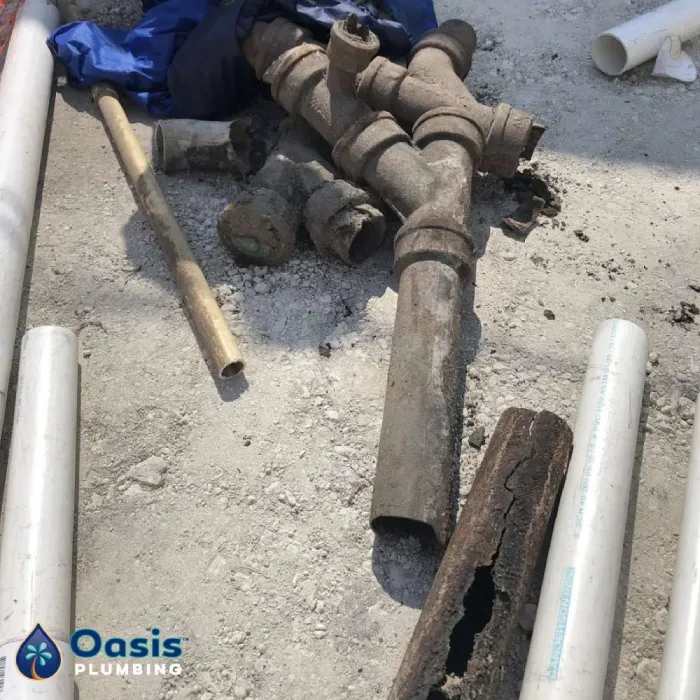
Proposed work
What will be done to address the problem?
Access requirements
Will excavation or another form of access be necessary?
Affected property areas
Which surfaces or structures may be disturbed?
Restoration responsibilities
What will happen to disturbed areas after plumbing work?
Assumptions and exclusions
What is included, and what is not?
Possible changes
What happens if previously concealed conditions are discovered?
These details help homeowners understand the boundaries of the proposed work.
Why Is a Clear Scope Important?
Consider an estimate that simply states, “Repair damaged sewer pipe”.
That description identifies the general service but leaves several questions unanswered.
Where is the damaged pipe? How much piping will be addressed? Will the plumber need to excavate? What happens to the surface above the repair?
A more specific scope helps explain what the homeowner is authorizing. It also provides a reference if questions arise while the work is underway.
The estimate should communicate the proposed repair clearly enough that the homeowner understands both the planned work and its known limitations.
Have Questions About a Proposed Sewer Line Repair?
Understanding the affected pipe and the work being recommended can help you make an informed decision. Call Oasis Plumbing at (305) 703-8220 to discuss your sewer line concerns.
Why Should the Estimate Identify the Specific Sewer Line Problem?
A sewer repair recommendation should explain the condition being addressed so the homeowner understands why the proposed work is necessary.
Sewer line problems can involve different conditions. A pipe may have a crack, a separated joint, a damaged section, or another defect affecting its function. These findings are not interchangeable.
For example, a separated connection may involve a different affected area than a crack along the pipe wall. A homeowner reviewing the estimate should understand which condition the plumber identified and why it matters.
Should the Estimate Explain the Findings?
Yes. The proposed work should be connected to the findings from the plumbing evaluation. That explanation does not need to be overly technical. It should identify the relevant condition and explain why it requires attention.
For example, a plumber might describe a damaged connection that is interfering with the sewer line’s function. The homeowner should be able to understand how the proposed repair addresses that connection.
If the findings are uncertain, the scope should distinguish what has been established from what remains to be confirmed.
What If the Problem Has Not Been Fully Identified?
Not every underground condition can be established before access is available.
A plumber may have enough information to identify a suspected problem area while still needing direct access to confirm the full condition of the pipe.
In that situation, the estimate should explain the known findings and relevant assumptions.
Homeowners should understand whether the proposed work is based on a confirmed defect or whether additional conditions may become apparent later.
This does not automatically make the estimate unreliable. It means the limitations of the available information should be communicated.
Why Does the Repair Location Need to Be Clearly Explained?
The estimate should identify which section of the sewer line is expected to receive work and where that section is located on the property.
A sewer line may run beneath landscaping, paved surfaces, or other areas before reaching its connection point.
Knowing where the affected section is located helps homeowners understand which parts of the property may be involved. It also helps clarify whether the proposed work is limited to a particular area.
How Specific Should the Location Description Be?
The level of detail depends on what has been established.
For example, a plumber may be able to identify the affected section relative to a cleanout, a building wall, or another reference point.
If the exact location remains uncertain, that limitation should be explained. The important point is that the homeowner should understand where the plumber expects to perform the work.
A vague description can make it difficult to anticipate which areas may need access.
Why Does the Location Matter Beyond the Pipe Itself?
The location influences practical considerations. A damaged section beneath an open yard may involve different access conditions from one beneath a driveway or patio.
The surrounding area may affect how the work is planned and which surfaces could be disturbed.
However, the location alone does not determine the repair method. The condition of the pipe and the access required also matter.
For homeowners in Shorecrest reviewing proposed sewer line work, understanding the affected location can help make the scope easier to evaluate. The same principle applies to any property, regardless of neighborhood.
What Work Should Be Described in the Proposed Repair Scope?
The repair scope should explain the main activities required to address the identified sewer line problem, including what portion of the piping will be worked on and what the completed plumbing work is intended to accomplish.
Homeowners do not need a step-by-step construction manual. However, they should understand the main work being authorized.
Depending on the project, the scope may describe:
Accessing the affected sewer line section.
Exposing piping where necessary.
Performing the proposed corrective work.
Addressing specified pipe connections or affected sections.
Verifying the completed plumbing work as appropriate.
Backfilling or closing excavated areas where included.
These are general examples, not a statement that every project requires each activity.
Should the Scope Identify How Much Pipe Will Be Worked On?
Where the extent is known, yes. A description of the affected section helps distinguish the proposed work from unrelated portions of the sewer system.
For example, an estimate that identifies a particular damaged section provides more useful information than one that refers generally to the entire sewer line without explaining the intended work area.
However, some underground conditions may affect the final extent. If the proposed scope depends on assumptions about concealed piping, those assumptions should be stated.
What About Work Outside the Identified Repair Area?
Homeowners should understand whether the proposed scope is limited to the identified problem or includes other specified work.
For example, the estimate may address a particular section while excluding unrelated plumbing components.
That distinction helps prevent the assumption that approving one repair automatically includes every possible sewer line concern.
A clear scope establishes what the plumber intends to address and what falls outside the proposed work.
How Should Access and Excavation Requirements Be Explained?
A sewer line repair estimate should describe the access expected to be necessary, including excavation or disturbance of property surfaces where applicable.
Because sewer lines are often buried, reaching the damaged section may require opening the ground or another surface.
The amount of access depends on the pipe’s location, depth, condition, and the proposed work. Homeowners should understand whether the plan involves exposing a particular section or accessing a more extensive portion of the underground route.
Should the Estimate Identify Areas That May Be Disturbed?
Where reasonably known, yes.
For example, if excavation is expected in a landscaped area, the homeowner should understand that the area may be affected.
If the pipe runs beneath a paved surface, the scope should explain whether that surface is expected to be disturbed.
Some conditions may remain uncertain until work begins. However, known access requirements should not be left unexplained.
Does Every Sewer Repair Require Extensive Digging?
No. The amount of excavation depends on the affected section and the technical requirements of the repair.
Some projects may involve localized access. Others may require more extensive excavation.
Certain sewer line conditions may allow less invasive approaches, but those methods are not suitable for every situation.
For more information about the general factors that affect excavation requirements, see “Sewer Line Repair Without Digging: When Is a Less Invasive Approach Possible?“
The important consideration when reviewing an estimate is understanding the access proposed for the specific property.
Homeowners should not assume that limited excavation or a particular method is included unless the scope states so.
What Should the Estimate Explain About Property Restoration?
When sewer line work may disturb landscaping, pavement, or other property surfaces, the estimate should clarify which restoration activities are included and who is responsible for them.
Repairing the underground pipe and restoring the area above it are related but distinct parts of a project.
For example, excavation may require removing soil or disturbing an existing surface. After the plumbing work is completed, the area may need backfilling, surface restoration, or additional work. However, not every plumbing scope includes all restoration activities.
What Does Restoration Responsibility Mean?
Restoration responsibility identifies who will address the affected property areas after the plumbing work.
Depending on the agreement, certain activities may be included in the plumbing scope, while others may be excluded or handled separately.
Homeowners should clarify whether the proposed work includes:
Backfilling an excavated area.
Restoring disturbed soil or grading.
Replacing removed landscaping.
Repairing affected pavement or concrete.
Restoring other specified surfaces.
These are questions to clarify, not promises that any particular activity is included.
Why Is This Important Before Work Begins?
Imagine that a sewer repair requires access beneath a paved area. The homeowner may assume that the plumber will restore the pavement to its previous condition.
However, if surface restoration is excluded from the scope, that expectation may not match the agreement. Clarifying responsibilities beforehand helps prevent misunderstandings.
The same principle applies to landscaping, decorative surfaces, and other affected areas.
The estimate should distinguish the plumbing repair itself from any property restoration that may be required afterward.
Why Should an Estimate Identify Assumptions and Exclusions?
Assumptions and exclusions explain which conditions the proposed scope relies on and which activities or circumstances are not included.
This is particularly important for underground sewer work because some conditions may remain concealed until access is established.
An estimate may be based on the information available during the initial evaluation. Once the affected piping is exposed, the actual condition may differ from what was reasonably anticipated. That possibility should be communicated clearly.
What Are Common Types of Assumptions?
Depending on the project, assumptions may involve:
The expected location of the damaged section.
The anticipated extent of affected piping.
The accessibility of the repair area.
The condition of adjacent pipe sections.
The absence of additional concealed defects within the proposed work area.
These assumptions should be relevant to the specific project. An estimate does not need to speculate about every imaginable problem. However, important conditions that could affect the proposed scope should be identified.
What Are Exclusions?
Exclusions identify work that is not included.
For example, a scope may exclude restoration of a particular surface or work on piping outside the identified repair area.
The homeowner should understand those boundaries before approving the project. An exclusion does not necessarily mean the work will be required. It means the activity is not part of the proposed agreement.
Can the Repair Scope Change After Work Begins?
Yes. Some underground conditions may only become apparent after the pipe is accessible.
For example, an exposed section may reveal additional damage that was not visible during the initial evaluation. If those findings affect the proposed work, the plumber may need to explain a revised scope.
Homeowners should understand how such changes will be communicated and authorized before additional work proceeds.
A clear estimate acknowledges meaningful uncertainty without leaving the homeowner unsure about what has been approved.
What Questions Should Homeowners Ask Before Approving Sewer Line Repair?
Before approving a sewer line repair estimate, homeowners should understand the identified problem, the proposed work, the access requirements, and how unexpected conditions will be handled.
A few direct questions can help clarify the scope without requiring specialized plumbing knowledge.
Questions About the Problem
What specific sewer line condition needs to be addressed?
Ask the plumber to explain the identified defect and why corrective work is recommended.
Where is the affected section located?
Understand which portion of the underground piping is involved and where the work is expected to take place.
Questions About the Proposed Work
What exactly is included in the repair scope?
Ask which pipe sections or connections will be addressed and what the work is intended to accomplish.
What access or excavation will be required?
Clarify which areas of the property may need to be opened or disturbed.
What restoration is included?
Understand who is responsible for backfilling, landscaping, pavement, or other affected surfaces.
Questions About Uncertainty
What assumptions is the estimate based on?
Ask whether any important conditions remain unconfirmed because the piping is underground.
What work is excluded?
Clarify which activities fall outside the proposed scope.
What happens if additional damage is discovered?
Understand how changes will be explained and whether separate approval will be required.
How will completion of the proposed work be confirmed?
Ask what information or verification will be provided to show that the agreed plumbing work has been completed.
These questions help establish expectations before work begins.
For homeowners in Belle Meade, the company’s sewer line repair in Belle Meade page provides location-specific service information.
You can also explore Oasis Plumbing’s broader sewer line repair and replacement service.
The purpose of reviewing the scope is not to challenge every technical decision. It is to understand what the plumber is proposing and why.
Need Clarity About a Sewer Line Repair?
Understanding the proposed scope, access requirements, and possible limitations can help you make an informed decision. Call Oasis Plumbing at (305) 703-8220 to discuss your sewer line concerns.
Key Takeaways
A sewer line repair estimate should clearly explain the identified problem and proposed work.
The repair location helps homeowners understand which part of the sewer line and property may be affected.
The scope should identify the work included and the boundaries of the proposed repair.
Access and excavation requirements should be explained where they can reasonably be established.
Restoration responsibilities should be clarified before work begins.
Assumptions and exclusions help explain what the proposed scope covers and what remains uncertain.
Underground conditions may differ from initial findings once the affected pipe is accessible.
Homeowners should understand how changes in scope will be communicated and approved.
A sewer line repair estimate is more than a description of plumbing work. It helps establish what problem is being addressed, where the work will take place, and what the homeowner is authorizing.
Because sewer lines are often buried, some conditions may remain unknown until the affected section becomes accessible. That uncertainty does not prevent an estimate from being useful.
However, the proposed scope should explain the known findings, anticipated work, access requirements, restoration responsibilities, and important limitations.
For homeowners in Miami Shores Village, Shorecrest, and Belle Meade, asking these questions before approving sewer line work can help create clearer expectations and better communication throughout the project.
The most useful estimate is one that helps you understand what is being proposed, why the work is appropriate, and what could change if additional conditions are discovered.
If you’re dealing with a sewer line problem and want to understand what work may be necessary, our plumbers in Miami Shores at Oasis Plumbing can help you discuss your concerns and determine an appropriate next step.
Call Oasis Plumbing at (305) 703-8220 to discuss sewer line repair in Miami-Dade.
