

If you’ve been wondering what does a drinking water filter remove, you’re not alone. Many homeowners want cleaner, better-tasting water but aren’t always sure what a drinking water filter actually does—or whether it’s the right solution for their home.
The answer depends on the type of filtration system and the specific water quality concerns you’re dealing with. Some filters are excellent at reducing chlorine, sediment, unpleasant tastes, and certain contaminants. Others are designed to address lead, volatile organic compounds (VOCs), or even microscopic organisms. At the same time, no single filter solves every water problem.
Understanding what a drinking water filter can—and cannot—remove helps you make smarter decisions before investing in a system. Installing the wrong filter often leads to disappointment because the underlying water issue was never properly identified.
For homeowners in Miami Shores Village, Shorecrest, and Belle Meade, knowing what’s in your home’s water is the first step toward choosing the right filtration solution instead of relying on guesswork.
Table of Contents
What Does a Drinking Water Filter Actually Remove?
The simplest answer is that a drinking water filter removes contaminants that affect the quality, taste, odor, and safety of your drinking water—but only those it is specifically designed to target.
Different filtration technologies are built to solve different problems. That’s why two filters sitting next to each other at the store may perform very differently.
Common contaminants many residential drinking water filters can reduce include:
Chlorine
Sediment
Dirt and rust particles
Bad tastes and odors
Lead (with certified filters)
Certain pesticides and herbicides
Some industrial chemicals
Volatile Organic Compounds (VOCs)
Certain microorganisms (depending on filter type)
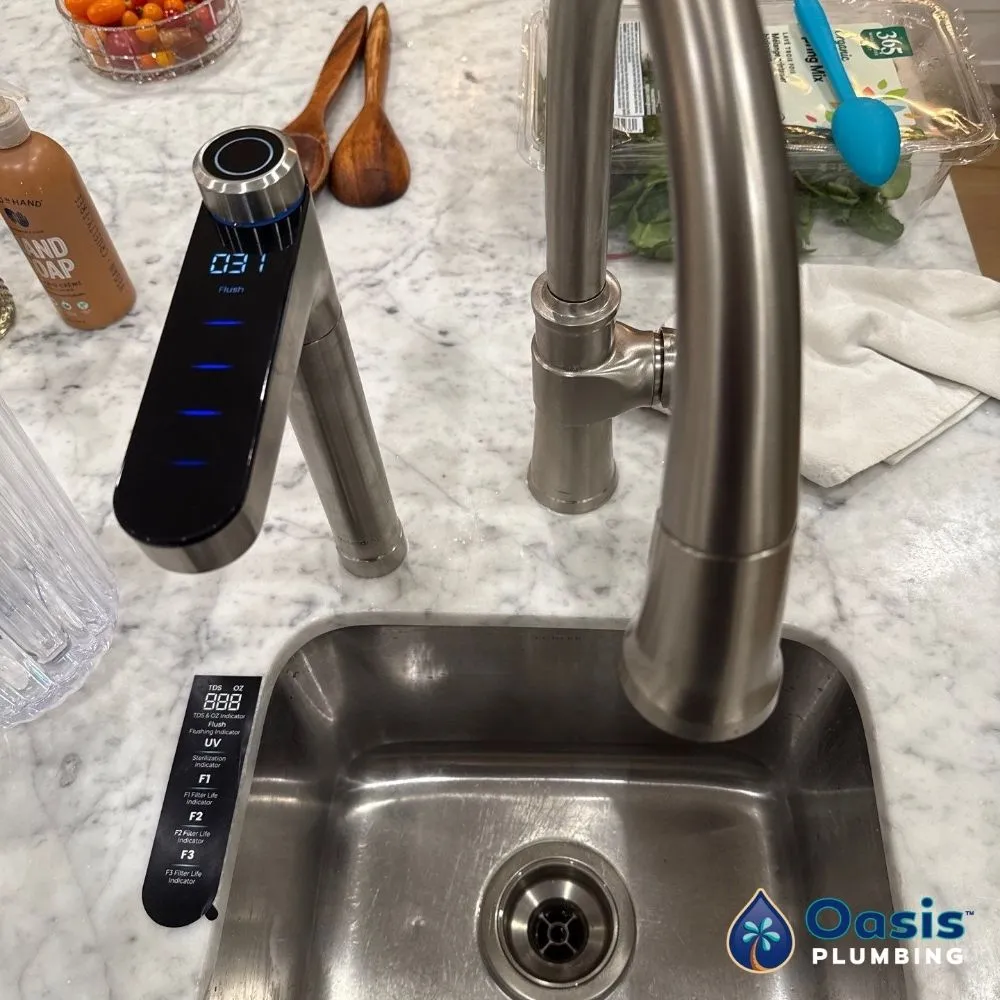
For homeowners in Miami Shores Village, chlorine taste is one of the more common reasons people begin looking into drinking water filtration. While municipal water is treated to meet safety standards, some homeowners simply prefer water that tastes cleaner and fresher.
Cleaner Water Starts with the Right Filter
Stop guessing which filter you need. Call Oasis Plumbing at (305) 703-8220 for professional drinking water filtration recommendations and installation.
Chlorine Is One of the Most Common Things Filters Remove
Municipal water systems commonly disinfect water using chlorine or chloramine. These disinfectants help protect public health during distribution.
However, once the water reaches your home, some people notice:
A swimming pool smell
Chemical taste
Dry skin after drinking or cooking
Coffee or tea that tastes different
Activated carbon filters are particularly effective at reducing chlorine and significantly improving taste and odor.
For many homeowners in Shorecrest, improving everyday drinking water quality is less about safety concerns and more about enjoying water that tastes better straight from the tap.
Sediment, Rust, and Visible Particles
Another common job of a drinking water filter is removing physical particles suspended in the water.
These may include:
Sand
Dirt
Rust flakes
Pipe scale
Sediment
Sediment doesn’t necessarily mean your water is unsafe, but it can make water appear cloudy and may shorten the life of appliances or additional filtration equipment.
Older plumbing systems may also contribute tiny rust particles that eventually reach kitchen faucets.
A sediment filter serves as the first line of defense by trapping these larger particles before they reach your drinking water.
Protect Your Water and Plumbing
Professional filter installation helps protect both your drinking water and your home’s plumbing. Call Oasis Plumbing at (305) 703-8220 today.
Can Drinking Water Filters Remove Lead?
Some can—but not all.
Lead removal depends entirely on the certification and design of the filter.
Certified filters designed for lead reduction use specialized filtration media that can significantly reduce lead concentrations when properly maintained.
This is why choosing a filter solely based on marketing claims can be risky.
Homeowners should look for filters specifically certified for lead reduction rather than assuming every drinking water filter provides that protection.
For older homes in Belle Meade, especially properties with aging plumbing components or previous plumbing modifications, understanding whether lead reduction is necessary begins with knowing the home’s plumbing materials.
What About Chemicals Like Pesticides and VOCs?
Many high-quality carbon filters can reduce certain chemicals such as:
Pesticides
Herbicides
Benzene
Industrial solvents
Volatile Organic Compounds (VOCs)
These contaminants are generally invisible and cannot be detected simply by tasting or smelling your water.
Not every filter removes every chemical.
That’s why professional recommendations often begin with identifying the contaminants you’re actually trying to address.
Installing an expensive filtration system without knowing your water quality may result in paying for features you don’t need—or missing the contaminants you do.
Can Filters Remove Bacteria and Viruses?
Sometimes—but only certain systems.
This is one of the biggest misconceptions homeowners have.
A standard pitcher filter or basic faucet filter generally is not designed to eliminate harmful bacteria or viruses.
Systems that address microorganisms may include:
Ultraviolet (UV) disinfection
Specialized membrane filtration
Certain certified microbiological filters
If biological contamination is suspected, the solution often involves more than simply installing a standard drinking water filter.
Professional evaluation helps determine the appropriate treatment method.
Choose the Right System the First Time
Every water problem needs the correct filtration solution. Call Oasis Plumbing at (305) 703-8220 for expert guidance and installation.
What Drinking Water Filters Cannot Fix
Knowing a filter’s limitations is just as important as understanding its strengths.
A drinking water filter cannot automatically solve every water quality issue.
Depending on the filtration system, it may not remove:
Every dissolved mineral
Every type of bacteria
Every virus
Every chemical contaminant
Plumbing corrosion
Damaged plumbing
Many homeowners mistakenly believe poor water quality always means they need a better filter.
Sometimes the real issue is actually:
Corroded plumbing
Plumbing dead legs
Poor plumbing maintenance
In these situations, replacing or repairing plumbing components may provide greater improvement than simply upgrading the filter.
Why Water Testing Matters Before Buying a Filter
One of the smartest things a homeowner can do is identify the problem before choosing the solution.
Water can look perfectly clear while still containing contaminants you cannot see.
Likewise, water that appears cloudy may simply contain harmless sediment.
Professional water testing helps determine:
Which contaminants are present
Which filtration technology is appropriate
Whether multiple treatment methods are needed
Whether plumbing repairs should come first
Instead of purchasing multiple filters hoping one works, testing creates a more targeted solution.
It also prevents homeowners from overspending on unnecessary equipment.
Drinking Water Filters vs. Reverse Osmosis
Many homeowners assume these terms mean the same thing.
They don’t.
A standard drinking water filter generally focuses on improving taste, odor, and reducing selected contaminants.
A reverse osmosis (RO) system uses a semi-permeable membrane capable of reducing a much wider range of dissolved contaminants.
That doesn’t necessarily make reverse osmosis the best choice for every home.
Some households benefit from:
Carbon filtration only
Reverse osmosis only
A combination of both
Whole-home filtration plus under-sink drinking water filtration
The best choice depends on your home’s water quality, household needs, and long-term goals.
Signs Your Home May Benefit from a Drinking Water Filter
You may want to consider a drinking water filtration system if you notice:
Water tastes like chlorine
Unpleasant odor from drinking water
Cloudy drinking water
Visible sediment
Rust-colored water
Concerns about aging plumbing
Better-tasting water for cooking
Reduced bottled water purchases
These signs don’t automatically indicate dangerous contamination, but they do suggest it’s worth evaluating your home’s water quality.
A professional assessment can determine whether filtration alone will solve the issue or if plumbing repairs should also be considered.
Get Professional Drinking Water Filtration
Improve your home’s drinking water with the right solution. Call Oasis Plumbing at (305) 703-8220 to schedule your consultation.
Choosing the Right Drinking Water Filter for Your Home
There is no universal “best” drinking water filter.
The right system depends on factors such as:
Water source
Existing plumbing
Water test results
Household size
Desired contaminants to reduce
Available installation space
Professional recommendations focus on matching the filtration technology to your home’s specific needs rather than installing the most expensive system available.
That approach often produces better water quality and better long-term value.
Key Takeaways
Drinking water filters remove different contaminants depending on the filtration technology.
Most quality filters improve taste, odor, and water clarity by reducing chlorine and sediment.
Some systems can reduce lead, chemicals, and certain harmful contaminants.
No drinking water filter removes every possible contaminant.
Water testing helps determine which filtration system is appropriate for your home.
Professional installation helps ensure the system matches your home's plumbing and water quality needs.
Understanding what does a drinking water filter remove helps homeowners choose a solution based on facts rather than assumptions. While many filtration systems effectively reduce chlorine, sediment, unpleasant tastes, odors, lead, and certain chemicals, no single filter solves every water quality issue. The best results come from identifying the actual problem first and selecting the filtration technology that matches your home’s needs. Whether you live in Miami Shores Village, Shorecrest, or Belle Meade, choosing the right system starts with understanding both your water and your plumbing.
Cleaner drinking water starts with the right filtration system—not guesswork. Oasis Plumbing helps homeowners evaluate their water quality, recommend the appropriate drinking water filtration solution, and provide professional installation that fits their home’s plumbing system.
If you’re ready to improve the quality, taste, and confidence in your drinking water, call Oasis Plumbing today at (305) 703-8220 to schedule your drinking water filtration consultation.
