
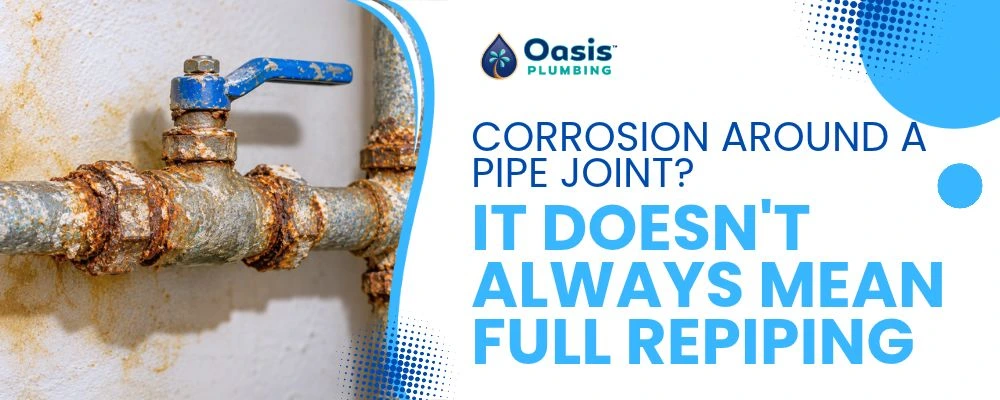
A small patch of corrosion around a water pipe connection might not seem particularly concerning. Perhaps the joint looks discolored, has a rough surface, or shows signs of moisture that weren’t noticeable before.
But how can you tell whether the connection needs attention or whether the surrounding plumbing may also be affected?
Old pipe joints deserve evaluation when they show active seepage, recurring moisture, visible deterioration, or changes that suggest the connection may no longer be sound. However, the condition of one joint does not automatically establish that the entire water supply system needs replacement.
For homeowners in Miami Shores Village, FL, understanding this distinction can help prevent both overlooked plumbing problems and unnecessary assumptions about repiping.
The important questions are what the joint is made of, why it appears deteriorated, whether the surrounding piping is affected, and whether a targeted repair can address the problem.
Table of Contents
When Should Old Pipe Joints Be Evaluated?
Old pipe joints should be professionally evaluated when corrosion, moisture, seepage, or physical deterioration raises questions about the connection’s condition. A plumber can determine whether the issue is limited to the joint or whether the surrounding water-supply piping also needs attention.
Not every discolored connection is actively leaking. Some surface changes may develop without immediately affecting the joint’s ability to contain water. However, visible deterioration should not be dismissed simply because water is not dripping onto the floor.
A closer evaluation is particularly worthwhile when you notice:
Persistent moisture
Water repeatedly appears around the same connection, even after the surrounding area has dried.
Mineral deposits
White or other crusty buildup develops near a joint and may indicate previous or ongoing moisture exposure.
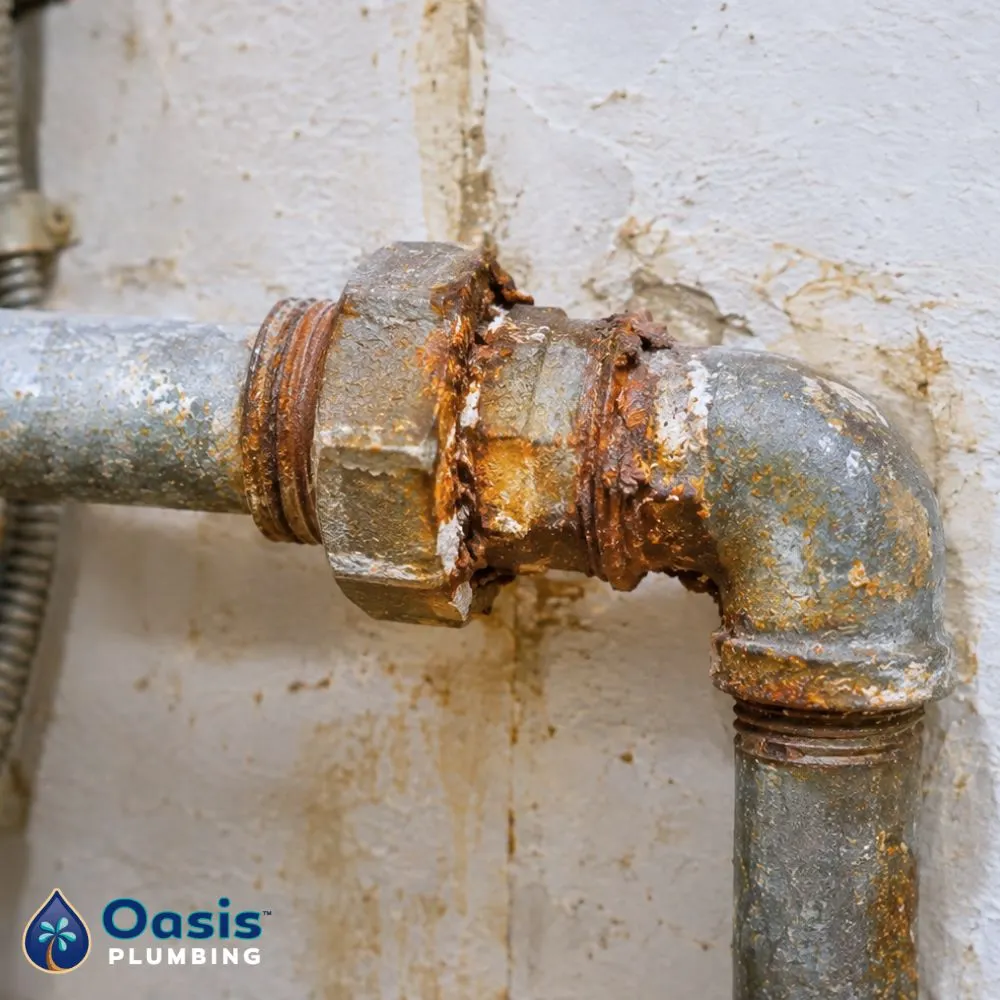
Rust or corrosion
Metal surfaces show deterioration that may affect the connection or nearby piping.
Staining beneath a fitting
Marks on a wall, cabinet, or other surface suggest that water may have escaped from the connection.
Visible damage
The fitting appears cracked, distorted, or otherwise physically compromised.
These observations help identify a connection that deserves attention, but they do not establish the full extent of the problem.
For example, mineral deposits around a fitting may suggest that moisture has been present. They cannot, by themselves, confirm whether the joint is currently leaking or whether the adjacent pipe has deteriorated internally.
The next step is understanding what is happening at the connection and how it relates to the surrounding supply line.
Concerned About a Deteriorating Pipe Connection?
Call Oasis Plumbing at (305) 703-8220 to discuss aging water supply connections and pipe evaluation in Miami Shores Village.
What Causes Water Supply Pipe Joints to Deteriorate?
Pipe joints can deteriorate for several reasons, including corrosion, movement, installation conditions, and changes affecting the materials used in the connection.
A joint is where sections of piping or plumbing components meet. Depending on the system, the connection may involve threaded fittings, soldered joints, mechanical fittings, or other approved joining methods.
Each connection type has its own requirements and potential vulnerabilities.
Corrosion at Metal Connections
Metal fittings may corrode when conditions allow chemical or electrochemical reactions to occur. Corrosion can affect the outer surface, the connection itself, or portions of the piping that are not visible.
A rusty fitting may indicate surface deterioration, but the appearance alone cannot establish how much sound material remains. Similarly, a connection that looks relatively clean may still have problems that are not visible from the outside.
The type of metal and the surrounding conditions matter when evaluating what the corrosion means.
Movement and Stress Around Connections
Water supply piping can experience movement from temperature changes, vibration, inadequate support, or other physical stresses. A connection may be particularly vulnerable when the adjoining piping is placed under strain.
For example, a pipe that is poorly supported may place additional stress on a fitting. If seepage develops at that connection, the plumber may need to evaluate both the joint and the conditions affecting it.
Replacing a fitting without addressing an ongoing source of stress may not resolve the underlying issue.
Installation and Connection Conditions
The way a joint was originally assembled can also influence its performance. Different materials and fitting types require appropriate joining methods. An improperly assembled connection may be more susceptible to leakage or deterioration.
However, a plumber should not assume that every aging connection was installed incorrectly. The condition of the fitting, the joining method, and the surrounding pipe must be assessed together.
What Does Seepage Around a Pipe Joint Actually Mean?
Seepage around a pipe joint means moisture may be escaping through or near a connection, but the visible wet area does not always identify the exact source.
Water can travel along the outside of a pipe before collecting at a fitting. Condensation or moisture from another source may also make a connection appear wet. This is why identifying the origin of the moisture matters before recommending a repair.
Active Seepage vs. Old Water Stains
A connection with an old stain may not currently be leaking. By contrast, a fitting that repeatedly becomes wet after the area is dried may warrant closer investigation. The distinction affects how a plumber evaluates the condition.
For example, a homeowner may notice a small amount of water beneath a pipe connection inside a cabinet. The water could be coming directly from the joint, traveling along the pipe from another connection, or originating from an unrelated source.
Repairing the visibly wet fitting without confirming the source could leave the actual problem unresolved.
Why Small Leaks Still Deserve Attention
A slow leak may not release much water at once, but repeated moisture can affect nearby materials. Cabinet surfaces, walls, and other building components may deteriorate when they remain damp. Moisture can also make it harder to distinguish fresh leakage from previous staining.
For homeowners in Miami Shores Village who notice repeated dampness around an exposed water supply connection, documenting where the moisture appears can provide useful information for a plumber.
However, homeowners should avoid tightening deteriorated fittings or disturbing questionable connections without knowing their condition. A weakened joint may be damaged further by excessive force.
Can Connecting Different Pipe Materials Cause Joint Problems?
Connections between different pipe materials require careful evaluation because material compatibility, fitting design, and corrosion behavior can affect long-term performance.
However, the presence of different materials does not automatically mean a connection is defective. Modern plumbing systems can contain approved transitions between different piping materials.
The important question is whether the transition uses suitable components and remains in good condition.
Why Dissimilar Metals Matter
When certain dissimilar metals are connected in the presence of an electrolyte, galvanic corrosion can occur. The degree of risk depends on the specific metals, water conditions, and connection arrangement.
This does not mean every connection between different metals will fail. It does mean the plumber should identify the materials involved before deciding how to repair or replace the fitting.
Appropriate transition fittings or other approved connection methods may be necessary, depending on the materials and application.
Lead and Galvanized Pipes Are Not the Same
Lead and galvanized steel are different plumbing materials with different concerns.
Lead piping raises concerns about potential lead exposure in drinking water. Lead-bearing plumbing components require material-specific evaluation, and water appearance alone cannot establish whether lead is present.
Galvanized steel piping is steel coated with zinc to resist corrosion. Over time, its condition may be affected by corrosion and deterioration of the pipe or fittings. A corroded galvanized connection should not be described as a lead pipe simply because it is old.
Likewise, a suspected lead component should not be evaluated solely through the assumptions used for galvanized steel. Material identification is essential.
If a plumber identifies a lead service line or other lead-bearing drinking-water component, the evaluation must account for lead-specific safety considerations rather than treating it as an ordinary corroded fitting.
What About Metal-to-Plastic Connections?
Metal-to-plastic transitions may also be appropriate when compatible, approved fittings are used. A plumber needs to consider the materials, fitting design, support, and installation requirements.
Visible seepage at such a connection does not automatically mean the two materials should never have been joined. The actual connection method and condition determine what corrective work may be appropriate.
What Can a Visual Inspection Reveal About Aging Pipe Connections?
A visual inspection can identify exposed corrosion, moisture, damaged fittings, and other observable conditions, but it cannot reliably determine the internal condition of every pipe or concealed joint.
This limitation is especially important when homeowners are trying to decide whether one deteriorated connection represents a larger plumbing concern. A plumber may begin by examining accessible fittings and the adjacent piping.
The assessment can help identify areas that need closer attention, but visible conditions are only part of the picture.
What Can Be Observed?
A visual examination may reveal:
Corrosion or deterioration on exposed metal surfaces.
Moisture or staining around fittings.
Cracks or physical damage to accessible components.
Inadequate support or visible strain near a connection.
Transitions between identifiable pipe materials.
These findings may help explain why a particular connection is leaking or deteriorating. However, they do not necessarily establish the condition of piping behind walls or beneath floors.
What Cannot Be Confirmed by Appearance Alone?
A pipe may have internal deterioration that is not obvious from its exterior. Conversely, some visible discoloration may be superficial. The amount of corrosion visible at a joint does not provide a reliable measurement of the condition of every connected pipe.
A plumber may need additional information or appropriate evaluation methods before making a repair recommendation.
For example, the condition of accessible connections elsewhere in the same supply line may help establish whether the problem appears isolated. That still does not guarantee that concealed sections have the same condition.
Why One Joint Cannot Tell the Whole Story
Imagine finding a heavily corroded connection beneath a bathroom sink. It would be reasonable to investigate that fitting and the adjacent pipe.
It would not be reasonable to conclude from that single observation that every supply line in the home requires replacement.
The appropriate recommendation depends on the material, extent of deterioration, leakage history, and condition of the surrounding plumbing.
When Is Repairing a Pipe Joint Enough?
A targeted joint repair may be appropriate when deterioration is limited to an identifiable connection and the surrounding piping is suitable for a reliable repair.
The plumber must determine whether the fitting can be repaired or replaced without leaving an unresolved problem in the adjacent pipe.
For example, an accessible connection may be leaking because a fitting has deteriorated while the surrounding piping remains in serviceable condition. In that situation, replacing the affected connection may be a reasonable option.
However, a repair should not be selected solely because the visible leak appears small.
Conditions That May Support a Targeted Repair
A localized repair may be considered when:
The affected connection can be clearly identified.
The surrounding pipe has adequate integrity for the proposed work.
Compatible replacement fittings are available.
The joint can be accessed and repaired appropriately.
There is no confirmed broader condition that makes the repair unsuitable.
These are considerations, not guarantees. A plumber still needs to evaluate the actual piping before determining whether a localized repair is appropriate.
When a Joint Repair May Not Address the Full Problem
A fitting replacement may be less suitable when the adjacent piping is also deteriorated.
For example, removing a damaged threaded fitting may reveal that the pipe threads are significantly weakened. In that case, replacing only the fitting may not create a dependable connection.
The repair scope may need to extend into sound piping. This does not necessarily mean repiping the entire home. It means the plumber must identify where a suitable repair can be made.
When Should Joint Deterioration Lead to a Broader Pipe Evaluation?
Broader evaluation may be appropriate when several connections show deterioration, the surrounding pipe is compromised, or repeated joint repairs suggest that the problem extends beyond one fitting.
The purpose of the evaluation is to understand the extent of the affected supply piping. It should not begin with an assumption that complete replacement is necessary.
Multiple Deteriorated Connections
If several accessible joints along the same supply line show significant corrosion or seepage, the plumber may need to examine whether a shared condition is contributing to the deterioration.
The connections may have similar materials, installation methods, or environmental exposure. However, multiple affected joints still do not establish the condition of every pipe in the house. The assessment should follow the actual piping arrangement.
Deterioration Extending Beyond the Fitting
Sometimes the most concerning condition is not the joint itself but the adjacent pipe.
For example, corrosion may extend along a threaded section or another part of the supply line. If the surrounding pipe cannot reliably support a new connection, a longer section may require replacement. The extent of that work depends on where sound piping can be identified.
Repeated Problems at the Same Connection
A connection that leaks again after a previous repair may warrant a closer look at the surrounding conditions. Possible considerations include the connection method, material condition, support, and whether the original repair addressed the cause.
A recurring joint problem is a reason to investigate further—not automatic proof that the entire water supply system has failed. For homeowners considering lead repiping and replacement in Miami Shores Village, identifying the actual pipe materials is particularly important before discussing the appropriate scope.
A deteriorated connection involving galvanized steel, copper, lead, or another material may require different considerations.
Not Sure Whether a Joint Repair Is Enough?
Call Oasis Plumbing at (305) 703-8220 to discuss evaluating deteriorated water-supply connections and possible repair or repiping options.
Lead Repair vs. Repiping: What Should Guide the Decision?
The decision between targeted repair and repiping should depend on the condition of the affected connection, the surrounding piping, and the extent of any confirmed deterioration.
A single corroded fitting may require a localized repair. Several deteriorated connections along a compromised pipe section may justify evaluating a broader replacement.
The important distinction is that repair scope should follow the findings rather than the age or appearance of one fitting alone.
| Evaluation finding | Possible consideration |
|---|---|
| One damaged fitting with sound adjacent piping | Targeted fitting repair or replacement |
| Joint deterioration extending into nearby pipe | Replacement of the affected pipe section |
| Several deteriorated connections on the same line | Broader evaluation of that supply line |
| Uncertain or unidentified pipe material | Material identification before choosing a repair method |
| Suspected lead-bearing components | Lead-specific assessment and appropriate replacement considerations |
| Concealed piping with unknown condition | Further evaluation before recommending a larger scope |
These possibilities are not interchangeable. A plumber should explain what has been observed, what remains uncertain, and why a particular repair scope is being recommended.
Does Repiping Always Mean Replacing Every Water Line?
No. Repiping can involve replacing an affected section or a larger portion of the supply piping, depending on the circumstances. The term alone does not establish how much piping needs replacement.
For this article’s focus, the important question is whether deterioration at the joints is localized or indicates a condition affecting additional connections and piping. A broader recommendation should be supported by the actual assessment.
What If the Pipe Material Requires Special Consideration?
The material may affect whether a localized repair is appropriate and how any replacement should be performed. Lead-bearing components, for example, involve considerations beyond ordinary fitting deterioration.
A plumber should not treat lead and galvanized steel as equivalent simply because both may be found in older plumbing installations. Material identification helps determine the appropriate next steps.
For additional information about the broader service, Oasis Plumbing’s water line repair and replacement page may help homeowners understand the available repair and replacement considerations.
What Should Homeowners Ask During a Pipe Joint Evaluation?
When a plumber evaluates old pipe joints, the discussion should clarify whether the concern is limited to a connection or involves the surrounding supply system.
Homeowners in Miami Shores Village can use the following questions to better understand the findings.
What material is the affected pipe and fitting made from?
Material identification helps establish which repair methods and connection types may be suitable.
Is the moisture coming from the joint itself?
Confirming the source helps avoid repairing the wrong component.
Does deterioration extend into the surrounding pipe?
The answer may affect whether replacing only the fitting is appropriate.
Are other connections on the same line showing similar conditions?
This can help determine whether additional evaluation is warranted.
Can a reliable repair be made using the existing piping?
A replacement fitting still needs a suitable connection to sound material.
What findings support a broader replacement recommendation?
Ask the plumber to distinguish confirmed deterioration from uncertainty about concealed piping.
Are there material-specific concerns?
This is especially important when lead-bearing components or incompatible connections are suspected.
The goal is to understand the reason behind the recommendation. A homeowner should be able to distinguish a confirmed joint problem from a suspected condition elsewhere in the supply system.
Key Takeaways
Old pipe joints should be evaluated when they show active seepage, recurring moisture, corrosion, or visible deterioration.
Moisture around a fitting does not always mean the fitting itself is the source.
Corrosion can affect connections differently depending on the materials and surrounding conditions.
Lead and galvanized steel are distinct materials with different plumbing concerns.
Visual inspection can identify exposed deterioration but cannot confirm the condition of every concealed pipe.
A targeted repair may be appropriate when the affected connection and surrounding piping can support a reliable repair.
Multiple deteriorated joints or damage extending into adjacent piping may justify broader evaluation.
A deteriorated connection does not automatically mean the entire home requires repiping.
An aging water supply connection can raise important questions about the condition of the surrounding plumbing. Visible corrosion, staining, or seepage may indicate that a fitting needs attention. However, these observations do not automatically establish how much piping is affected.
A plumber should consider the joint’s condition, identify the materials involved, and assess whether the surrounding pipe can support a dependable repair. Sometimes, the appropriate solution may involve replacing one connection.
In other situations, deterioration extending beyond the fitting may justify evaluating a larger section of the supply system.
For Miami Shores Village homeowners, the most useful approach is to base repair decisions on the actual condition of the piping rather than assuming that one deteriorated joint means widespread failure.
Aging connections deserve attention, but the extent of any repair or repiping work should be determined through evaluation—not appearance alone.
Corrosion, seepage, or visible deterioration around a water-supply connection can leave homeowners uncertain about whether a simple repair will be enough.
Oasis Plumbing provides water supply pipe repair and replacement services for homeowners in Miami Shores Village, FL.
When a connection shows signs of deterioration, an important part of the evaluation is identifying the pipe materials, understanding the condition of the affected joint, and determining whether the surrounding supply piping may also need attention.
Depending on the findings, a targeted repair may be appropriate. In other circumstances, deterioration affecting additional connections or pipe sections may make broader repiping considerations relevant.
Not every deteriorated pipe joint requires complete home repiping. The appropriate recommendation should reflect the condition of the actual plumbing system and the materials involved.
Our plumbers in Miami at Oasis Plumbing can discuss your concerns about aging water supply connections and the evaluation needed to determine suitable repair or repiping options. Specific material and connection-type capabilities should be confirmed before work is planned.
Noticing corroded, aging, or leaking water supply connections? Call Oasis Plumbing at (305) 703-8220 to discuss pipe evaluation, repair, and repiping options in Miami Shores Village.
